U Haul Tow Dolly: A Complete Overview
# U Haul Tow Dolly: A Complete Overview
The U-Haul tow dolly is a rental trailer that lifts the front (driven) wheels of a front-wheel-drive vehicle off the ground while the rear wheels roll on the road. It handles vehicles up to 5,290 lb GVWR, weighs about 1,050 lb empty, and uses surge brakes — no electric brake controller needed on your tow vehicle. Before you rent, check that your tow vehicle’s payload and hitch rating can handle the dolly plus your car; payload is almost always the tighter limit, and ignoring it is the most common failure point.
](https://rvownerhelp.com/wp-content/uploads/2026/05/u-haul-tow-dolly-hero-1.jpg)

## What the U‑Haul tow dolly is — and what it isn’t
**What it is:** A two-wheel trailer with a tilting cradle. You drive the front wheels onto the cradle, secure them with straps, and tow with the car’s rear wheels on the road. Surge brakes in the coupler automatically apply when you slow down. The dolly uses a 2‑inch ball coupler and a flat‑4 lighting connector. Typical rental rates run $55–$70 per day plus mileage (about $0.79/mile for one‑way), but confirm at your local U‑Haul center.
**What it isn’t:** A flat‑bed trailer. It only lifts the front axle. That means:
– **Rear‑wheel‑drive vehicles cannot be towed** — the driveshaft and transmission will spin without lubrication, causing immediate damage.
– **All‑wheel‑drive and 4WD vehicles are generally prohibited** unless the owner’s manual explicitly approves dinghy towing with only the front wheels lifted. Most AWD systems (Subaru, Audi, Toyota RAV4, Jeep Cherokee) will overheat the transfer case or damage the differential.
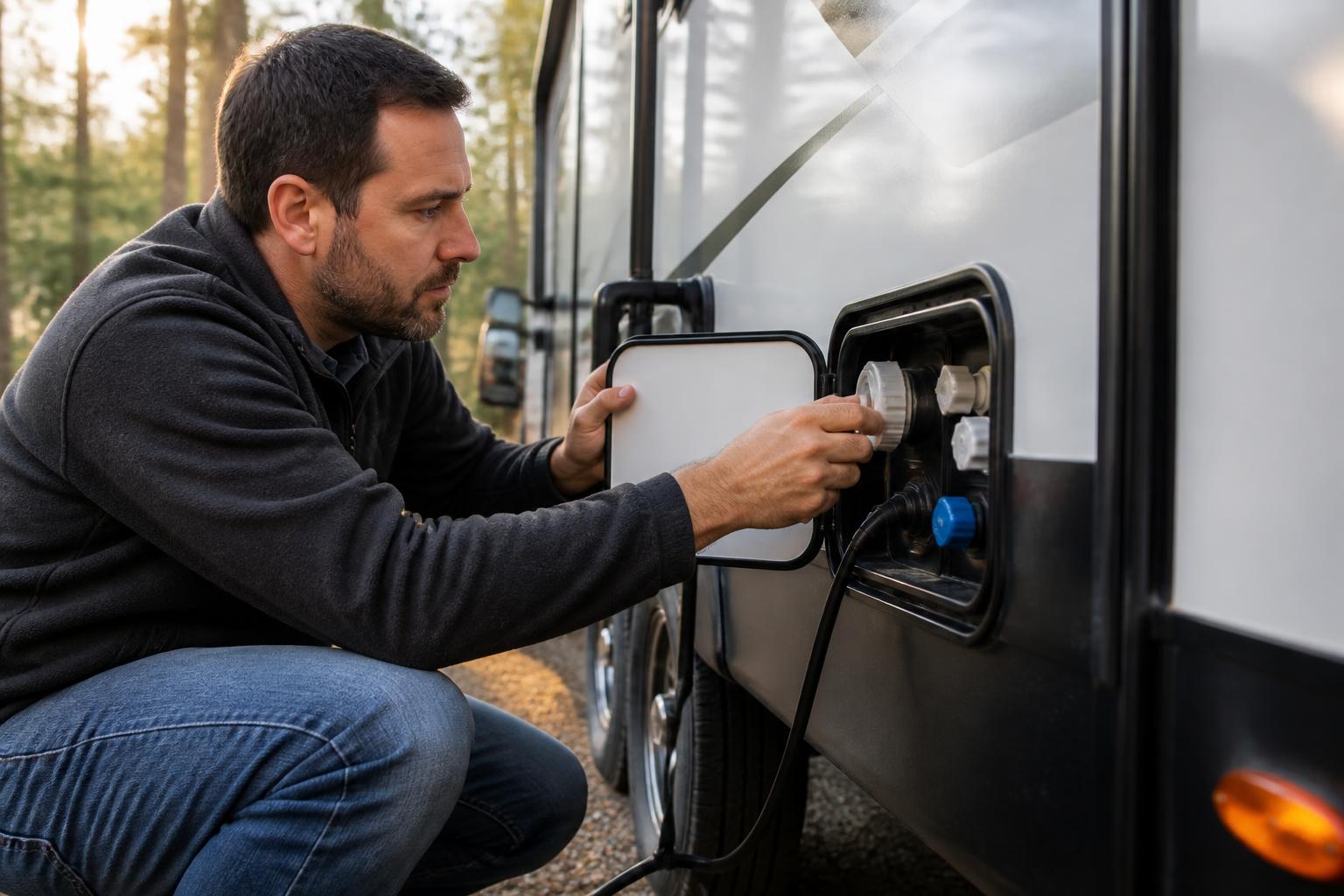

– The rear axle of the towed car carries full road load — your car’s steering must be unlocked and the rear wheels free to roll. If the owner’s manual says “do not tow behind a motor home,” do not use a dolly.
## Before you rent: the critical checks that change your next move
This is where most people go wrong. Two checks determine whether the dolly will work — and if either fails, your next action changes immediately.
**Check 1: Does your car fit the dolly’s weight limits?**
The dolly’s maximum vehicle GVWR is 5,290 lb. That’s the car’s fully loaded weight (curb weight plus cargo and passengers). If your car’s GVWR exceeds 5,290 lb, you cannot use this dolly. Period. The dolly will be overloaded, the surge brakes won’t have enough stopping power, and U‑Haul’s rental agreement won’t cover you.
→ **If your car is over 5,290 lb GVWR:** You need a flat‑bed trailer (rent one from U‑Haul or another provider). Do not proceed.
**Check 2: Can your tow vehicle handle the weight?**
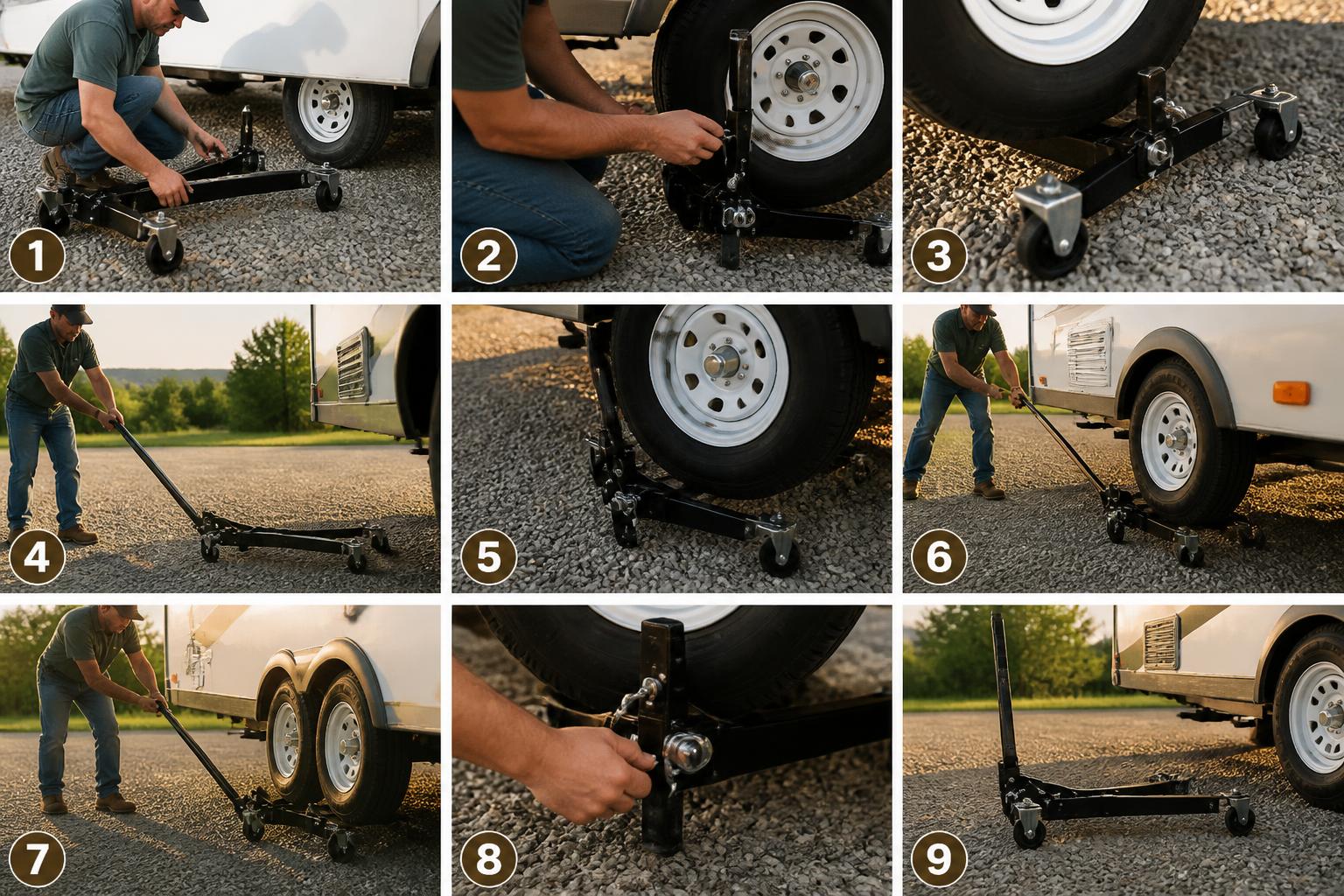

Payload is the real limiter, not [towing capacity](/f150-towing-capacity/). Calculate:
– Dolly tongue weight when loaded: roughly 10–15% of the car’s weight plus the dolly’s own tongue weight (empty: ~100–150 lb; loaded: up to 500 lb). For a 3,500‑lb car, expect ~400–525 lb on the tongue. – Add your passengers, gear, and any accessories in the tow vehicle. – Compare to your truck’s payload rating (found on the driver‑side door jamb sticker). Example: Truck payload = 1,500 lb. Passengers + gear = 500 lb. Tongue weight = 450 lb. That leaves 550 lb for the car’s tongue — fine.
But if the truck’s payload is only 1,200 lb, you’re at 950 lb used before the car’s tongue, leaving only 250 lb — and you’d be over once the car’s real tongue weight lands. → **If you exceed payload:** You must either reduce cargo/passengers, switch to a larger tow vehicle, or use a different trailer (e.g., a car-hauler trailer that distributes weight differently). Do not risk towing overloaded — it compromises braking, steering, and trailer sway stability.
## How to use the dolly: step‑by‑step with decision points
### Before you load
1. **Verify your car’s manufacturer towing instructions.** Look in the owner’s manual under “recreational towing” or “towing behind a motor home.” Many modern cars (Honda Civic, Ford Focus, Toyota Corolla) require pulling a specific fuse to keep the battery from draining and to disable the parking pawl. If the manual says “do not tow,” you stop here — the dolly is not an option.
2. **Check the dolly’s condition.** U‑Haul inspects its equipment, but you visually confirm: tire pressure, strap condition, safety chains, coupler latch, and surge brake actuator movement. The coupler should slide in and out about 1 inch when you push it; if it’s frozen, the brakes won’t work.
3. **Select the correct hitch ball mount.** The dolly’s coupler sits ~20 inches off the ground. Your ball mount must bring the ball to that height ±1 inch. If the dolly sits nose‑high or nose‑low, surge brake engagement will be uneven and the dolly may sway.
### Loading
– Park the dolly on level ground. Lower the loading ramps.
– Drive the car straight onto the dolly — creep in, do not hit the wheel‑stop blocks. The car’s weight should be fully on the cradle.
– Set the parking brake, put the transmission in park (or leave manual in neutral), and turn off the engine. **Leave the ignition in a position that keeps the steering unlocked** — usually “accessory” or just past the lock position. On some vehicles, turning the key to “off” locks the steering, which will cause the car to push sideways in turns.
– Attach the two wheel straps over the front tires. Ratchet outward. Snug the strap so there’s no slack, but **do not overtighten** to the point the tire bulges.
– Cross the safety chains under the dolly tongue and attach to the tow vehicle. Attach the breakaway cable (small cable with a pin) to the tow vehicle — not to the dolly or the ball.
### Towing checkpoints (success or stop signals)
– **Pre‑pull check:** Verify all lights (tail, brake, turn signals) work via the flat‑4 connector. If your tow vehicle has a 7‑pin, use a 7‑to‑4 adapter.
– **First 100 yards:** Drive slowly and stop. Inspect strap tension, coupler tightness, and that the car’s rear wheels track straight. If the car pulls to one side, the straps may be uneven or the dolly is not level. **Stop and re‑adjust before hitting the highway.**
– **During the trip:** Keep speed at or below 55 mph (U‑Haul’s recommendation). If you feel excessive sway, slow down immediately. Surge brakes are automatic — they apply harder the more you brake, so leave extra following distance. **If sway does not settle after slowing, pull over and re‑check loading. Sway that persists means you’re overloaded or the dolly is improperly loaded.**
### Unloading
Reverse the steps: release straps, lift ramps, and drive the car off at idle. The dolly’s ramp angle is shallow, but approach slowly.
## Key facts and takeaways
| Specification | Value |
|—————|——-|
| Dolly dry weight | ~1,050 lb |
| Maximum vehicle GVWR | 5,290 lb |
| Maximum tongue weight (on coupler) | 500 lb |
| Brake system | Surge (hydraulic) – no electric brake controller needed |
| Coupler | 2‑inch ball (class III/IV) |
| Lighting | Flat‑4 connector (tail, turn, brake) |
| Recommended max speed | 55 mph |
| Rental style | One‑way or round‑trip; daily rate plus mileage |
**Payload math example (80% safety margin for tow vehicle capacity is fine, but payload is the strict limit):**
If your truck has a payload of 1,500 lb and you carry 500 lb of passengers/gear, the dolly + car tongue must stay under 1,000 lb. For a 4,000‑lb car with 10% tongue weight, that’s 400 lb — well within. But if your truck’s payload is only 1,200 lb, the same loads push you to 900 lb used, leaving only 300 lb for the car’s tongue — very tight. Most trucks have less payload than you think.
**Decision criterion that changes the recommendation:**
If your vehicle is front‑wheel drive and under 5,290 lb GVWR, and your tow vehicle has adequate payload, the dolly works. If any of those conditions fail — especially AWD or RWD — you must use a flat‑bed trailer. There is no workaround for the dolly.
## Expert tips
**Tip 1: Pull the fuse if your owner’s manual says so.** Many modern cars require removing the “tow fuse” or a specific fuse to keep the battery from draining and to prevent the transmission’s parking pawl from engaging. U‑Haul staff will mention it, but most renters skip this and end up with a dead battery at the destination. **Common mistake:** Leaving the ignition in “accessory” for hours can still drain the battery; the fuse pull is the only sure way.
**Tip 2: Use a ball mount with the correct rise/drop to level the dolly.** The dolly coupler sits ~20 inches off the ground. If your tow vehicle’s hitch receiver is 18 inches high, you need a 2‑inch rise ball mount. If it’s 22 inches high, a 2‑inch drop. **Common mistake:** Using a standard 2‑inch drop on a lifted truck tilts the dolly nose‑high, reducing rear wheel contact and increasing sway.
**Tip 3: Always cross the safety chains and attach the breakaway cable to the tow vehicle.** Cross the chains under the dolly tongue to form a cradle — this catches the tongue if the coupler fails. The breakaway cable must be attached to the tow vehicle’s frame or hitch, not looped around the ball or tied to the dolly itself. **Common mistake:** Attaching the breakaway cable to the dolly renders it useless in a separation. Test the cable: if you pull the pin, the surge brakes should lock.
## Related questions
**Can I tow an AWD or 4WD vehicle on a U‑Haul tow dolly?**
No, unless the owner’s manual explicitly permits it. Most AWD systems will be damaged. U‑Haul’s rental agreement prohibits towing AWD/4WD vehicles on their dolly. You’ll need a flat‑bed trailer.
**What if my car is rear‑wheel drive?**
You cannot use the dolly. The rear wheels on the ground would spin the driveshaft and transmission without oil pressure, causing catastrophic damage. Rent a full trailer instead.
**Does the dolly have electric brakes?**
No. It uses surge brakes — hydraulic actuation when the towing vehicle slows. No brake controller or 7‑pin wiring is needed. A flat‑4 connector powers lights only. However, your tow vehicle must have a 2‑inch receiver and a functioning 4‑pin flat connector.
**How do I find my car’s actual weight for the dolly?**
Check the driver‑side door jamb sticker for GVWR (gross vehicle weight rating). If you need curb weight (empty), use the owner’s manual or a public scale. Do not guess — exceeding the dolly’s 5,290‑lb limit is a safety violation and void your rental contract.
## Explore This Topic
– Back to [Towing & Setup](/towing-setup-hub/)
Related guides in this cluster:
– [Scamp Camper: A Complete Overview](/scamp-camper/)
– [Malibu Beach RV Park: A Complete Overview](/malibu-beach-rv-park/)
– [The Complete Guide to F150 Towing capacity](/f150-towing-capacity/)
– [RV Trailer: Everything to Know Before Buying](/rv-trailer/)

Practical RV guides from an experienced owner. Motorhomes, travel trailers, truck campers — we have owned them, maintained them, and written the guides we wish we had found when we started.