Locking Hitch Pin: What to Look For & Top Picks
# Locking Hitch Pin: What to Look For & Top Picks
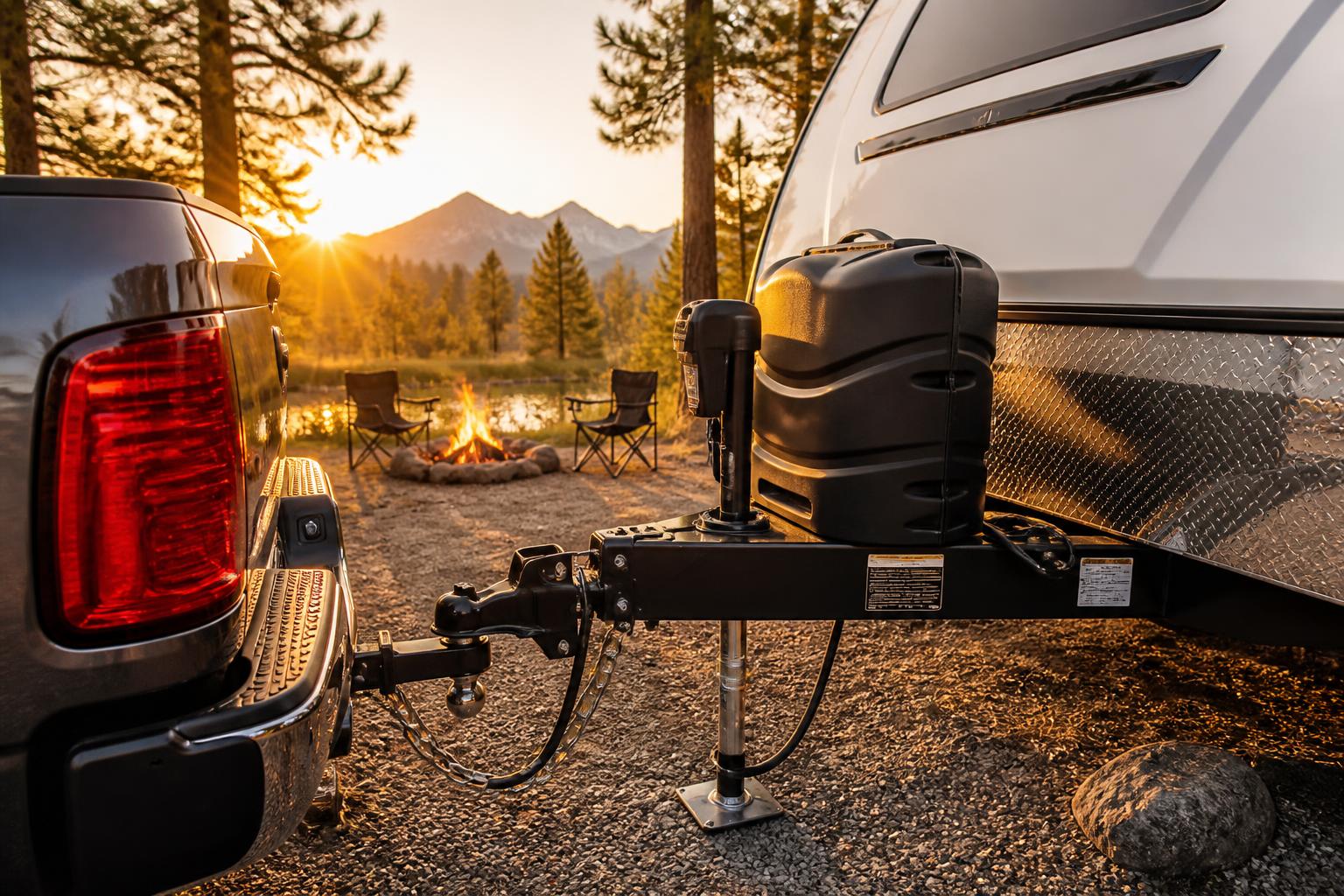
A locking hitch pin costs less than $20 and is the single cheapest thing you can do to keep your trailer from rolling away without you. But most RV owners buy the wrong one—wrong diameter, weak metal, or a lock that seizes after one winter. Here’s how to pick one that actually works, plus the best balanced option for most setups.
## Quick answer
Buy a locking hitch pin that matches your receiver tube size (5/8″ diameter for a standard 2″ receiver), uses a hardened steel lock body, and has a weather-sealed keyway. The [METOWARE 5/8″ locking hitch pin (1 pack)](https://www.amazon.com/dp/B08F3DTYPH?tag=rvownerhelp-20&linkCode=ogi&th=1&psc=1) fits Class III and IV receivers, uses a disc-detainer lock, and stays smooth even after road salt exposure. It’s under $20 and outlasts cheaper zinc-alloy pins that fail in a single season.
**5-point quick-fit check (pass/fail before you buy):**
– [ ] Pin diameter matches your receiver hole – check the stamp on the receiver tube (2″ tube = 5/8″ pin; 1.25″ tube = 1/2″ pin)
– [ ] Lock body is hardened steel, not die-cast zinc – zinc corrodes and seizes within months
– [ ] Keyway has a weather cover or shielded design – prevents dirt and moisture from jamming the lock
– [ ] Lock mechanism is disc-detainer or wafer – pin-tumbler locks are easily picked
– [ ] Pin length leaves at least ¼” of pin visible past the far side of the receiver wall – too short and the pin might not engage the far receiver hole fully
### What this means for your next purchase
If your current pin passes all five checks, keep it. If it fails even one—especially the hardened steel or weather-sealed keyway—replace it before your next trip. A cheap zinc pin that corrodes shut will force you to cut it off with an angle grinder on the side of the road. That $10 “savings” quickly becomes a $200 tow bill and hours lost.
—
## Comparison framework

All three METOWARE versions are the same 5/8″ hardened steel locking pin design, only differing in pack quantity. They fit 2″ receiver tubes on Class III/IV hitches. The table below shows what each pack makes sense for.
| Product | Price | Best For | Key Feature |
|———|——-|———-|————-|
| [METOWARE 1 Pack](https://www.amazon.com/dp/B08F3DTYPH?tag=rvownerhelp-20&linkCode=ogi&th=1&psc=1) | Check current price | Single-trailer owner with one hitch | Best value; no wasted money |
| [METOWARE 2 Pack](https://www.amazon.com/dp/B08F3DPKF2?tag=rvownerhelp-20&linkCode=ogi&th=1&psc=1) | Check current price | Household with two tow vehicles or a spare | Cost per pin slightly lower |
| [METOWARE 4 Pack](https://www.amazon.com/dp/B097Y3PJGS?tag=rvownerhelp-20&linkCode=ogi&th=1&psc=1) | Check current price | Multiple trailers, ATVs, or shared-use hitches | Bulk price per pin; carry one spare |
**Top Pick:** [METOWARE 1 Pack](https://www.amazon.com/dp/B08F3DTYPH?tag=rvownerhelp-20&linkCode=ogi&th=1&psc=1). For a single RV or tow vehicle, you don’t need extras. The 1-pack gives you the same hardened lock and weather-resistant cylinder as the multi-packs. If you have two trucks or a second trailer, the 2-pack is a better deal per pin.
—
## Trade-offs to know
### The weak spot most reviews skip
Here’s the counter-intuitive truth: a locking hitch pin alone won’t stop a dedicated thief. The real weak point on most trailers isn’t the pin—it’s the coupler latch. A locking pin prevents someone from sliding the hitch shank out of the receiver, but if your trailer coupler uses a standard clip-on latch (no built-in lock), a thief can still release the coupler from the ball and drive off with the trailer. I’ve seen owners secure a $30,000 travel trailer with a $12 pin and leave the coupler unlocked.
**What that means for you:** Consider the pin as one layer in a security stack. Pair it with a coupler lock (e.g., a receiver-lock-style coupler lock) for real theft protection. Many RV owners skip this and assume the pin is enough—don’t be one of them.
### Material durability matters more than brand
Most budget locking pins use a zinc-alloy lock body. They look fine out of the box, but after one winter of road salt, the keyway seizes solid. The METOWARE pin uses hardened steel for the lock housing—that’s the same material you want in a proper padlock. The pin itself is black oxide-coated, which resists surface rust better than bare steel but isn’t stainless. If you tow near saltwater or through winter slush, plan to replace the pin every two to three years.
**Expert tip #1:** After every trip in wet or salted conditions, spray the keyway with a dry PTFE lubricant (not WD-40, which attracts grit). Insert the key, turn it a few times, and wipe off excess. **Common mistake:** applying oil-based lube, which gums up after dust exposure and makes the lock harder to turn.
### Keyed vs. keyed-alike vs. combination
The METOWARE pin comes with two keys, but every pin uses a different key. If you have multiple trailers or trucks, you’ll carry a separate key for each pin. Some brands offer keyed-alike sets, but those are usually on higher-end models ($30+ per pin). For most RV owners with one trailer, a single pin means one key—not a problem. If you buy the 4-pack for multiple trailers, keep all keys on a single ring or buy a multi-pack that’s keyed-alike.
**Expert tip #2:** Take a photo of your key code (usually stamped on the key head) and store it in your phone or glove box. **Common mistake:** losing the only key, then having to cut the pin off with an angle grinder. A locksmith can cut a replacement from the code in 10 minutes.
### Pin fit and receiver clearance
Standard 5/8″ pins work with 2″ receiver tubes, but some aftermarket hitches or weight-distribution setups have tighter tolerances. I’ve seen pins bind on hitches with heavy powder-coat or aftermarket receiver sleeves. **Verification step:** Before you buy, pull a 5/8″ bolt from the hardware store and test it through your receiver hole. If the bolt slides through without forcing, the pin will fit. Also check the pin length: too short and it won’t reach the far receiver wall; too long and it might interfere with a spare tire carrier, bike rack, or wiring harness. The METOWARE pin is about 3.5″ long—fine for standard 2″ receivers, but measure your depth.
**Expert tip #3:** Test-fit the unlocked pin in your receiver *before* you insert the stinger or ball mount. If the pin doesn’t slide through freely, the lock mechanism might not align with the receiver hole. **Common mistake:** forcing the pin, which damages the lock body and makes future removal impossible—exactly what you’re trying to avoid.
### Weight rating: the overlooked spec
Most locking pins don’t advertise a weight rating, and that’s a problem. If you’re towing a heavy RV with a 1,000 lb tongue weight, the pin needs to handle that shear load. The METOWARE pin is 5/8″ diameter hardened steel—typical for 10,000–12,000 lb GTWR trailers. But if you’re towing a 15,000 lb fifth wheel with a 2,000 lb pin weight, a standard 5/8″ pin may not be adequate. Check your owner’s manual or the receiver manufacturer’s specs for minimum pin grade. A simple rule: if you’re over 12,000 lb GVWR trailer, move to a 3/4″ pin (requires a 2.5″ receiver) or verify the pin’s shear strength.
—
## Related questions
### Can a locking hitch pin be picked?
Technically yes, but realistically no for the casual thief. The METOWARE pin uses a disc-detainer lock, which requires specialized tools and skill to pick. Most hitch theft is opportunistic—someone who can lift the coupler off the ball or slide out an unlocked pin. A hardened steel lock with a shielded keyway is enough to deter 95% of theft. If you’re parked in a high-theft area for weeks at a time, add a coupler lock or a cable lock through the receiver.
### How do I know which pin diameter I need?
Check the stamp on your receiver tube—it’s usually on the side or top near the hitch opening. Class III and IV receivers with a 2″ tube use a 5/8″ pin. Class I and II receivers (1.25″ tube) use a 1/2″ pin. If the stamp is worn, measure the hole with a 5/8″ drill bit or bolt shank. Never guess—a loose pin will rattle and oval the receiver hole over time, making future fits sloppy.
### Do I need a locking pin if I have a weight distribution hitch?
Yes. A weight distribution hitch uses a separate shank and head assembly, and the locking pin still secures that shank into the receiver. The WDH brackets and bars don’t prevent someone from unthreading the hitch pin or sliding the shank out. A locking pin protects the connection between the shank and the vehicle—the same vulnerability as a standard hitch ball mount. Don’t skip it just because you have a WDH.
### How often should I replace a locking hitch pin?
Replace a hitch pin when the lock cylinder becomes stiff (won’t turn smoothly), the coating chips and exposes bare metal to rust, or after three seasons of heavy use in wet or salted environments. A hardened steel pin with a sealed keyway like the METOWARE can last longer if you maintain it. If you can’t turn the key without jiggling, it’s time for a new pin before it seizes completely.
## Explore This Topic
– Back to [Towing & Setup](/towing-setup-hub/)
Related guides in this cluster:
– [RV Storage: What to Look For & Top Picks](/rv-storage/)
– [RV Internet: What to Look For & Top Picks](/rv-internet/)
– [Love’s RV Stops: What to Look For & Top Picks](/love-s-rv-stops/)
– [RV Hot Water Heater: What to Look For & Top Picks](/rv-hot-water-heater/)

Practical RV guides from an experienced owner. Motorhomes, travel trailers, truck campers — we have owned them, maintained them, and written the guides we wish we had found when we started.