Understanding F 150 Towing Capacity: A Practical Guide
The maximum towing capacity of a Ford F‑150 can range from 5,000 to over 14,000 pounds depending on the configuration. But the number on the brochure is rarely the real limiter — your truck’s payload rating is what actually determines how much trailer you can safely tow. Ignoring payload is the most common reason owners end up overloaded without realizing it, leading to poor handling, sway, and longer stopping distances.


Why payload is the real limit
Towing capacity assumes a stripped truck with a 150‑lb driver and no passengers or cargo. Once you add your family, gear, and the trailer’s tongue weight, the payload number becomes the hard ceiling.
Take a typical F‑150 SuperCrew 4×4 with the 3.5L EcoBoost and Max Tow Package:
- Payload sticker: 1,800 lbs
- You and three passengers: 600 lbs
- Gear in the cab and bed: 200 lbs
- Tongue weight of a 7,000‑lb travel trailer: 840–1,050 lbs (12–15% of GVWR)
Total load on the truck: 1,640–1,850 lbs — right at or over the payload limit. That overloaded condition causes rear sag, wandering, and longer braking, even though the brochure says you can pull 13,000 lbs.


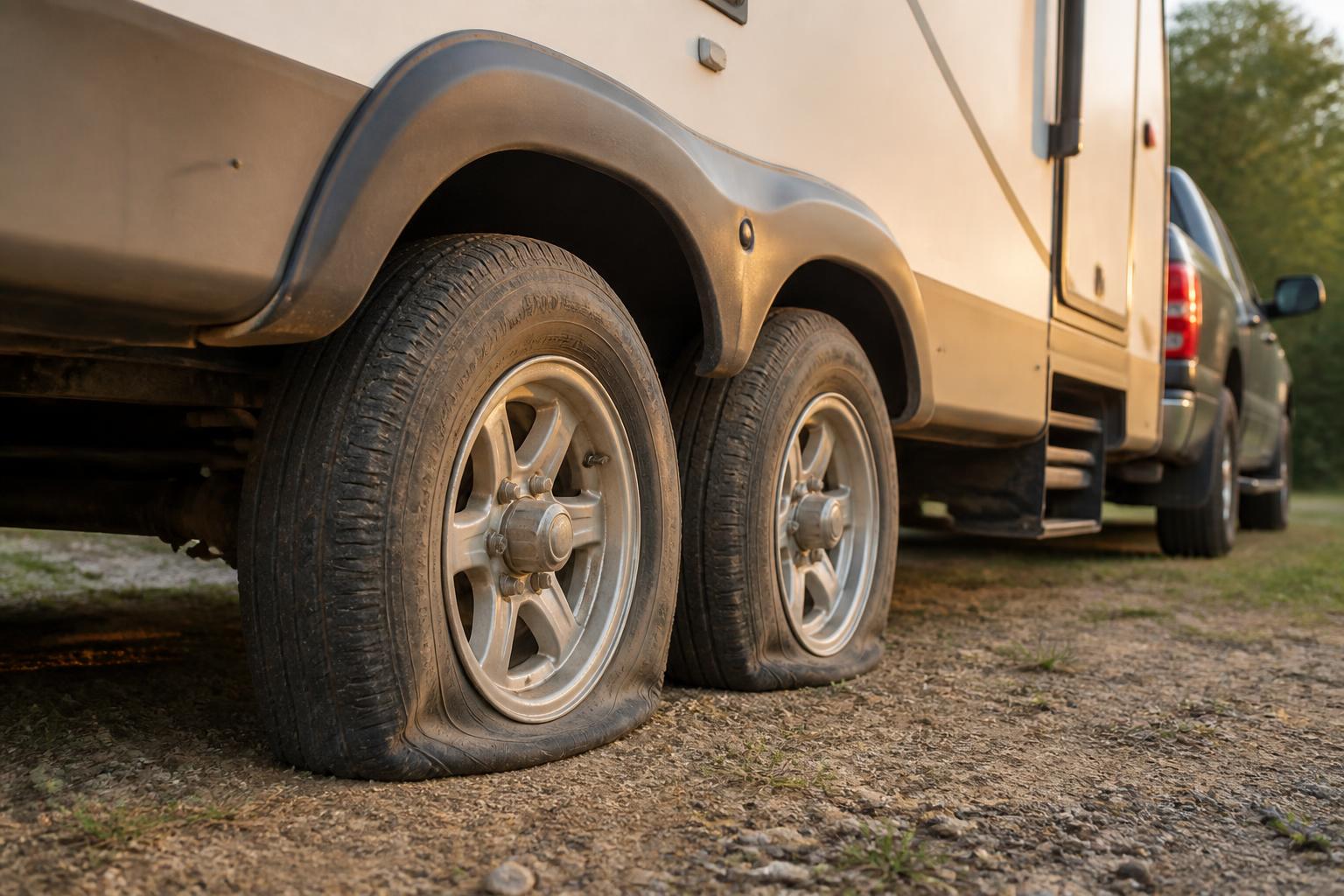
How to detect it early: Before buying a trailer, run the payload math. If you already own the trailer and feel the truck squatting or swaying, weigh the tongue with a Sherline scale or use a public CAT scale to get the real numbers.
The failure mode most owners miss: payload overload
This is the single most common mistake F‑150 owners make with towing. You read the brochure, see 13,000 lbs, and shop for a travel trailer near that number. You bring it home, hook up, and the truck sits nose‑high. The steering feels light. On the highway, the trailer starts to push the truck around in crosswinds.
Symptom: Rear sag, wandering at highway speeds, frequent steering corrections after passing trucks.


Likely cause: You exceeded the payload rating before the trailer even hit the road. The tongue weight alone consumed your remaining payload, and the truck’s rear suspension can’t support the load. Weight distribution might help, but only if you’re within your payload to begin with.
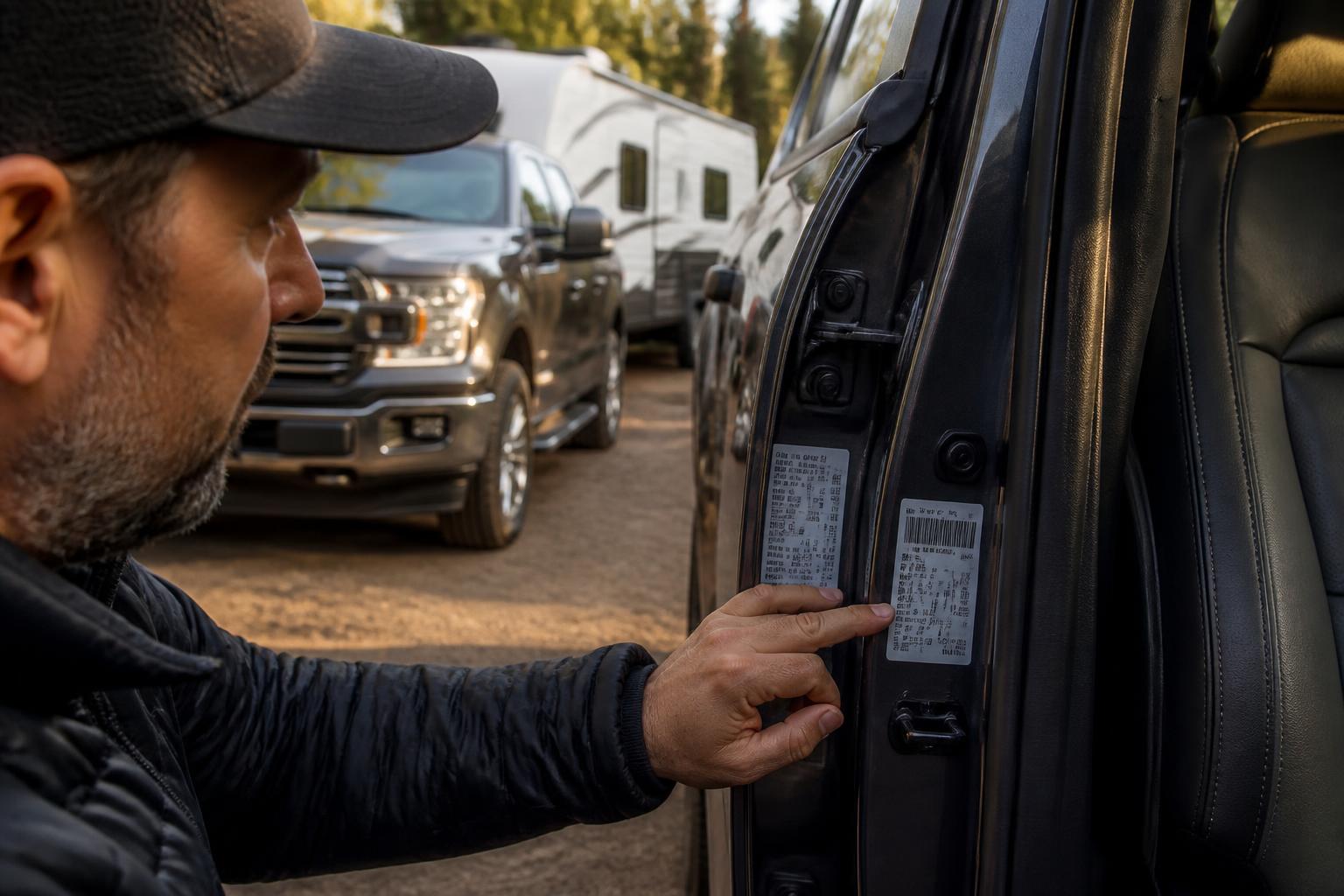
Safer next move: Stop at a CAT scale before your next trip. Weigh the truck alone (front axle, rear axle, total) with the trailer attached. Compare the rear axle weight to the GAWR (Gross Axle Weight Rating) on the driver’s door sticker. If you’re over, you need a lighter trailer or a truck with higher payload.
How to find your F‑150’s actual towing capacity
Follow these steps to get the real numbers for your specific truck, not the generic brochure figures.
1. Read the payload sticker – On the driver’s side door jamb is a yellow and white “Tire and Loading Information” label. It shows the combined weight of occupants and cargo should never exceed XXX lbs. That is your payload.
2. Look up your towing capacity – Ford publishes a towing guide each model year. You need the engine (3.3L V6, 2.7L EcoBoost, 5.0L V8, 3.5L EcoBoost, or PowerBoost), cab style (Regular, SuperCab, SuperCrew), bed length, drivetrain (2WD or 4WD), axle ratio, and whether you have the Max Trailer Tow Package. Use your VIN or contact a Ford dealer to confirm the exact rating.
3. Weigh the truck as it sits – If you have aftermarket accessories (tonneau cover, bed liner, running boards, tool box), your actual curb weight is higher than spec. A public scale gives you the real number. Subtract that from the GVWR on the door sticker to get your true payload.
4. Run the payload math – Subtract the weight of all passengers and cargo you will carry in the truck. The remaining payload must handle the trailer’s tongue weight (10–15% of trailer GVWR). Divide remaining payload by 0.15 to get the heaviest trailer you can tow without exceeding payload.
Example:
- Payload sticker: 1,800 lbs
- Passengers + cargo: 700 lbs
- Remaining for hitch weight: 1,100 lbs
- Max tongue weight: 1,100 lbs
- Max trailer GVWR (at 15% tongue): 1,100 ÷ 0.15 = 7,333 lbs
Even if the brochure says you can tow 13,000 lbs, payload caps you at about 7,300 lbs for a travel trailer.
Quick safety check before you hook up
Use this checklist before every tow. If any item fails, adjust the load or trailer before driving.
- [ ] Payload remaining ≥ 12% of trailer GVWR (for tongue‑pull trailers)
- [ ] Trailer GVWR ≤ truck’s rated towing capacity (apply the 80% safety margin: trailer GVWR ≤ 0.8 × rated capacity)
- [ ] Trailer brake controller installed and properly adjusted — required by law in most states for trailers over 1,500 lbs
- [ ] Weight distribution hitch in use if tongue weight exceeds 500 lbs or trailer GVWR exceeds 5,000 lbs (check your owner’s manual for the exact threshold)
- [ ] Truck tires inflated to the cold pressure listed on the door sticker for towing (not the unloaded pressure)
Stop or escalate: when to halt DIY steps and get professional help
If your transmission temperature hits 240°F or higher while towing, pull over immediately and let it cool. Continued driving at that temperature can cause transmission failure. This is a hard stop — do not continue until it drops below 220°F.
Also stop and get professional help if:
- Your rear axle weight exceeds the GAWR on the door sticker after loading and adjusting the weight distribution hitch.
- You feel continuous trailer sway even after adjusting hitch tension and checking tongue weight.
- Brake fade occurs on a downhill grade (pedal goes to the floor or feels spongy). This signals overheated trailer brakes or an improperly adjusted brake controller.
In any of these scenarios, have the setup weighed and inspected before your next trip. A local RV dealer or a mobile RV technician can measure axle weights and confirm the hitch is adjusted correctly.
Putting it all together: a real‑world example
Let’s run the numbers for a 2022 F‑150 XLT SuperCrew with the 3.5L EcoBoost and Max Tow Package (payload 1,820 lbs, GVWR 7,050 lbs, rated towing 13,200 lbs).
- You and three passengers: 550 lbs
- Gear in the cab and bed: 200 lbs
- Remaining payload: 1,820 – 550 – 200 = 1,070 lbs
- You want to tow a travel trailer with a GVWR of 8,000 lbs. Tongue weight at 12%: 960 lbs — under 1,070 lbs ✓
- Check towing capacity: 8,000 lbs ≤ 13,200 lbs ✓
- Apply the 80% margin: 8,000 ÷ 0.8 = 10,000 lbs, still under 13,200 ✓
This combination is safe to tow with a weight distribution hitch and a properly adjusted brake controller.
When you need a weight distribution hitch and trailer brake controller
Weight distribution hitch: Required for virtually any travel trailer over 5,000 lbs on an F‑150. It transfers tongue weight from the rear axle to the front axle, improving steering and stability. Many manufacturers require it whenever tongue weight exceeds 500 lbs.
Trailer brake controller: Mandatory for trailers with brakes (typically over 1,500 lbs GVWR). The F‑150 has a built‑in controller on some trims; otherwise you need an aftermarket unit (Curt, Tekonsha, or similar). Set the gain by driving at 25 mph on a level road and applying only the trailer brakes — adjust until the trailer brakes engage smoothly without locking up.
Warning signs you’re already over the limit
If you suspect your current setup is overloaded, watch for these warning signs on the road:
- Rear sag – The truck’s rear sits noticeably lower than the front, even with a weight distribution hitch adjusted correctly.
- Sway – The trailer pushes the truck sideways in wind or when passed by a large vehicle.
- Headlights pointing up – Oncoming drivers flash their high beams because your headlights are aimed too high.
- Longer braking – You need extra pedal travel or feel the trailer “pushing” the truck.
- Transmission temperature spikes – The gauge climbs quickly on any grade, especially above 230°F.
If you notice any of these, pull over at the next safe spot. Weigh the tongue and reduce load or adjust hitch weight before continuing. If transmission temp hits 240°F or your rear axle exceeds GAWR, that’s your escalation signal — stop driving and get a professional weigh‑in before the next trip.
Frequently asked questions
Can I increase my F‑150’s payload?
No. Payload is set by the truck’s GVWR and curb weight. Adding air springs or helper bags does not change the GVWR — you can only reduce the weight you carry or switch to a lighter trailer.
Does towing capacity include the weight of the trailer?
Yes. Towing capacity is the maximum loaded trailer weight the truck is rated to pull, assuming a lightly loaded truck (driver only, no cargo). Your actual trailer weight must be under that number, and your payload must also accommodate the tongue weight.
What’s the safe margin for towing?
Many experienced RV owners recommend staying at or below 80% of your truck’s rated towing capacity and 90% of your payload. This leaves room for wind, grades, and temperature. Check your owner’s manual — some manufacturers specify a lower maximum trailer weight without a weight distribution hitch.
The F‑150 is a capable tow vehicle when you follow the numbers. Start with the payload sticker, do the math, and verify your setup with a scale before you hit the road.

Practical RV guides from an experienced owner. Motorhomes, travel trailers, truck campers — we have owned them, maintained them, and written the guides we wish we had found when we started.