F150 Towing Capacity: Everything You Need to Know
# F150 Towing Capacity: Everything You Need to Know
The Ford F-150 can tow up to **13,500 lbs** when properly equipped (2023 model, 3.5L EcoBoost, Max Trailer Tow Package, 3.55 axle). That number sells trucks, but it won’t keep you safe on the road. For RV towing, **payload capacity** is the real constraint — and it maxes out long before that headline number. Your actual safe towing limit depends on your specific truck configuration, the trailer’s tongue weight, and the people and gear inside the cab.
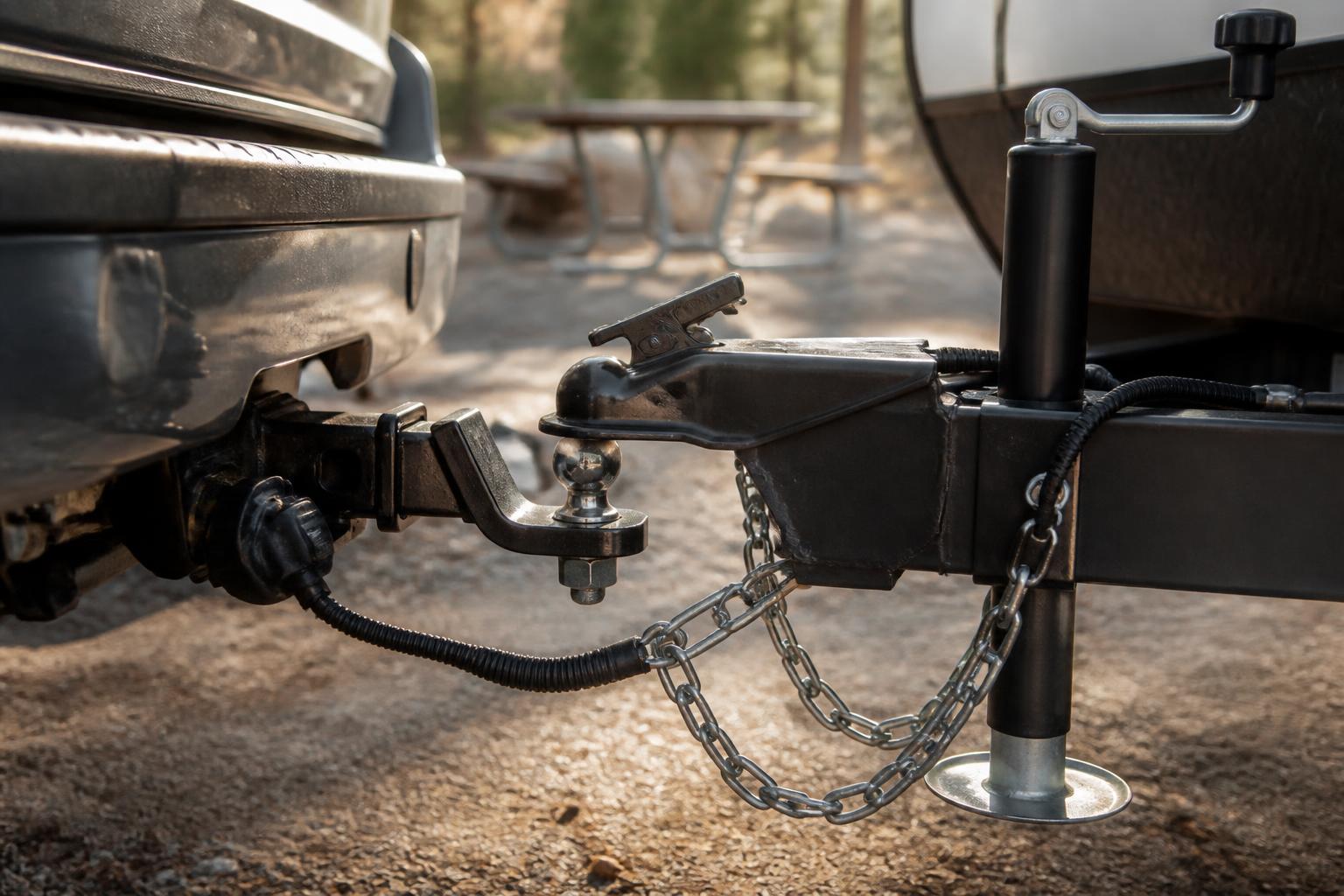
: Everything You Need to Know](https://rvownerhelp.com/wp-content/uploads/2026/05/f150-towing-capacity-hero-1.jpg)
: Everything You Need to Know](https://rvownerhelp.com/wp-content/uploads/2026/05/f150-towing-capacity-hero-1-1.jpg)
## Where to Find Your F-150’s Real Numbers
Do not rely on a generic chart from a blog. Your truck’s actual limits are on two places:
– **Driver’s side door jamb sticker** — This is the yellow “Tire and Loading Information” sticker. It shows your GVWR (Gross Vehicle Weight Rating, typically 6,500–7,050 lbs on F-150s), front and rear GAWR ratings, and the **payload** number. That payload number is the one you will hit first.
– **Ford’s VIN-specific towing lookup** — Go to Ford’s trailer towing guide page and enter your VIN. The result accounts for your exact engine, cab style (Regular, SuperCab, SuperCrew), bed length, axle ratio, and whether the Max Trailer Tow Package is installed. This is the only reliable way to get your max tow rating.

To verify the math yourself: subtract your truck’s curb weight from its GCWR (Gross Combined Weight Rating, listed in the towing guide). The remainder is your legal max trailer weight. But legal does not mean comfortable or safe with a travel trailer.
## Payload: The Real Limiter for RV Towing
Most F-150 payloads range from 1,500 to 2,200 lbs. Higher trims — Platinum, Limited, King Ranch — eat into that number because added features (sunroof, power running boards, heavier seats) reduce the weight the truck can carry. A base XL with few options often has the highest payload in the lineup.
Here is the calculation that matters for a 10,000 lb travel trailer:
| Item | Weight |
|——|——–|
| Trailer tongue weight (13% of 10,000 lbs) | 1,300 lbs |
| Driver + one passenger | 350 lbs |
| Cargo in bed (firewood, tools, cooler, gear) | 200 lbs |
| Weight-distribution hitch | 75 lbs |
| **Total payload used** | **1,925 lbs** |
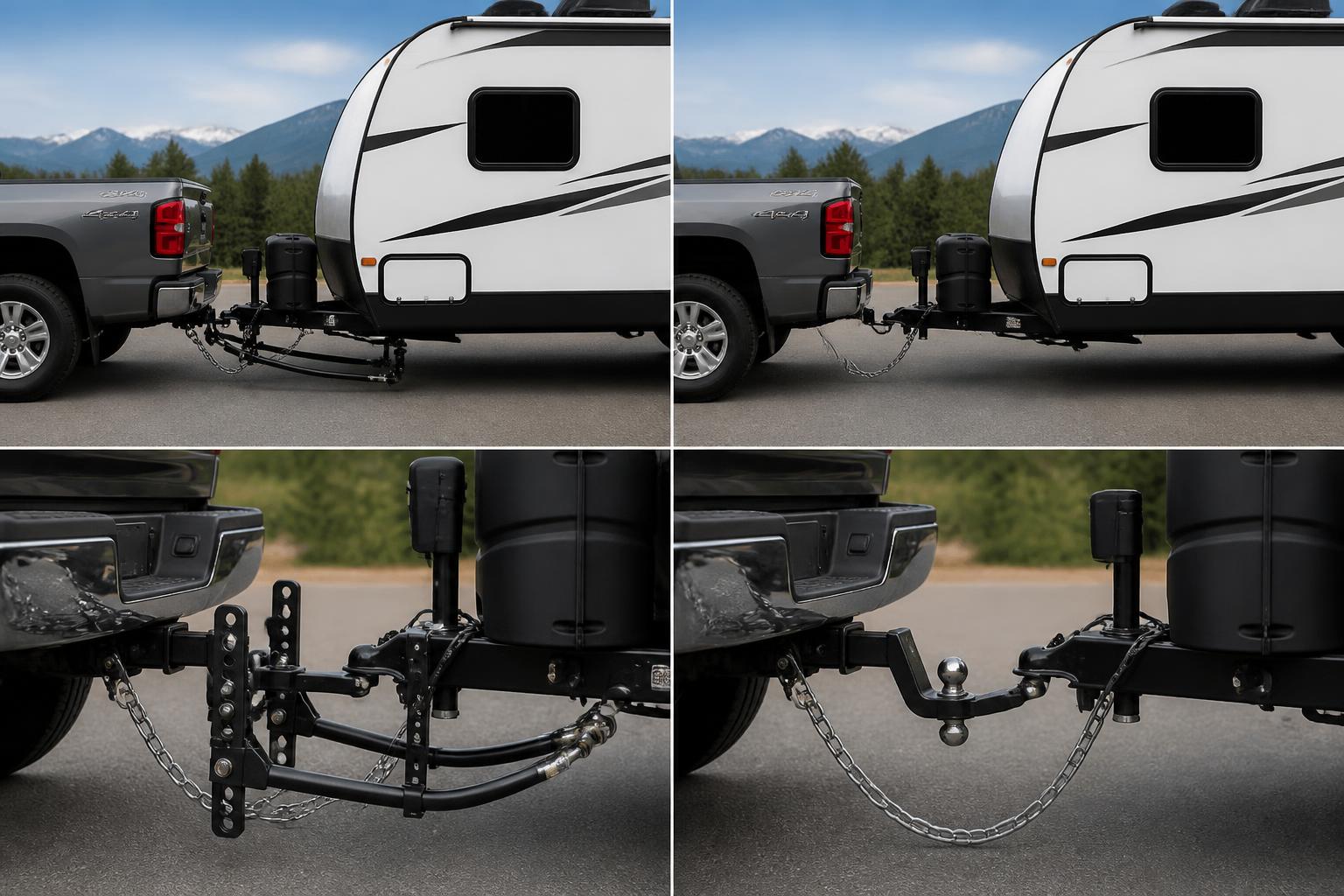
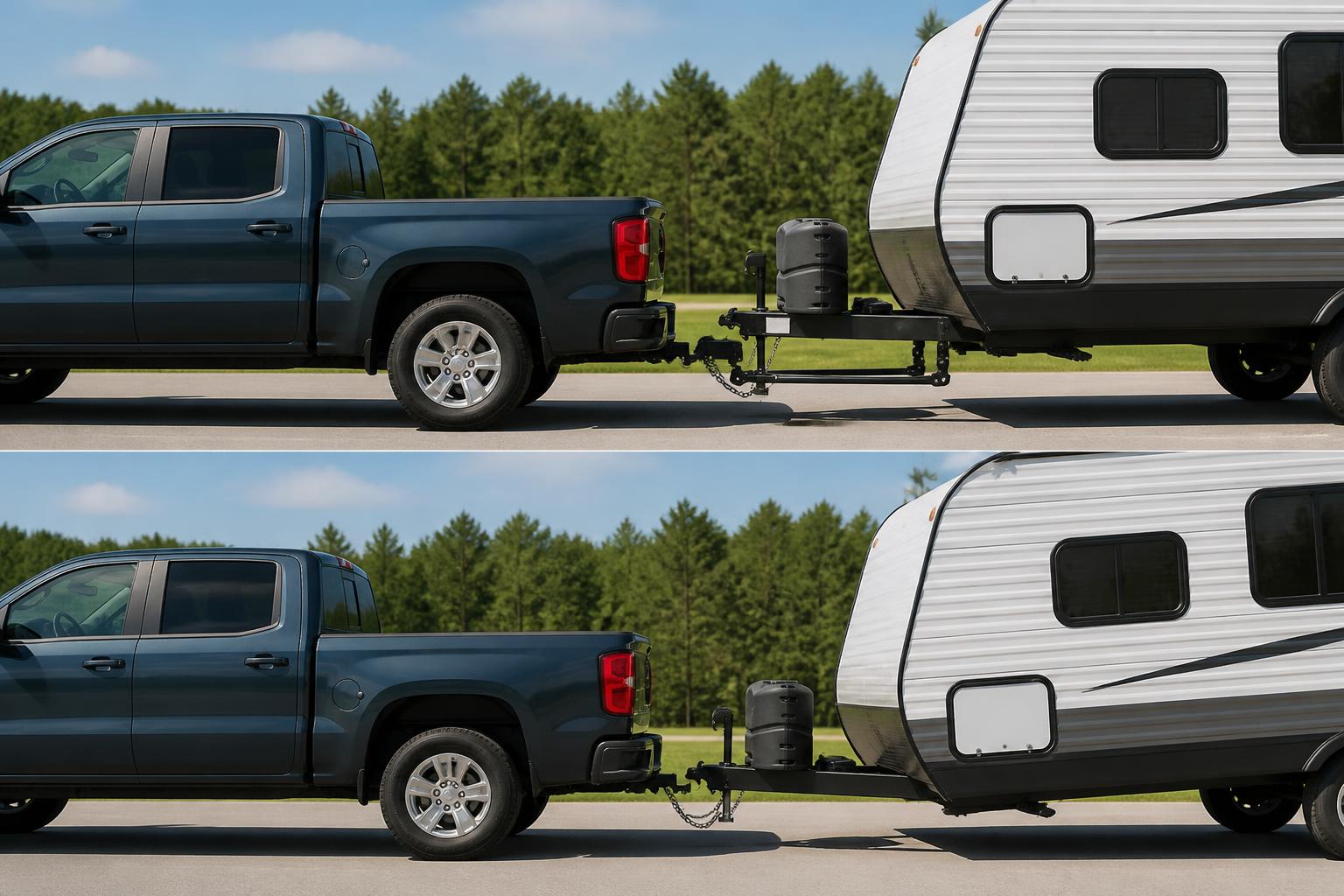

If your payload sticker reads 1,800 lbs, you are 125 lbs over before you even leave the driveway. The trailer must be lighter — or you need a different truck.
**Decision criterion that changes the recommendation:** If your loaded trailer tongue weight plus all passengers and cargo exceeds 85% of your truck’s payload rating, you need a 3/4-ton truck regardless of whether the tow rating looks acceptable. This threshold catches most F-150 owners who plan to pull a 7,500 lb travel trailer with a family of four and a full bed. The math does not lie — and overloaded rear axles cause steering instability and brake fade.
## Hitch Setup: Weight Distribution vs. Standard
Ford requires a **weight-distribution hitch** for any trailer over 5,000 lbs or with tongue weight over 500 lbs. Most travel trailers exceed both thresholds, so consider this mandatory, not optional.
– **Standard (bumper-pull) hitch** — Suitable for utility trailers, boats under 5,000 lbs, or lightweight pop-up campers. No load redistribution.
– **Weight-distribution hitch** — Uses spring bars to transfer tongue load forward to the front axle and rearward to the trailer axles. Required for travel trailers over 5,000 lbs. Without it, the rear of the truck sags, headlights blind oncoming drivers, and steering becomes dangerously light.
– **Fifth-wheel/gooseneck** — F-150s with the 6.5-ft bed and Heavy-Duty Payload Package can pull a small fifth wheel (up to about 12,000 lbs). Tongue weight (15–25%) sits directly over the rear axle, which changes the payload math but does not eliminate it.
**Brake controller gain adjustment:** Every F-150 with the tow package is pre-wired for a brake controller. Install a proportional unit (Tekonsha P3 or similar). To set gain: find an empty straight road. Drive 25 mph and manually apply only the trailer brakes using the controller slide. If the trailer brakes lock up, reduce gain. If you feel zero resistance, increase gain. Fine-tune by doing a full truck-plus-trailer stop from 30 mph — the trailer brakes should engage slightly before the truck’s brakes, pulling the rig to a straight, controlled stop.
## Step-by-Step: Setting Up Your F-150 for a Tow
**Before you hook up — early checkpoints:**
– Write down your payload from the door sticker. Weigh your truck fully loaded (passengers, gear, full fuel) at a CAT scale. Subtract that weight from GVWR. The remainder is the maximum tongue weight you can carry.
– Measure the trailer’s loaded tongue weight with a Sherline scale or a bathroom scale and a 2×4 lever. Target 10–15% of loaded trailer weight. For a 7,500 lb trailer, that is 750–1,125 lbs. If tongue weight is below 10%, the trailer will sway at highway speeds.
**Ordered setup steps:**
1. **Install weight-distribution hitch** — Set the hitch ball height so the trailer sits level front-to-back when coupled. Adjust spring bar tension so the front of the truck returns to within 1/2 inch of its unladen height. Measure over the front wheel wells — this is the only reliable way to confirm proper load distribution.
2. **Adjust brake controller gain** — Follow the test procedure above. Make small adjustments: one click at a time, then test again.
3. **Cross safety chains under the hitch** — Chains must cross under the coupler to cradle it if separation occurs. Leave enough slack for turns but no more than necessary.
4. **Verify all lights** — Turn signals, brake lights, running lights. Have a helper watch or use a magnetic light tester.
5. **Check tire pressures** — Inflate rear truck tires to the maximum cold pressure printed on the sidewall (typically 44–50 psi for LT tires, 35–44 psi for P-metric). Do not run normal daily pressure (32–35 psi) while towing — that causes sidewall flex and heat buildup.
**Test drive — 5-mile loop:**
Take a route with at least one stop, one left turn, and a short highway segment. After the loop, pull over and check:
– Hitch ball and coupler are tight
– Spring bars are not bottomed out or sagging
– Tires are cool to the touch (not hot)
– Trailer tracks straight behind the truck
**Stop and escalate if you see any of these:**
| Symptom | What it means | Action |
|———|—————|——–|
| Truck sways at 55+ mph | Trailer too heavy or tongue weight too low | Reduce speed immediately. Check tongue weight at next stop. Do not drive over 50 mph until corrected. |
| Front end feels light or wanders | Insufficient spring bar tension or hitch ball too low | Re-measure front fender height. Add spring bar tension. If no improvement, reduce trailer load. |
| Transmission temp exceeds 230°F on a sustained grade | Powertrain is beyond safe limits | Drop to a lower gear, reduce speed to 45 mph, and turn off overdrive.
If temp does not drop within 2 minutes, pull over and let the truck idle in Park until it cools. Repeat trips on this route require a transmission cooler upgrade or a lighter trailer. |
| Rear tires feel hot after a short drive | Overloaded rear axle | Stop driving. Weigh the rig. You are exceeding the tire load rating. |
**If you cannot resolve sway with speed reduction and hitch adjustment, do not continue.** Park the trailer and arrange a lighter tow vehicle. Sway that cannot be corrected is a sign the rig is fundamentally mismatched — no amount of hardware adjustment will make it safe at highway speeds.
## Expert Tips That Change Your Setup
**Tip 1: Weigh the rig loaded, not empty.** Actionable step: Pull onto a CAT scale with your fully loaded truck and trailer (truck front axle, truck rear axle, trailer axles all on separate scales). Subtract the truck’s scaled weight from its GVWR — that is your remaining payload margin. Common mistake: Owners weigh the truck empty, calculate tongue weight, and assume they are fine. A loaded truck with a full tank, cooler, tools, and passengers can be 600–800 lbs heavier than empty, eating the entire payload margin before the trailer is hooked up.
**Tip 2: Apply the 80% rule to your specific payload, not the tow rating.** Actionable step: Calculate 80% of your actual payload (not the brochure number). For a 1,800 lb payload, that is 1,440 lbs usable. Subtract your passengers and gear from that number — the remainder is the maximum tongue weight you should plan for. Then back-calculate the maximum trailer weight using 13% tongue weight. Common mistake: Applying the 80% rule to the tow rating only (e.g., 10,800 lb max trailer on a 13,500 lb rated truck) while ignoring that payload runs out first. That 10,800 lb trailer will have a 1,400 lb tongue weight, which alone exceeds most F-150 payloads once the family is inside.
**Tip 3: Replace P-metric tires with LT tires if you tow more than 10,000 miles per year.** Actionable step: Check your current tire sidewall. If it says “P” before the size (e.g., P275/65R18), those are passenger tires designed for unloaded driving. Replace with LT275/65R18 (LT = Light Truck) for stiffer sidewalls, higher load capacity, and better stability under sustained towing. Common mistake: Inflating P-metric tires to the sidewall max pressure (44 psi) thinking that makes them safe for heavy towing. P-metric tires physically lack the sidewall reinforcement of LT tires and generate more heat under load. They are fine for occasional towing under 6,000 lbs but not for regular RV use.
## When the Max Tow Rating Traps You
The biggest mistake RV owners make: seeing 13,500 lbs on the brochure and assuming any trailer under that is fine. For an F-150, **payload runs out first** for any travel trailer over about 6,500–7,000 lbs when the cab is full. A diesel 3/4-ton truck carries 3,000+ lbs of payload — that is why it can safely pull a 9,000 lb travel trailer that would overload an F-150, even though the F-150’s engine has enough power.
The engine can pull it. The frame can handle it. The payload cannot. Check your specific sticker, weigh your full setup, and stay below the payload number. That is the only safe rule.
If your loaded tongue weight plus occupants exceeds your payload by 100 lbs or more, it is not a “close enough” situation. It is an overloaded rear axle that reduces braking effectiveness, increases stopping distance, and makes the truck unpredictable in emergency maneuvers. Drop down to a lighter trailer or move up to a 3/4-ton truck before your next trip.
## Explore This Topic
– Back to [Towing & Setup](/towing-setup-hub/)
Related guides in this cluster:
– [Understanding F 150 Towing Capacity: A Practical Guide](/f-150-towing-capacity/)
– [Ford Ranger Towing Capacity: A Complete Overview](/ford-ranger-towing-capacity/)
– [F150 Tow Capacity: What Every Owner Should Know](/f150-tow-capacity/)
– [Toyota Sequoia Towing Capacity: What Every Owner Should Know](/toyota-sequoia-towing-capacity/)

Practical RV guides from an experienced owner. Motorhomes, travel trailers, truck campers — we have owned them, maintained them, and written the guides we wish we had found when we started.