RV Surge Protector Buying Guide: Features to Consider
# RV Surge Protector Buying Guide: Features to Consider
Plugging into a campground pedestal without a surge protector is a gamble you don’t need to take. The best RV surge protector for you is the one that matches your RV’s amperage, has a joule rating high enough for your risk level, and gives you a clear diagnostic display so you know when it’s still working. For most 30‑amp travel trailer owners, the [TOWTAMER 15,000J RV Surge Protector 30 Amp with LED Display](https://www.amazon.com/dp/B0DT3STQ68?tag=rvownerhelp-20&linkCode=ogi&th=1&psc=1) nails that balance. But before you click “buy,” there are three things that separate a waste of money from real protection.
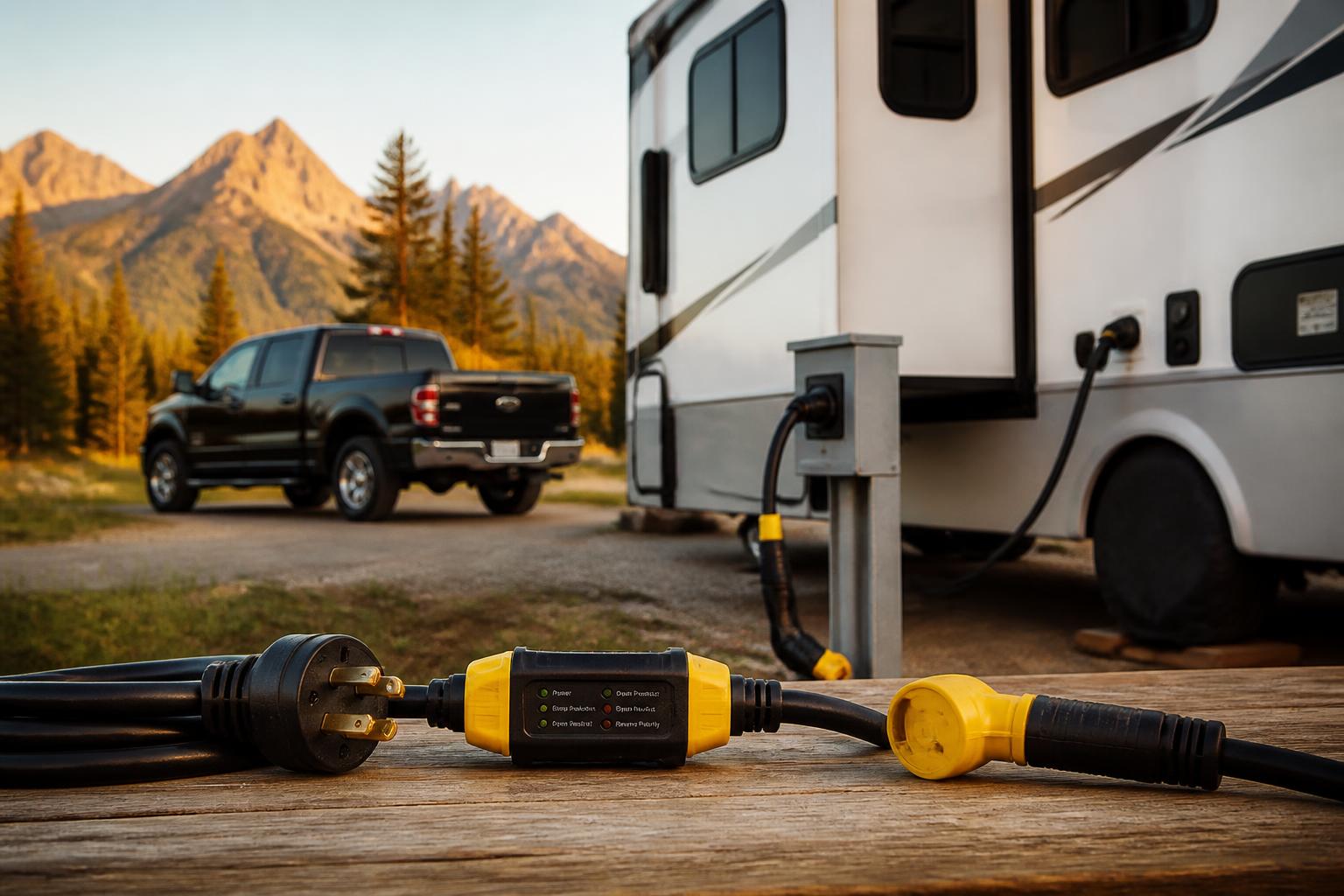
## The three features that actually matter
Most cheap surge protectors rely on a single green light that stays on even after the MOVs inside have been cooked. That’s the silent failure that fries your converter or TV. Here’s what to look for instead.
### Diagnostic display with error codes
A simple “protected” light tells you nothing useful. You need a digital readout that shows line voltage, amp draw, and specific error codes like open neutral (E2), reverse polarity (E5), or missing ground. The TOWTAMER units display those codes before you energize your rig, so you can fix the pedestal problem first.
### Jou
le rating that matches your exposure
Joule rating is the energy absorption capacity. For a 30‑amp RV parked mostly in well‑maintained parks, 1,500–2,000 joules is a floor. If you stay in older campgrounds or areas with summer thunderstorms, go higher. The TOWTAMER 15,000J (30‑amp) and 18,000J (50‑amp) give you real headroom. A higher rating also means the unit will survive more small surges before degrading.
### Weather resistance
Campground pedestals sit in the open. An IP68‑rated housing (like the TOWTAMER cover) keeps rain, sprinklers, and road spray out. Without that seal, moisture corrodes the internal circuitry within a season. If the product page doesn’t mention an IP rating, assume it’s not weatherproof.
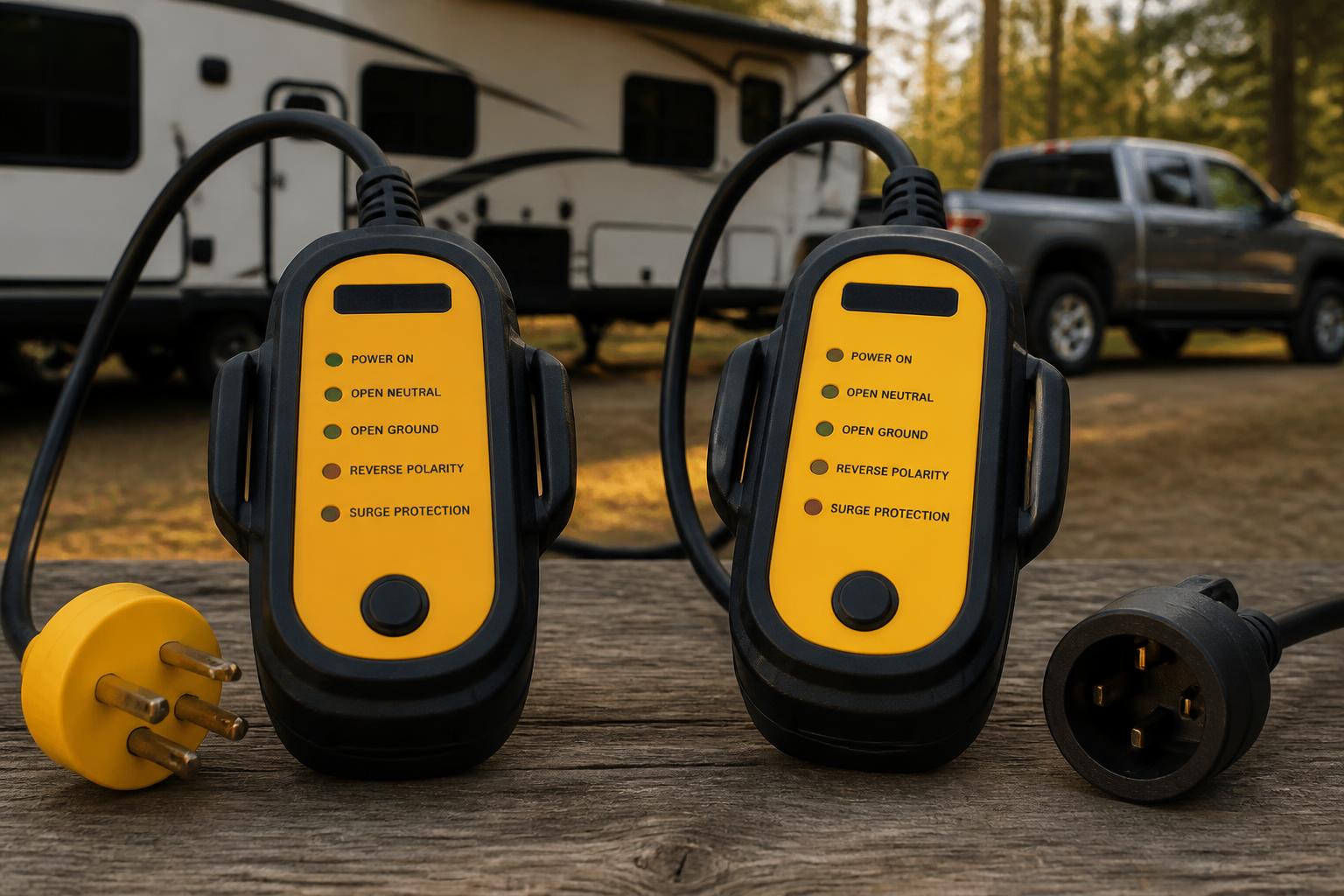
**Applicability boundary:** This advice applies when you plug into 120‑volt shore power at RV parks, campgrounds, or your driveway. If you exclusively boondock (no shore power connection) or run a 12‑volt‑only system, a surge protector does nothing for you. And if your RV has a combination inverter/charger with built‑in surge protection, you may not need an external unit—check your inverter manual first.
## Side‑by‑side: TOWTAMER surge protectors
| Product | Brand | Amp rating | Joule rating | Key features | Best for |
|———|——-|————|————–|————–|———-|
| [TOWTAMER 15,000J RV Surge Protector 30 Amp with LED Display](https://www.amazon.com/dp/B0DT3STQ68?tag=rvownerhelp-20&linkCode=ogi&th=1&psc=1) | TOWTAMER | 30‑amp | 15,000J | LED display, voltage monitoring, clear error codes, IP68 waterproof cover | 30‑amp travel trailers, pop‑ups, small fifth wheels |
| [TOWTAMER 18,000J RV Surge Protector 50 Amp with LED Display](https://www.amazon.com/dp/B0DYVCWGHG?tag=rvownerhelp-20&linkCode=ogi&th=1&psc=1) | TOWTAMER | 50‑amp | 18,000J | LED display, voltage monitoring, clear error codes, IP68 waterproof | 50‑amp motorhomes, large fifth wheels |
| [TOWTAMER 18,000J RV Surge Protector 50 Amp with LED Display](https://www.amazon.com/dp/B0FJ85V5X9?tag=rvownerhelp-20&linkCode=ogi&th=1&psc=1) | TOWTAMER | 50‑amp | 18,000J | LED display, voltage monitoring, clear error codes, IP68 waterproof | 50‑amp motorhomes, large fifth wheels |
**Top Pick: [TOWTAMER 15,000J RV Surge Protector 30 Amp with LED Display](https://www.amazon.com/dp/B0DT3STQ68?tag=rvownerhelp-20&linkCode=ogi&th=1&psc=1)** – If you own a 30‑amp RV, this unit gives you the joule reserve to handle repeated surges, a display that catches pedestal wiring faults, and a waterproof cover that survives a season of rain. It’s not the cheapest, but it’s the most likely to actually protect your $2,000 converter.
## Best‑fit picks by use case
**30‑amp owner (most travel trailers, pop‑ups, small fifth wheels):** The TOWTAMER 15,000J unit. Plug it in, glance at the display, and you’ll know the pedestal is safe before you connect the RV. The IP68 cover means you don’t have to unplug it during a rainstorm.


**50‑amp owner (large motorhomes, big fifth wheels with dual A/C):** The TOWTAMER 18,000J 50‑amp unit. Higher current capacity, same diagnostic features, and enough joule headroom to protect the whole coach. Note: the 50‑amp version is heavier and longer; measure your shore‑power cord storage compartment before ordering.
**Budget‑conscious or seasonal camper:** If you only plug in a few weekends a year, a $40 basic surge protector with a simple “good” light might seem enough. But that unit probably lacks error codes and weather sealing, and it likely has a low joule rating (under 1,000J). One hit from a lightning surge on a power line and it’s dead, and you won’t know until something breaks. The TOWTAMER line is the next step up without jumping to $200 EMS units.
## Trade‑offs to know
**Portable vs. hardwired** – These TOWTAMER units are portable (plug‑in). Portable means you can check the pedestal before connecting, and you can move it between RVs if you upgrade. But portable units are easier to lose, steal, or break off. Hardwired protectors are permanent but require installation and are harder to replace after a surge.
**No low‑voltage cutoff** – This is the biggest limitation. A surge protector only handles voltage spikes (over 165V or so). It does not protect against sustained brownouts or voltage sag below 104V, which can burn out an A/C compressor or a microwave. An EMS (energy management system) shuts off power at both low and high voltage thresholds. If you camp in older parks with known voltage drop problems, consider an EMS that also includes surge protection, such as the Progressive Industries EMS‑HW30C. The TOWTAMER display will show the real‑time voltage, so you can decide to unplug manually, but it won’t do it for you.
**Practical implication:** If you buy a TOWTAMER unit, you still need to monitor the display regularly. A reading below 105V means you should unplug, not just trust the surge protector.
**Silent death and replacement** – MOVs degrade with every surge. A unit that survived three small surges may no longer protect against the fourth. The TOWTAMER display includes a “MOV status” indicator: if it shows “Good,” the MOVs are intact. If it ever blinks “MOV” or shows a fault code you can’t clear, replace the unit immediately. Do not assume it’s still working because the lights are on.
## How to verify your surge protector is actually working (checklist flow)
Run these checks the first time you use it, and again after any known electrical event (nearby lightning, power outage at the park):
1. **Plug into a known good 120V outlet** (not the RV). The display should light up and show voltage between 108V–132V. If the display stays dark, the unit is dead out of the box or the outlet is bad.
2. **Press the test button** (if equipped) or read the initial error code. For TOWTAMER, look for a steady voltage reading and no flashing codes. Flashing “E2” means open ground at the pedestal – that’s the pedestal, not the protector. Flashing “E5” means reverse polarity. Both mean you should not connect your RV until the pedestal is fixed.
3. **Check the MOV status**. The display should show a “MOV Good” indication (often a green icon or the word “Good”). If it shows “Replace” or a blinking icon, the MOVs are degraded. Replace the unit even if it still passes power.
4. **Feel the case** after 30 minutes of normal RV load (e.g., A/C and fridge running). It should be warm but not hot. Above 110°F is a failure sign; unplug and replace.
5. **Stop / escalate signal:** If the internal breaker trips repeatedly, or if the display shows fault codes that won’t clear after resetting the pedestal breaker, the surge protector itself may be failing. Swap it before your next trip.
## Related questions
**Can I use a 50‑amp surge protector on a 30‑amp RV?**
Only with a dogbone adapter (30‑amp male to 50‑amp female), but it’s not recommended. The unit is designed for higher current and may not detect faults correctly at lower current. Use the correct amperage for your RV.
**How often should I replace my RV surge protector?**
After any major surge (lightning within a mile, utility spike), replace immediately. Otherwise, inspect annually and replace if the MOV status shows degraded. Most quality units last 3–5 years with normal cycling.
**Do I still need an EMS if I have a surge protector?**
Yes, if you park in older parks or areas with frequent voltage drops. An EMS protects against sustained undervoltage and overvoltage, which a surge protector cannot. For full protection, look for an EMS model that also includes surge protection.
## Explore This Topic
– Back to [RV Electrical & Solar](/rv-electrical-solar-hub/)
Related guides in this cluster:
– [Happier Camper Buying Guide: Features to Consider](/happier-camper/)
– [RV Water Heater Buying Guide: Features to Consider](/rv-water-heater/)
– [Camper Toilet Buying Guide: Features to Consider](/camper-toilet/)
– [Choosing the Right RV Generator: A Buyer’s Guide](/rv-generator/)

Practical RV guides from an experienced owner. Motorhomes, travel trailers, truck campers — we have owned them, maintained them, and written the guides we wish we had found when we started.