How to Winterize a Camper
# How to Winterize a Camper
The single most expensive mistake camper owners make during winterization is pouring antifreeze directly into the hot water heater. That six-gallon tank can hold up to $50 worth of antifreeze, and worse, the chemical taste will linger in your plumbing for months. The right approach: drain the water heater first, then bypass it so antifreeze never enters that tank. Here’s the full process to protect your camper from freeze damage, step by step.
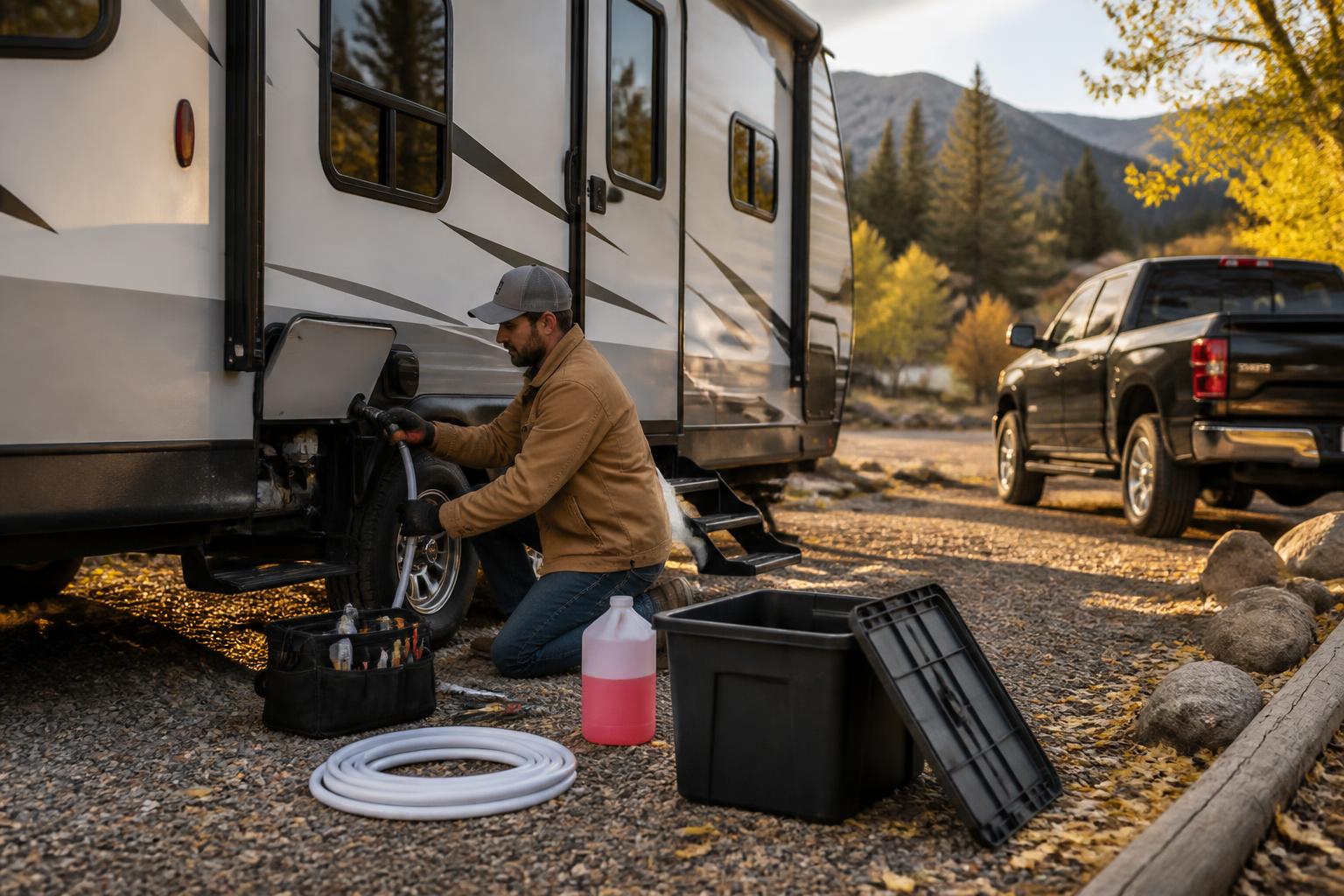
## Before You Start: Tools and Prep
Gather these supplies before working on anything:
– **RV-specific non-toxic antifreeze** – about 1 gallon per 20 feet of camper length, but buy 2–3 gallons to be safe
– **Water heater bypass kit** – if your camper doesn’t already have one installed (most built after 2005 do)
– **Air compressor with blow-out adapter** – optional but recommended for fully clearing lines
– **Adjustable wrench or socket set** – for water heater drain plug and anode rod
– **Screwdriver** – for accessing interior panels
– **Bucket or drain pan** – for collecting water from low-point drains
**Estimated time:** 1–2 hours for a basic camper, up to 3 hours if you’re chasing stubborn drain valves.

**Safety stop:** If your camper has a propane water heater, turn off the propane supply at the tank and kill the 12V power to the water heater before draining. Electric water heaters must be disconnected from shore power or the breaker turned off. Never drain a hot water heater – let it cool first.
## Step 1: Drain Every Water Line
Start with the water heater because it holds the most water and needs to be empty before antifreeze enters your system.
### Water Heater Drain
Locate the exterior access panel for your water heater. Remove the drain plug or anode rod (if equipped) and let the tank drain completely. Open the pressure relief valve to let air in, which speeds up drainage.
**Model-year note:** Some newer campers use a low-point drain plug on the water heater itself rather than an exterior access. Check your manual if you can’t find the drain.
### Low-Point Drains
Find the low-point drain valves – usually two clearly marked PEX lines (red for hot, blue for cold) under the camper or inside a basement compartment. Open both fully. If you see only caps instead of valves, unscrew them carefully and catch any water with your bucket.

### Fresh, Grey, and Black Tanks
– **Fresh tank:** Open the drain valve completely. Leave it open during the rest of the process so any residual water can escape.
– **Grey and black tanks:** Dump these at a proper waste station first. After dumping, close the valves, add a few gallons of water, flush them, and dump again. This step prevents frozen sludge in the holding tanks.
## Step 2: Bypass the Water Heater
This is where the counter-intuitive part comes in. You want antifreeze in your pipes, but **not** in your water heater.
Find the water heater bypass valves – usually three valves near the back of the water heater or behind an interior access panel. In a standard three-valve system:
1. Close the cold water inlet valve (feeding the water heater).
2. Close the hot water outlet valve (leaving the water heater).
3. Open the bypass valve (connects incoming cold water directly to the hot water line, skipping the water heater).
If your camper uses a single-valve bypass switch (common on Suburban models), simply turn it to the “Bypass” or “Winterize” position.
Don’t have a bypass? Install one now or use the air compressor blow-out method (explained below) – but skipping this step means you’ll dump gallons of expensive antifreeze into the water heater tank with no way to easily flush it out.
## Step 3: Pump Antifreeze into the System
Connect a short length of drinking-water-safe hose to the inlet side of your water pump. You’ll usually find a winterization port near the pump area – it looks like a capped fitting with a short hose attached. Drop the free end of the hose into your antifreeze jug.
### Running the Pump
Turn on the water pump switch. Open the **cold** side of the kitchen faucet first. When pink antifreeze flows steadily from the faucet, close it. Repeat for the hot side kitchen faucet, then move to the bathroom sink (cold then hot), then the shower (cold then hot), and finally the outdoor shower if equipped.
**Common friction point:** The water pump will run dry or suck air once the jug is empty, causing it to prime poorly. Pour antifreeze slowly or add a second jug before the first runs out. If the pump starts chattering, turn it off immediately and add more antifreeze.
### Flush the Toilet
Pedal-flush toilets: Press the pedal halfway to let antifreeze into the bowl, then flush fully to push antifreeze through the valve. Thetford and Dometic models both work the same way here – just ensure you see pink water cycling through.
### Pour Antifreeze Down Drains
Pour about one cup of RV antifreeze into each sink drain, the shower drain, and the toilet bowl. This protects the P-traps, which hold standing water and can freeze even after the lines are winterized.
## Step 4: Exterior and Other Vulnerable Points
– **Outside shower:** Run antifreeze through the hot and cold sides until pink flows.
– **Washing machine (if equipped):** Most campers have a winterization valve for the washer lines – run the self-cleaning cycle with antifreeze in the supply tub.
– **Ice maker line:** Disconnect the water line at the valve and blow it out with compressed air (antifreeze won’t reach the full line length through the pump).
– **Sewer line:** The flexible hose isn’t vulnerable, but pour a cup of antifreeze into the black tank after dumping to protect the tank valve seal.
## When the Process Goes Wrong: Troubleshooting
One pattern that catches even experienced owners: the hot water side of the bathroom sink refuses to run pink. The likely cause? The hot water line between the water heater and that sink wasn’t drained, so the antifreeze pushes against a plug of cold water. Open the shower hot side first to create a path, then the sink hot should flow.
Another recurring mistake: using air blow-out only and skipping P-traps. Even with dry lines, the P-traps still hold standing water. Pouring antifreeze into each drain is non-negotiable – a frozen P-trap can crack the plumbing under your sink.
| Problem | Likely Cause | Fix |
|———|————–|—–|
| Pump won’t pull antifreeze | Air lock in pump line | Lift the suction hose above the jug to burp air, or prime the pump by pouring a few ounces of antifreeze directly into the pump head |
| Antifreeze flows from one faucet but not another | Closed valve in a branch line | Trace the water line to the faucet and check for a shut-off valve (common under sinks in older campers) |
| Pink water comes out clear after 5 minutes | Bypass valve is open, sending water through the water heater | Confirm the water heater is in bypass mode – if clear water keeps flowing, you’re filling the water heater tank |
| Water in the fresh tank won’t drain | Clogged tank drain valve | Tap the valve body with a wrench handle gently, or use compressed air at the fresh tank fill port to break the clog |
## Unfreeze Check: Did It Work?
After you finish every step, open a faucet and confirm pink antifreeze flows freely. Walk around the camper and listen for gurgling or dripping from water lines – any sound suggests trapped water, which will freeze and crack a pipe overnight.
**Verification step:** Turn on the water pump and open each fixture one by one. If any fixture sputters or runs clear, you have trapped water in that line. Re-run the pump on that fixture until steady pink appears.
**Stop / escalate threshold:** If you discover standing water in places it shouldn’t be, or if you can’t get antifreeze to flow to a particular faucet after repeated attempts, stop and consult a certified RV technician. Freeze damage is expensive – better to pay for a service call than a new water system. Also, if you see water spots on interior walls, bulging on PEX lines, rust around water heater connections, or a musty smell in the bathroom or kitchen area, you already have a freeze-related leak and need a repair before winterizing.
## Winterization Guarantee Checklist
Use this pass/fail check after you think you’re done. Every item must pass before you leave the camper for the season.
– **Water heater bypass valve** is engaged – confirm no antifreeze entered the tank.
– **All six faucet functions** flow pink (kitchen hot/cold, bath hot/cold, shower hot/cold).
– **Toilet flushes pink** – both bowl rinse and flush valve.
– **All P-traps** have at least one cup of straight antifreeze in them (sinks, shower, tub).
– **Fresh tank drain is open** and empty – no standing water in the holding tank.
## FAQ
**Should I blow out the lines with air or use antifreeze?**
Both work. Air blow-out is faster and cheaper (no antifreeze cost) but leaves the lines dry, which can still trap small amounts of moisture. Antifreeze provides a chemical barrier that prevents rust and seal drying. Most RV techs recommend antifreeze for long-term storage (3+ months) and air for short-term winter protection.
**How much antifreeze do I actually need?**
A 20-foot travel trailer typically uses 1–2 gallons. A 30+ foot fifth wheel with two bathrooms uses 3–4 gallons. Buy one extra gallon to be safe – you can always return unopened jugs.
## Explore This Topic
– Back to [Maintenance & Repair](/maintenance-repair-hub/)
Related guides in this cluster:
– [Slide in Camper: Complete Buyer’s Guide](/slide-in-camper/)
– [Scamp Camper: A Complete Overview](/scamp-camper/)
– [The Ultimate Guide to Coleman Camper](/coleman-camper/)
– [RV Antifreeze Problems? What to Check First](/rv-antifreeze/)

Practical RV guides from an experienced owner. Motorhomes, travel trailers, truck campers — we have owned them, maintained them, and written the guides we wish we had found when we started.