RV Hot Water Heater: What to Know Before You Buy
If you’re shopping for an RV water heater, skip the flashy marketing and focus on three things first: how you camp, what power you have, and the physical space you’re working with. The wrong heater can turn a shower into a timed scramble or leave you with no hot water in the mountains. This guide walks you through the real trade-offs so you don’t waste money on a bad fit.


Tank vs. Tankless: Which One Actually Fits Your Camping Style?
The tank vs. tankless debate is the first fork in the road. Both work—but for very different owners.
Tank (Storage) Heaters
Most RVs come with a 6- or 10-gallon tank heater. They store pre-heated water on demand.
Pros:
- Reliable hot water for short showers (6 gallons gives about 6–8 minutes of shower time)
- Works well at any altitude
- Simple repair and parts availability
Cons:
- Recovery time: after one shower, wait 15–30 minutes for the next
- Weight: a full 6-gallon tank adds about 55 lbs
- Uses propane even when you’re not using hot water (pilot or auto-ignition cycle)
Best for: Weekend campers, families with access to shore power, anyone who camps under 5,000 ft elevation regularly.
Tankless (On-Demand) Heaters
Tankless models heat water instantly as it flows through. They’ve become trendy, but they’re not always the upgrade people expect.
Pros:
- Endless hot water—as long as propane and battery last
- Lighter and smaller than a tank unit
- No standby heat loss
Cons:
- Cold water sandwich: a burst of cold between on/off cycles
- Struggles at low flow (you need ~0.5 GPM to kick on)
- Performance drops at high altitude—some models spec’d to 6,000 ft, others to 9,800 ft
- Requires a strong propane regulator and sometimes an electric bypass for recirculation
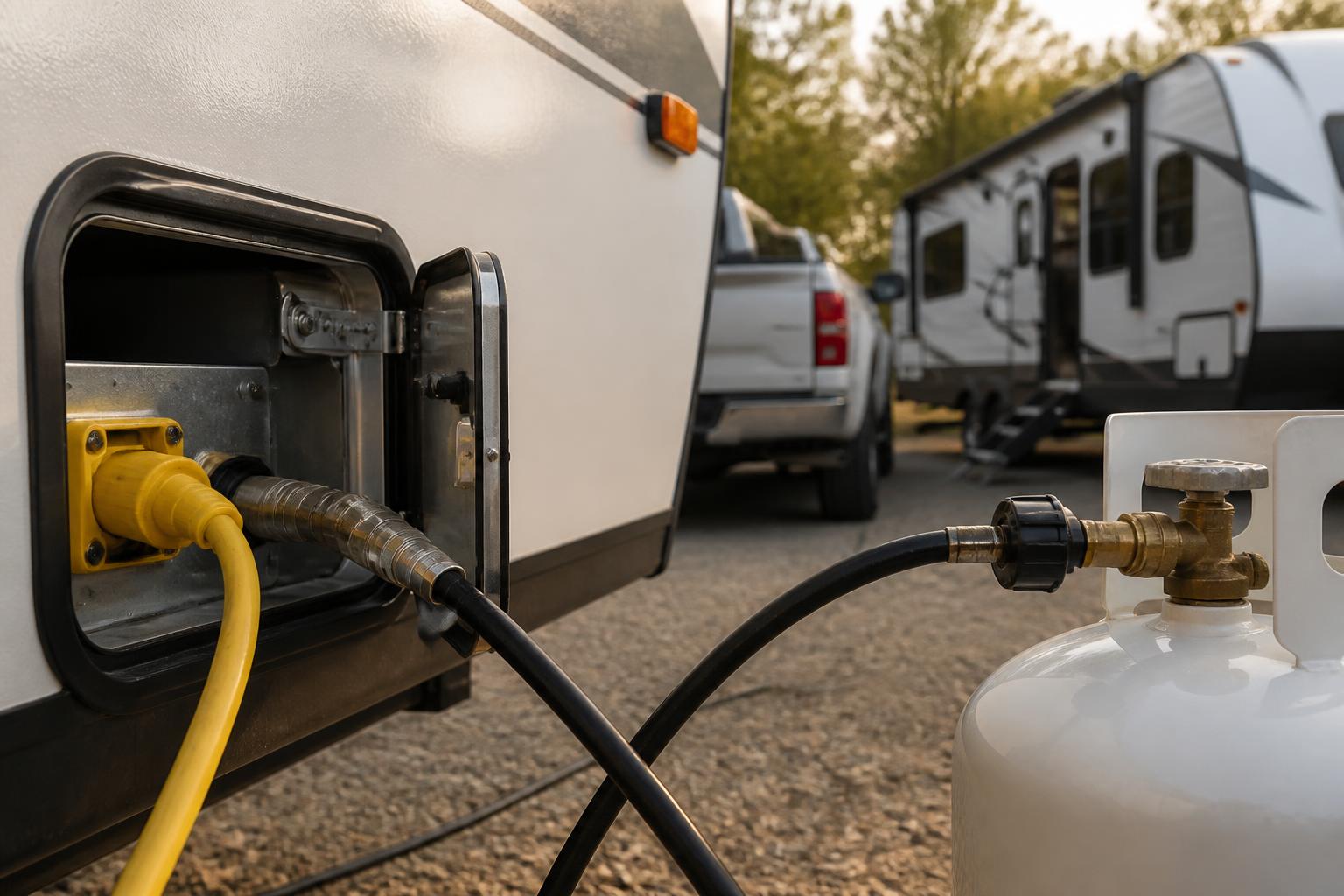

Best for: Boondockers, full-timers, anyone who showers without hookups for more than 3 days at a time.
Gas, Electric, or Both? The Power Source Decision
Most RVs run on propane for the water heater, but the power source affects your options.
Propane-Only
Common in older rigs. Simple, works off-grid, but guzzles propane in cold weather. If you dry camp in winter, you’ll go through a 20-lb tank in about 3–4 days just on hot water use.
Electric-Only
Rare in production RVs, but some aftermarket units exist. Only useful if you have reliable shore power (30-amp or 50-amp). Zero propane use, but no hot water when unplugged.
Hybrid (Gas/Electric)
The most flexible—and what most modern RVs use. You can run on electric (when plugged in) for free hot water, or switch to propane when dry camping. If you’re replacing, this is the typical “safe” choice unless you have a very specific boondocking-only need.
The One Decision Criterion That Flips the Recommendation
The single most important question: How many consecutive days do you go without hookups?


- 3+ days without shore power, and you have two or more people: Buy a propane tankless heater. A 6-gallon tank means one short shower per heat-up, and repeated reheats waste propane. A tankless gives you continuous hot water without the recovery wait, and uses roughly the same propane per shower.
- 2 days or less, or you’re always at full-hookup parks: Stick with a 6-gallon gas/electric hybrid tank. Cheaper to buy, easier to install, and the electric element saves propane when you’re plugged in. Tankless is overkill and introduces cold-water-sandwich annoyances for short trips.
What this means for your next purchase: If your typical trip involves two people sharing a shower schedule, a tank heater forces a choreography of waiting. The tankless eliminates that friction but adds installation complexity and a cold-water-sandwich that lasts about 10–15 seconds each time you turn the water off and back on. For solo campers or couples who don’t mind staggering showers, the tank unit remains the more practical, lower-cost bet.
The Hidden Trade-Off: Freeze Risk with Tankless
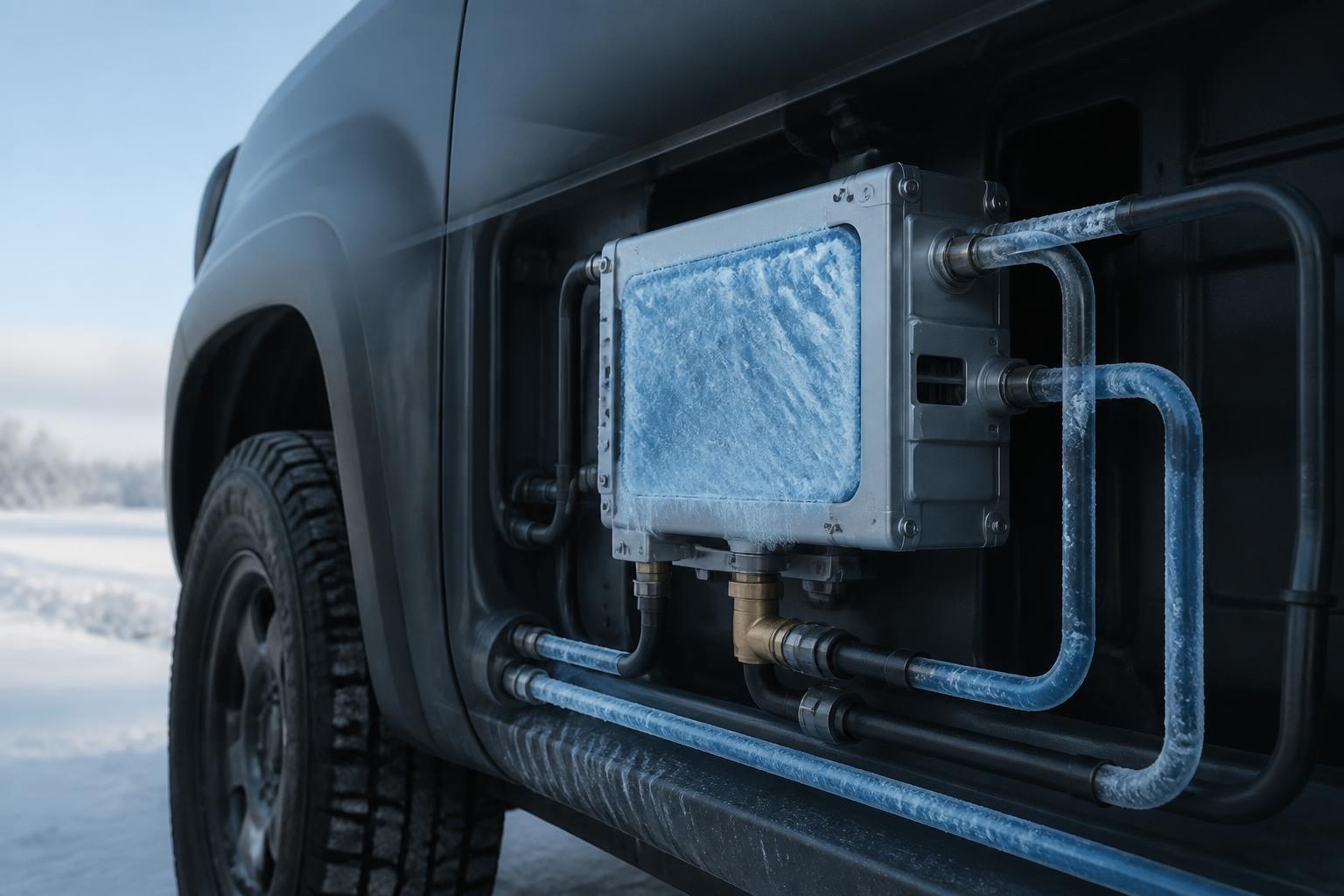
Here’s a mismatch most sales pages don’t mention: tankless water heaters freeze faster than tank units. The heat exchanger in a tankless has very little thermal mass—it can crack when internal water freezes, even if you’ve drained the system. Tank heaters hold 6–10 gallons of water that takes longer to freeze, and they’re often located in a heated compartment.
If you camp in sub-freezing temperatures regularly, a tankless demands aggressive winterization: blowing out lines with compressed air, running RV antifreeze through the heater (check the manual—some manufacturers forbid it), or using a heated pad. A tank heater is more forgiving. Don’t let the “endless hot water” pitch override cold-weather reality.
What to Check Before You Buy
Use this quick fit/no-fit checklist before clicking “add to cart”:
- [ ] Cutout dimensions – Measure the existing opening height, width, and depth. Aftermarket units are not always a direct swap. For example, a Suburban SW6DE (2010–2015) uses a different bolt pattern than the SW6D (2016+).
- [ ] Gas line size – Pull the access panel and look at the line feeding the current heater. Tankless models need 3/8″ line minimum. If you see 1/4″ copper, you’ll have to run new pipe. Verification step: Measure the outer diameter of the copper line. 3/8″ OD is actually 1/4″ ID—common confusion. Use a caliper or check the fitting stamp.
- [ ] Propane regulator capacity – Stock RV regulators often output 11″ WC. Tankless heaters need 12–14″ WC under load. Check the regulator model number online. If it’s a standard Marshall MEGR-250, you’ll want to upgrade to a MEGR-253 or similar high-flow unit.
- [ ] Altitude rating – If you camp above 5,000 ft regularly, verify the heater’s certified altitude limit. Many cheap units derate above 6,000 ft (flame instability, reduced output). Look for “high altitude rated” or a specific elevation in the specs.
- [ ] Bypass valves – Make sure the new heater supports winterization bypass valves. If it doesn’t, you’ll have to add them or rely on compressed air. Some aftermarket tankless units come with a bypass kit; others require a separate purchase.
- [ ] Warranty and parts availability – Propane tankless units from no‑name brands often have zero support. Stick with brands Suburban, Dometic, Girard, or Gidrox for a realistic shot at replacement parts.
3 Expert Tips (and the Pitfalls to Avoid)
Tip 1 – Measure twice, cut once
Pull the old unit and measure the raw cutout – not the trim ring. Common mistake: assuming all 6-gallon Suburban replacements have the same bolt pattern. The 2010–2015 Suburban SW6DE uses a different footprint than the 2016+ SW6D. Always use the manufacturer’s template. If you’re switching from tank to tankless, expect to enlarge the opening by about 0.5–1 inch in one direction.
Tip 2 – Add a recirculation loop for tankless
If your RV has long hot water lines (30+ feet from heater to bathroom), you’ll waste gallons waiting for hot water. Install a 12V recirculation pump at the far end with a push‑button switch. Common mistake: skipping this and blaming the heater for “slow hot water.” Even a well-functioning tankless takes 10–20 seconds to push hot water through 30 feet of line.
Tip 3 – Upgrade your propane regulator
Many RVs come with a 2‑stage regulator that outputs just 11″ WC. Tankless heaters need 12–14″ WC under load. Install a high‑flow model (Marshall Excelsior MEGR‑253 is common). Common mistake: running a tankless on the stock regulator – you’ll get flame pulsing and inconsistent temperatures. Verify with a manometer if you’re unsure.
Tankless Water Heater Comparison
Here are three tankless units from Gidrox, all essentially the same heater in different trim colors:
| Model | Key Specs | Best For |
|---|---|---|
| Gidrox Bright White | 12V DC propane, 9,800 ft altitude rated, CSA certified, digital display | High‑altitude boondocking, standard white RV siding |
| Gidrox True White | Same specs as above, true white paint | Matching specific color schemes |
| Gidrox Pearl White | Same specs as above, pearl white finish | Aesthetic preference |
All three are functionally identical: endless hot water, high altitude ready up to 9,800 ft, and CSA certified for RV use.
Top Pick: RV Tankless Water Heater – Endless Hot Water for Camping & High Altitude, 12V DC Propane Gas, High Altitude Ready (9,800ft), CSA Certified with Digital Display for Travel Trailers Bright White – because the bright white color is the most common RV exterior shade, and the specs cover 99% of U.S. camping altitudes.
A Word on Installation Reality
If you’re replacing an existing tank heater with a tankless, expect a half‑day to full‑day job. You’ll need to run a larger gas line, add a new 12V circuit (if the old one was just a direct ignition wire), and possibly enlarge the cutout. A professional RV shop will charge $400–$800 for labor alone.
If you’re ordering a new RV and choosing the water heater as an option, the factory‑installed tankless is usually a better value than aftermarket retrofit. You also get proper gas sizing from the start.
Ultimately, match the heater to your camping style, not to a sales pitch, and you’ll have hot water that works where it matters most.

Practical RV guides from an experienced owner. Motorhomes, travel trailers, truck campers — we have owned them, maintained them, and written the guides we wish we had found when we started.