Understanding Grand Design Reflection: A Practical Guide
# Understanding Grand Design Reflection: A Practical Guide
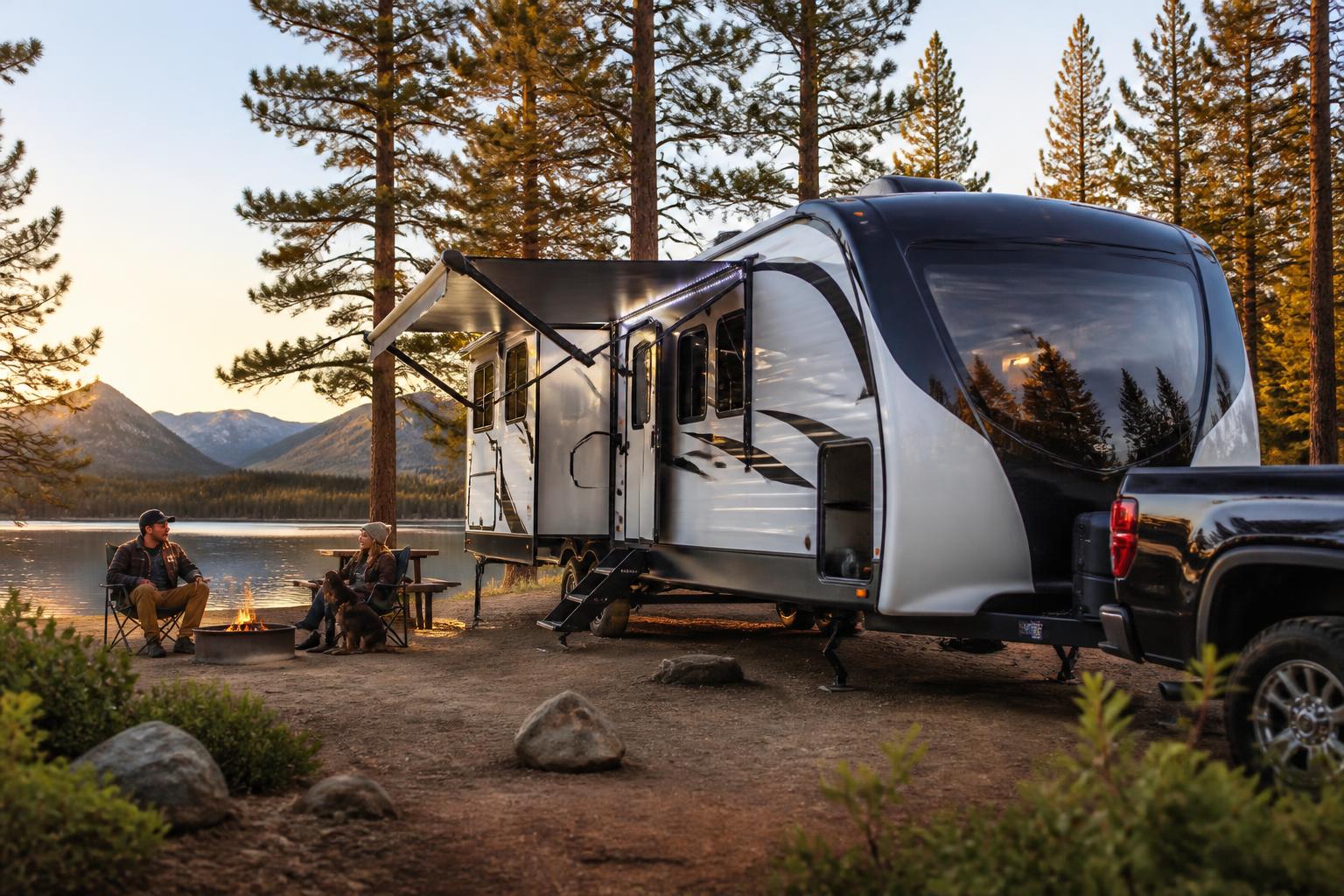
Grand Design Reflection refers to the radiant barrier system built into many Grand Design RVs—a reflective foil layer in the roof cavity that blocks up to 97% of infrared heat before it reaches your ceiling. Most Reflection, Transcend, and Solitude models come with this factory barrier, but sidewalls, windows, and the underbelly often lack dedicated radiant protection. This guide helps you evaluate what your unit already has, decide whether to add more based on your camping style, and install upgrades safely.

## What it means
Radiant heat moves differently than conductive heat. On a 95 °F day, the sun pounds your RV roof and sidewalls, radiating energy through the skin and into the living space. A radiant barrier—a thin sheet of aluminum foil laminated to a bubble-wrap or fiberglass substrate—reflects that infrared radiation back out, keeping the interior surfaces cooler.
[Grand Design](/grand-design-rv/) installs a multi-layer reflective foil in the roof cavity of most current models. The factory spec targets an **emissivity rating of 0.03–0.05** (lower is better). That foil must face an air gap (typically 1–2 inches between the roof skin and the ceiling panel) to work. If the foil is pressed directly against the roof deck, it conducts heat inward instead of reflecting it.

**Where the factory system falls short:** Sidewalls get fiberglass or foam insulation but rarely a dedicated radiant layer. Windows are single-pane or dual-pane without low-E coating—unless you ordered the optional upgrade. Underbelly wraps are vapor barriers first, not radiant barriers. So the roof is well-covered, but the rest of the RV still soaks up heat.
## How it works
Grand Design’s roof-reflective assembly has three layers:
– **Outer membrane** (TPO or fiberglass) – stops water, but does not block IR radiation.

– **Radiant foil** – stapled to rafters, separated from the roof skin by a 1–2 inch air gap.
– **Interior ceiling** (luan plywood or vinyl panel) – the foil cuts the temperature of that interior panel by 15–25 °F on a hot day, based on owner measurements.
The critical detail: that air gap. If you ever reseal the roof or install a vent and accidentally compress the foil against the skin, you kill the reflection effect. Also, the factory foil is only on the roof, not the walls. That means sidewall heat gain is still significant, especially on slides exposed to direct sun.
## Decision checklist: Which reflection upgrade fits your RV
Answer these five pass/fail questions based on your climate, usage, and current setup. Each one points to a specific action or tells you to skip it.
1. **Do you boondock in full sun for more than three days at a time?**
– Pass: Add a white elastomeric roof coating with solar reflectance index (SRI) ≥80 on top of your factory foil. This adds ~10% more reflectivity and drops roof skin temperature by 20–30 °F.
– Fail: Factory roof barrier alone is probably enough for short trips or shaded sites.
2. **Are your windows single-pane glass?**
– Pass: Install static-cling reflective film (e.g., Gila Platinum) on the inside of tall vertical windows that get afternoon sun. Cuts solar heat gain by about 50%, but reduces visibility—remove in winter if you want passive solar warmth.
– Fail: Dual-pane windows already block more conductive heat; film is optional but still helps.
3. **Do you camp regularly above 95 °F?**
– Pass: Add radiant barrier to accessible sidewalls—behind cabinets, under sinks, behind the refrigerator. Use self-adhesive double-bubble foil (R-4.2 when facing an air gap) and staple or tape to studs, keeping a ½” air gap from the interior panel.
– Fail: Roof reflection alone is adequate for moderate climates.
4. **Is your underbelly exposed to direct sun (high-clearance fifth wheel on gravel)?**
– Pass: Apply a radiant barrier to the underbelly *only* if you also have a factory vapor barrier layer. The foil can trap moisture if placed directly against the underbelly pan without an air gap—that leads to corrosion and mold.
– Fail: Factory underbelly wrap is sufficient for most paved sites.
5. **Do you run your air conditioner longer than four hours continuously on hot days?**
– Pass: Install a dedicated reflective windshield cover (for motorhomes) or a slide-out window cover. This alone can reduce AC runtime by 20–30%.
– Fail: Short AC cycles may not justify the effort.
Each “Pass” means the upgrade is worth your time and money. Each “Fail” means save your effort for something else.
## Practical steps to improve Grand Design reflection
If you decide to add or upgrade reflective protection, follow this sequence. Each step builds on the previous one, and there’s a clear stopping point.
### Step 1: Verify your factory roof barrier
Pop a ceiling vent trim ring loose or look through a light fixture hole—search for a shiny foil layer above the ceiling panel. If you see one, your roof is already covered. If not (early model or lower trim), consider a full roof radiant barrier install from a dealer. DIY roof penetrations can void your structural warranty.
### Step 2: Add reflective window film to side windows
– **Which windows:** Only tall vertical windows that get direct afternoon sun (living area, bedroom slides).
– **Product:** Static-cling film rated for UV block >90% and IR rejection >70%. Avoid adhesive films unless the manufacturer specifically says they won’t damage window seal gaskets.
– **Install:** Clean window, cut film 1/8” smaller than glass, spray soapy water, apply, squeegee. Let cure 24 hours before rolling slide-outs.
– **Checkpoint:** After 24 hours, check edges for peeling. If curling, the film is too tight or the window wasn’t clean enough—replace if needed.
### Step 3: Install radiant barrier on accessible interior walls
– **Where to apply:** Inside cabinets, behind refrigerator (remove lower vent cover), under sinks, behind entertainment center—anywhere with bare wallboard and no insulation behind.
– **Material:** 2-ft-wide roll of double-bubble reflective foil. Use foil tape on seams.
– **Action:** Cut panels to fit, staple or tape to wall studs, leaving a ½” air gap from the interior panel. Do not compress the bubble layer.
– **Failure mode to watch for:** If you staple the foil tight against the wall panel with no air gap, it becomes a heat conductor, not a reflector—you’ll actually make the wall hotter. Always leave that gap.
### Step 4: Apply roof coating (optional for extreme heat)
Only do this after Step 1 is confirmed. Use a white acrylic elastomeric coating with SRI ≥80. Brush or roll on, double-coat over factory TPO seams. This adds ~10% reflectivity and drops roof skin temperature by 20–30 °F.
### Success check
On a sunny 90 °F day, measure interior ceiling temperature with an IR thermometer.
– Factory-only: typically 85–95 °F.
– After upgrades: should be below 80 °F.
Also check AC runtime: aim for at least 15% reduction in time to reach set temperature from a 95 °F interior start.
**Stop and escalate:** If after completing all steps you still measure ceiling temps above 90 °F on a 90 °F day, or if you see condensation forming on interior walls or ceiling, stop. You may have an air gap problem, a moisture-trapping issue, or a larger insulation deficiency. Do not add more foil—that can worsen condensation. Contact a certified RV technician to inspect the wall cavities and roof assembly. Also, if you ever smell propane or hear hissing near any gas appliance while working in cabinets, stop immediately, turn off the gas at the tank, and call a professional.
## Related questions
**Will adding a radiant barrier void my Grand Design warranty?**
Adding non-penetrating reflective film to windows or taping foil to interior walls usually does not void the structural warranty. However, drilling, stapling into the roof membrane, or cutting into the roof skin will. Check your owner’s manual for modification restrictions.
**Can I use standard home insulation instead of reflective foil?**
Fiberglass batts slow conductive heat but do not reflect radiant heat. In an RV with thin walls, fiberglass alone is less effective than even a single-layer radiant barrier. Best practice is to use both: reflective foil facing an air gap plus fiberglass behind.
**Does Grand Design factory reflection work in winter?**
Yes, but only if the foil faces an interior air gap. In heating mode, it reflects indoor heat back into the living space, reducing furnace runtime. If the foil is installed facing the roof skin (no interior air gap), it provides little winter benefit. Check which side the foil faces in your unit.
**How often do I need to replace window film?**
Static-cling film lasts 2–4 seasons if you remove it during storage or winter. UV exposure makes it brittle. Replace when you see curling edges or reduced clarity.
## Explore This Topic
– Back to [RV HVAC & Appliances](/rv-hvac-appliances-hub/)
Related guides in this cluster:
– [Understanding Lazydays RV: A Practical Guide](/lazydays-rv/)
– [Understanding Winnebago Solis: A Practical Guide](/winnebago-solis/)
– [Grand Design RV Explained: What You Need to Know](/grand-design-rv/)
– [Understanding F 150 Towing Capacity: A Practical Guide](/f-150-towing-capacity/)

Practical RV guides from an experienced owner. Motorhomes, travel trailers, truck campers — we have owned them, maintained them, and written the guides we wish we had found when we started.