Malibu Beach RV Park: A Complete Overview
Malibu Beach RV Park is a small, basic campground on Pacific Coast Highway (PCH) in Malibu, California. It’s the closest legal beachside RV spot to Los Angeles, but it’s not a resort. The lots are tight, the traffic noise is constant, and you’ll pay $90–$130/night for the privilege. If your rig is under 30 feet and you want beach access over space and quiet, it works. If you expect full hookups, slide-out room, or a peaceful retreat, skip it. Book 60–90 days ahead for summer weekends—they sell out in hours.
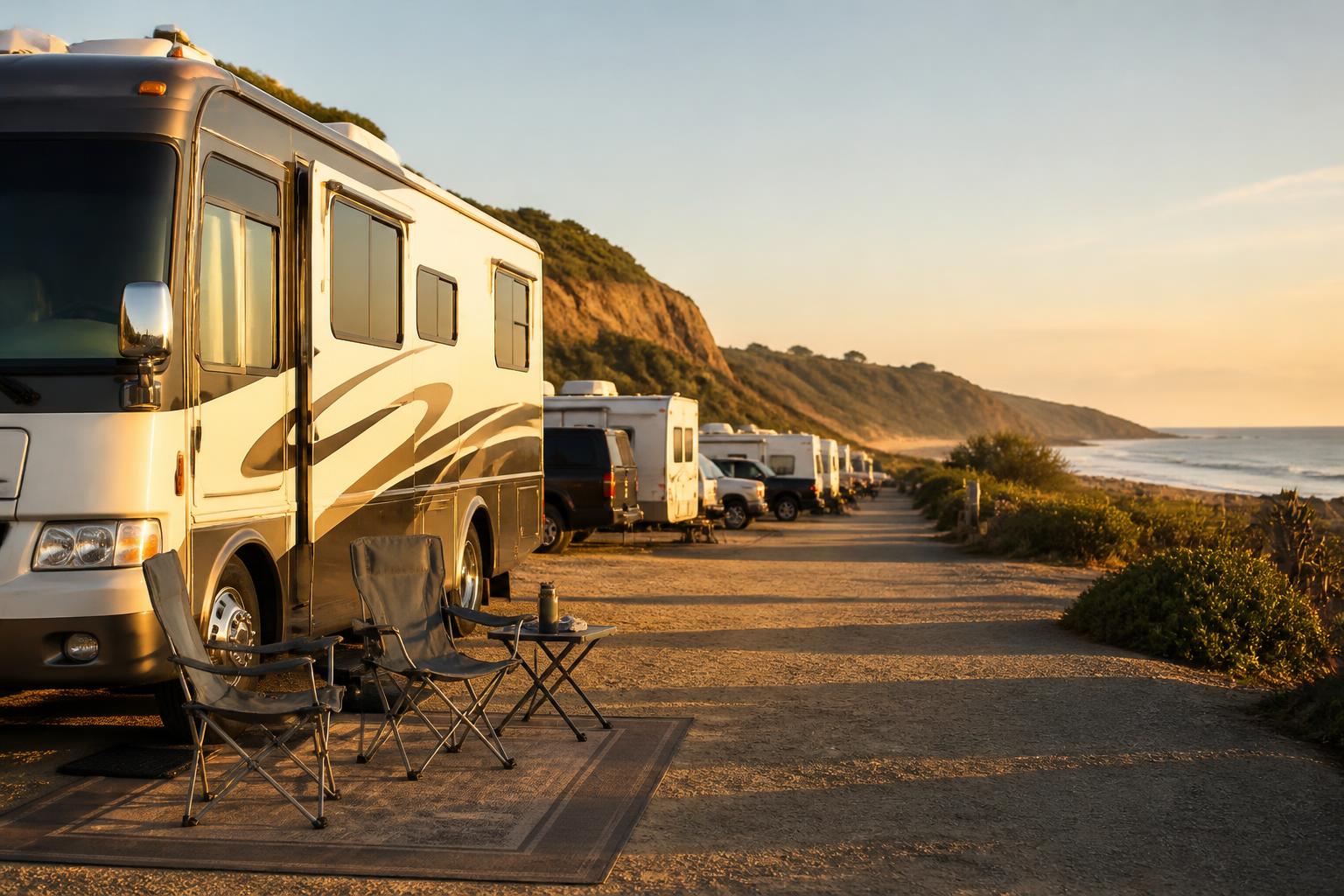

The number one mistake: treating it like a beach resort
The most common failure mode is arriving with a 35-foot or longer rig expecting oceanfront views, quiet evenings, and generous spacing. You’ll get a back-in pad next to the highway, a neighbor’s slide-out six inches from yours, and no sewer hookup. Most sites are barely 20 feet wide. A slide-out on one side forces your neighbor to walk around your rig.
How to detect it early: Open Google Earth street view and look at the site map on the park’s website. Read the last 20 reviews sorted by date—if you see “tight turns” or “noisy road” repeated, it’s accurate. Call the office with your exact rig length and ask: “Can I extend my slide-out on site 34?” If they hesitate, assume no.

Practical implication: If you’ve already booked and your RV exceeds 30 feet or has more than one slide-out, your best move is to cancel immediately while you’re still inside the 30-day refund window. Then book a larger park like Leo Carrillo State Beach (north on PCH) or Point Mugu State Park. Those parks have wider sites and sewer hookups at similar rates. Don’t gamble on a site upgrade—Malibu Beach RV Park has no “big rig” section.
What you actually get
Location and site types
- Address: 25801 Pacific Coast Hwy, Malibu, CA 90265
- GPS: 34.0352° N, 118.6786° W
- Standard back-in sites: Pavement or gravel, 35–40 foot max length—but many are actually shorter. Realistic max for easy maneuvering: 30 feet.
- Pull-through sites: Limited; best for quick overnight stops.
- Hookups: Water + 30/50 amp electric on all sites. Only a few have sewer. Central dump station available for guests (free) and non-guests ($10–15).
Applicability boundary
This park is only suitable for rigs under 30 feet with no more than one slide-out—ideally no slide-out at all. If your RV has multiple slides or exceeds 30 feet, the tight site widths (often under 20 feet) will force you to keep slides retracted the entire stay, defeating the purpose of owning a slide-out rig. Class A motorhomes over 35 feet frequently cannot back into sites without scraping mirrors or hitting parked cars. The park’s own website states a 40-foot maximum, but that assumes zero slide clearance and perfect backing skills.
What you won’t find


- No pool, no Wi-Fi, no cable TV.
- Cell signal: Verizon and AT&T 4G LTE often drop to one bar, especially on site edges. T-Mobile is slightly better.
- No propane on site. Closest fill: Malibu GMC (5 miles north) or Home Depot Santa Monica (9 miles south).
- Generator use prohibited. Shore power only.
Expert tips for avoiding common problems
Tip 1 – Reserve a specific site, not a category
Action: When booking online, note the site number assigned. Call within 48 hours to confirm it matches your slide-out pattern. Ask for a site that allows at least 2 feet of clearance on the slide side.
Common mistake: Booking a “standard” site and assuming it’s fine. Many standard sites are under 20 feet wide. Your slide will pinch your neighbor’s door.
Tip 2 – Verify your approach before you leave home
Action: Enter the park address into Google Maps satellite view. The entrance off PCH is a sharp right (coming from north) or left (from south). Measure your turning radius and practice the approach.
Common mistake: Trusting your GPS blindly. Multiple 35-foot+ motorhomes have scraped side walls on the curb cuts.
Tip 3 – Bring overkill-length power and water gear
Action: Carry at least a 50-foot 30-amp extension cord and a brass water pressure regulator (not plastic). Power pedestals are often at the back of the site, far from your connection point.
Common mistake: Using the short cord that came with your RV. You’ll run short and have to reposition—or skip the regulator and risk bursting a hose. Park water pressure can exceed 80 PSI; a plastic regulator will fail.
The real trade-off: beach access vs. everything else
You are paying for one thing: being able to walk from your RV to the sand in under five minutes. That’s it. You give up quiet (PCH traffic is loud from 6 AM to midnight), space (sites are tighter than most parking lots), and convenience (no sewer, no Wi-Fi, no on-site store). If your trip goal is sunbathing and surfing with the absolute minimum walk from your camper, the trade-off is worth it. If you want to relax in a recliner outside your rig while reading a book, you will be unhappy. The noise alone drove one reviewer to leave after one night.
How to confirm if you can accept the trade-off: Walk the beach access tunnel before setting up camp. Stand at your site for five minutes with the door open. If the traffic rumble bothers you, you will not enjoy the stay. Consider moving to a quieter state park 10 minutes north.
Practical logistics: from booking to setup
Booking and cancellation
- Reservation window: 6 months out online. Pay in full at booking.
- Cancellation policy: Full refund minus $20 if canceled 30+ days out; 50% refund 7–29 days; no refund under 7 days.
- Specific site requests: Call and ask; no guarantee, but they try.
Pre-arrival checks
- Measure total length (bumper to hitch). Verify turning radius fits the entrance.
- Fill fresh water tank before leaving home. You’ll need it if your site has no sewer—dump every 3–4 days at the station.
- Download offline maps. Cell data drops near the beach.
- Concrete verification step: Use Google Maps satellite view with the ruler tool to measure the width of your assigned site from pavement edge to edge. If it’s under 22 feet, don’t plan to extend slides. If under 20 feet, expect to keep slides in for the entire stay.
Arrival day flow
1. Check-in window: 2:00 PM to 8:00 PM. Late arrivals call ahead; gate code typically provided after 4:00 PM.
2. At the office: Show ID and reservation. They point you to your site. No escort.
3. Navigate to site: Drive slow. The road is tight—parked cars, pedestrians, very little extra width.
4. Back in carefully: There’s rarely space to maneuver if you misjudge. Use a spotter.
5. Leveling: Most pads are level, but bring blocks for crowned spots.
6. Hookup: Connect water (with regulator), power, and sewer if available. If no sewer, plan dump station timing.
7. Check neighbor clearance before extending slides. Need at least 2 feet on each side. If unsure, leave slides in.
Likely friction points
- No pull-through for big rigs → Must back in with tight visibility.
- Sewer hose crossing site path → Buy a hose ramp bridge. If you trip on the hose, you’re dealing with raw waste.
- Dump station line on weekend mornings → 30-minute wait. Go before 9 AM or after 8 PM.
- Water pressure spike → A plastic regulator can blow, flooding your site. Use a brass unit rated for 100+ PSI.
Success check
You’re level, water and power live, slides out (if clear), and you can walk to the beach tunnel in under 5 minutes. If you can’t extend slides, call the office to request a move if another site is open. If you’re on a site too small and nothing is available, you’ve confirmed the mistake—plan to adjust expectations for the stay.
Key facts at a glance
| Aspect | Detail |
|---|---|
| <strong>Max RV length</strong> | 40 ft (but realistically 30 ft for easy maneuvering) |
| <strong>Hookups</strong> | Water + 30/50 amp; limited sewer sites |
| <strong>Dump station</strong> | On-site; free for guests, $10–15 for others |
| <strong>Cell signal</strong> | Weak (Verizon, AT&T); T-Mobile fair |
| <strong>Wi-Fi</strong> | None |
| <strong>Pets</strong> | Allowed, $10/night, leash required |
| <strong>Cancellation</strong> | No refund under 7 days |
| <strong>Season</strong> | Year-round; busiest June–September |
Malibu Beach RV Park is a functional basecamp for short beach stays, not a destination RV park. If you need quiet, space, or full sewer hookups, skip it. If you’re willing to trade those for direct beach access and proximity to LA, this is the only RV park within striking distance—and with the right preparation, it works.
Related questions
Is Malibu Beach RV Park open year-round?
Yes, but reservations are essential during peak summer months and holiday weekends.
Can I bring a tent or pop-up camper?
Tents are not allowed. Pop-up camper vans under 18 feet may fit—call ahead to confirm site size.
Are there full hookup sites?
A handful have sewer connections. Most have only water and electric. The dump station is available to all guests.
Can I use a generator?
No—generator use is prohibited. Shore power is the only source.
What’s the nearest propane fill-up?
No propane on-site. Closest: Malibu GMC (5 miles north on PCH) or Home Depot in Santa Monica (9 miles south).

Practical RV guides from an experienced owner. Motorhomes, travel trailers, truck campers — we have owned them, maintained them, and written the guides we wish we had found when we started.