RV Inverter: Everything You Need to Know
An RV inverter converts your house battery’s 12V DC into 120V AC so you can run standard household outlets when you’re not plugged into shore power. The counter-intuitive truth most articles skip: your inverter’s standby current can drain more battery overnight than a single laptop charge, so a kill switch often matters more than brand or wattage for most boondocking setups.
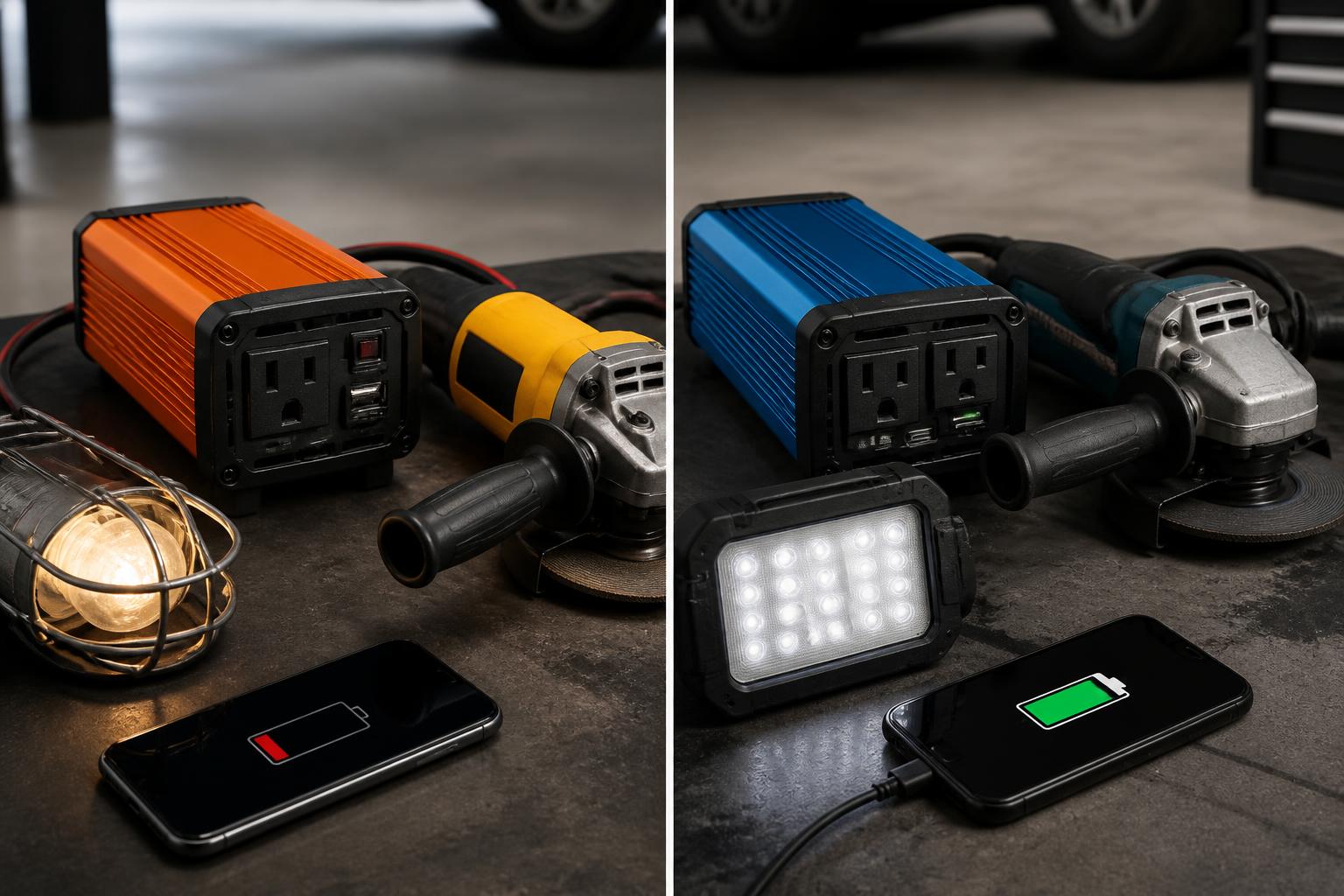
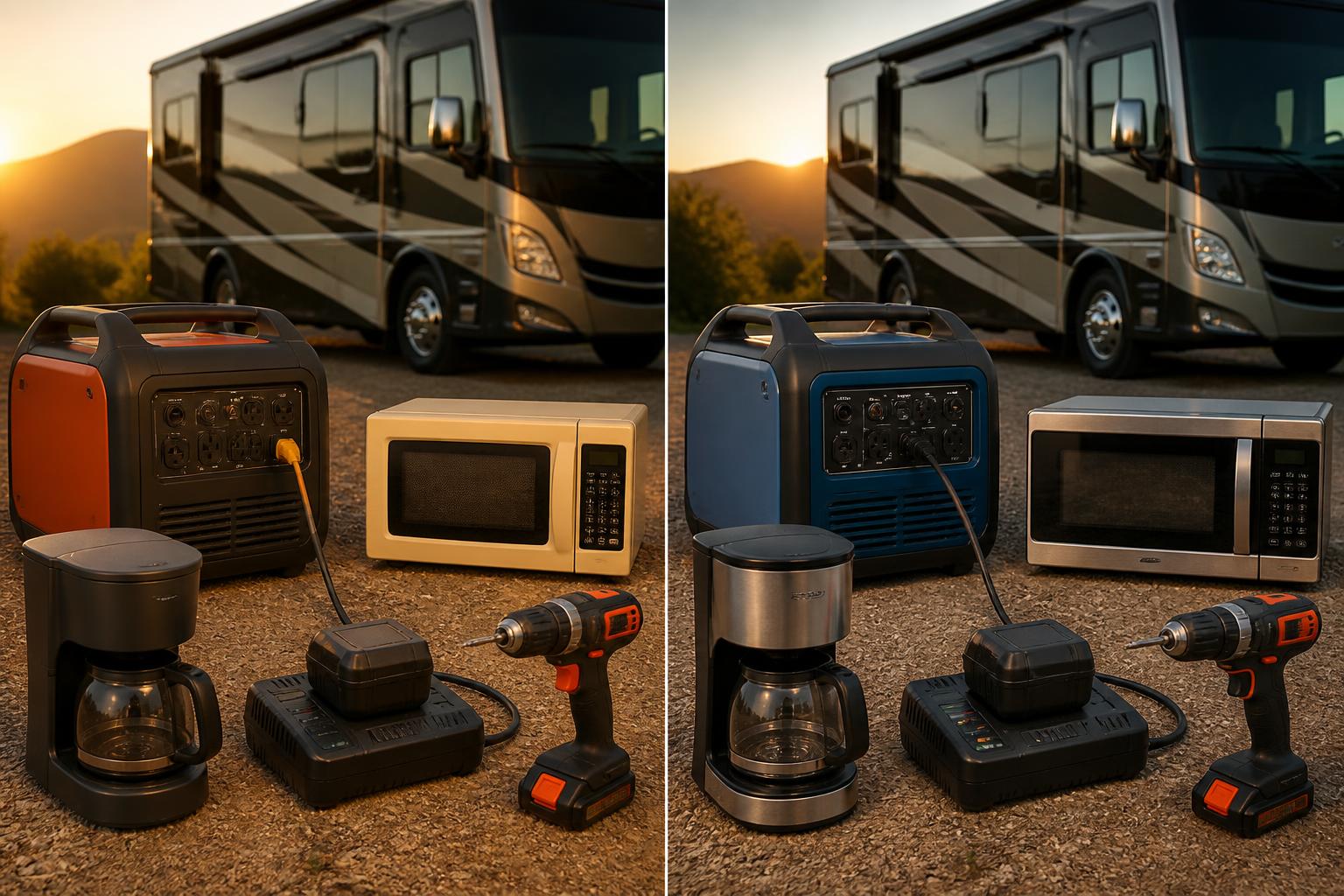
Choose a pure sine wave inverter sized for your heaviest continuous load — typically a microwave, coffee maker, or residential fridge, but never all three at once. For most RVs, a 2000W unit handles a microwave and TV; a 1000W inverter covers laptops, phone chargers, and a small LED TV. Modified sine wave inverters cost less but cause buzzing, overheating, or failure in sensitive electronics.


What an Inverter Actually Does (and What It Doesn’t)
An inverter gives you 120V AC from your battery bank — but it does not charge your batteries. A converter does that, and many RVs come with a built-in converter that powers 12V lights and charges the house battery when you’re plugged into shore power. The inverter is an extra box you add between the battery and your AC loads.
- Converter = takes 120V AC from shore power, outputs 12V DC for lights, fans, and battery charging.
- Inverter = takes 12V DC from the battery, outputs 120V AC for standard outlets.
You need both if you plan to run AC appliances off-grid. A common mistake is wiring the inverter to a single outlet rather than using a transfer switch — that works for a dedicated circuit but doesn’t feed your RV’s existing outlets.


Applicability boundary: This setup changes if your RV came with a factory-installed inverter/charger combo (common in higher-end motorhomes and fifth wheels from 2018 onward). Those units combine inverter, converter, and transfer switch in one box. Check your RV’s electrical panel: if you see a single large unit labeled “inverter/charger,” you already have the hardware. The sizing advice below still applies for determining whether it’s adequate for your loads.
How an Inverter Affects Your Battery Bank
An inverter draws DC current proportional to the AC load. The calculation is straightforward but the results are often shocking to first-time owners.
Amp draw formula:
`DC amps = (AC watts ÷ inverter efficiency) ÷ battery voltage`
For a 1500W microwave running at 85% efficiency on a 12V system:
`(1500 ÷ 0.85) ÷ 12 ≈ 147 amps` from your battery while running.
That means a standard 100Ah lead-acid battery (50Ah usable) would drain in about 20 minutes of continuous microwave use. The voltage sag will often trip the inverter’s low-voltage shutdown well before the battery is technically empty.
Practical implication for your next purchase: If you only plan to charge phones and run a laptop, a 1000W inverter on a single 100Ah lead-acid battery gets you about 2–3 hours of TV time before you need to recharge. For a microwave or coffee maker, step up to 2000W and a minimum 200Ah usable battery bank — which means 400Ah of lead-acid or 250Ah of lithium.
Inverter Size vs Battery Bank
| Inverter Size | Continuous Amps @ 12V | Min. Usable Battery Bank | Typical Use |
|---|---|---|---|
| 1000W | ~85–95A | 100Ah (200Ah lead-acid) | Laptops, TV, fans |

| 2000W | ~170–190A | 200Ah (400Ah lead-acid) | Microwave, coffee maker, small fridge |
| 3000W | ~255–285A | 300Ah (600Ah lithium) | Residential fridge, roof A/C (hard mode) |
Pure sine wave inverters run slightly less efficiently than modified sine (85–90% vs 90–95%), but they drive motors cleaner and don’t damage sensitive power supplies.
Pure Sine Wave vs Modified Sine: When the Small Premium Saves You Money
Pure sine wave inverters cost 50–75% more than equivalent modified sine units. The extra cost pays for itself the first time you plug in a modern TV, laptop charger, or any device with a switch-mode power supply.
Modified sine wave can cause:
- Audible buzzing from speakers, fans, and microwave transformers
- Overheating in laptop or phone chargers
- Erratic behavior from refrigerator control boards
- Preminent failure of electronics with capacitive power supplies
Real-world mismatch example: A reader bought a cheap 1500W modified sine inverter specifically for their 32″ LED TV. The TV’s power brick ran hot enough to smell after 20 minutes. Switching to a pure sine unit eliminated the heat entirely. If your load list includes anything with a motor, transformer, or switching power supply — that’s most modern electronics — pure sine wave is the right choice.
Verification step: To confirm whether an existing inverter is pure sine or modified, check the spec label on the unit’s side panel. Pure sine units are marked “pure sine wave” or “true sine wave.” If it says “modified sine,” “square wave,” or just “inverter” without qualification, assume modified sine.
Sizing Your Inverter and Battery Bank: A Practical Fit Check
Run through these five checks before buying. If you answer “no” to any item, adjust your plan or budget accordingly.
1. Continuous wattage: Does the inverter’s continuous rating exceed the total wattage of all devices you’ll run at the same time, plus 20% headroom? (A microwave at 1200W + TV at 100W = 1300W × 1.2 = 1560W minimum.)
2. Surge capacity: Can the inverter handle the starting surge of your largest motor load — typically 2–3× running watts for 2–5 seconds? (Roof A/C compressors need 3000–5000W surge even if running wattage is 1500W.)
3. Battery capacity: Does your usable battery bank provide at least 2.5× the inverter’s continuous amp draw in amp-hours? (Usable = 50% lead-acid, 80% lithium.)
4. Cable and fuse: Do you have the correct wire gauge per the manual — typically 2/0 AWG for a 2000W inverter — and a Class T fuse within 7 inches of the battery positive terminal?
5. Remote shutdown: Does the inverter include a remote on/off connection, or do you have a plan to add one? Without it, standby drain runs 300–500 Wh per day.
Expert Tips
1. Install a remote kill switch. Mount a small toggle or rocker switch near your driving position or bed so you can kill inverter power instantly when not in use. Common mistake: leaving the inverter on idle all day because the main cabinet switch is under the bed or behind a panel. That standby drain of 20–40W translates to 1.5–3.5 Ah per hour — more than a laptop charge uses in an entire evening.
2. Use a transfer switch for whole-RV wiring. Instead of running extension cords from a single inverter outlet, feed the inverter output into a manual or automatic transfer switch (like the Progressive Dynamics PD52 series). This lets your RV’s existing outlets work seamlessly whether you’re on shore power or battery. Common mistake: tying inverter output directly into a 30A inlet without a transfer switch — that backfeeds shore power and can kill someone working on the campground pedestal.
3. Match inverter type to your microwave, not your wallet. Run a modified sine inverter on a microwave and you’ll hear a loud hum; the microwave may not heat evenly and can overheat its internal transformer. Test your full load list before buying. If anything on it has a motor, transformer, or switch-mode power supply (most electronics), go pure sine wave. Common mistake: buying cheap modified sine for a “just the TV” setup, then having the TV’s power brick fail within a season.
Related Questions
Q: Do I need a separate inverter if my RV has a built-in converter?
Yes. A converter only charges your battery and powers 12V loads. It does not turn 12V into 120V. You must add an inverter for AC power off-grid.
Q: Can I run my RV air conditioner on an inverter?
Only with a 600–800Ah lithium bank and a 3000W+ pure sine inverter. Most roof A/C units draw 1500–2000W running and 3000–5000W startup surge. This is a hard-mode project requiring thousands in batteries; portable A/C units are slightly easier but still need heavy battery capacity.
Q: Is a 1000W inverter enough for overnight camping?
Yes, if you only need to charge phones, run a laptop, and watch a small LED TV. You’ll get about 2–3 hours of TV time on a 100Ah lead-acid battery before recharging. For a coffee maker or microwave, step up to 2000W and a larger battery bank.
Q: How do I know if my existing inverter is pure sine or modified sine?
Check the spec label on the unit. Pure sine wave inverters are labeled “pure sine wave” or “true sine wave.” If it says “modified sine wave,” “square wave,” or just “inverter” without qualification, assume it’s modified sine.
Q: What size wire for a 3000W inverter?
The manufacturer’s manual overrides all rules of thumb, but expect 4/0 AWG or larger copper cable within 4 feet of the battery, with a 350–400A Class T fuse. That cable is thick, heavy, and expensive — plan your mounting location to keep the run as short as possible.

Practical RV guides from an experienced owner. Motorhomes, travel trailers, truck campers — we have owned them, maintained them, and written the guides we wish we had found when we started.