Choosing the Right RV Generator: A Buyer’s Guide
# Choosing the Right RV Generator: A Buyer’s Guide
If you need to run a 13,500 BTU air conditioner while charging batteries and brewing coffee, you need a generator with at least 3,500 surge watts and 3,000 running watts. If you’re only topping off battery banks at night, a 2,000-watt inverter unit costs half as much and weighs under 50 lb. The wrong choice means either overpaying for capacity you’ll never use or ending up stuck in the heat because your generator trips under load. This guide helps you match specs to your actual usage, avoid common pitfalls, and decide whether new or used makes sense for your situation.
—

## How Much Power Do You Actually Need
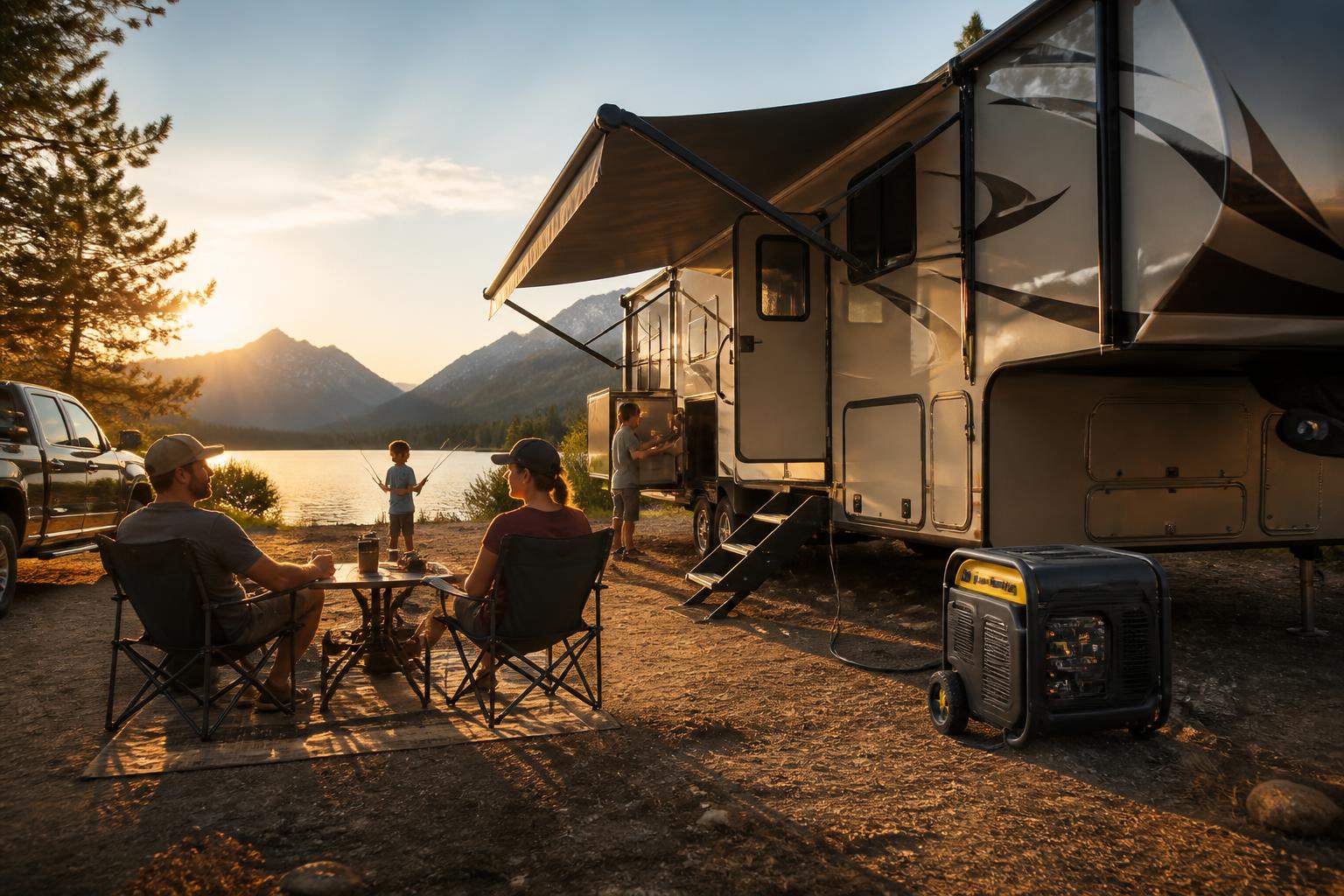
Add up the items you expect to run at the **same time** – not everything in the RV at once, but the realistic load during a typical evening or morning.
**Real-world example for a 30-amp RV:**
– 13,500 BTU AC (startup surge ~2,200W, running ~1,500W)
– 12V battery charger (200W)
– LED lighting (50W)
– Laptop charger (100W)
That totals about **1,850 running watts** during a quiet evening. Add a microwave (1,000W) and you jump to ~2,850W running. AC startup surge can hit 2,200W, so a generator rated at 3,500 surge / 3,000 running keeps you comfortably covered.
**General guidelines:**
– 30-amp pedestal → 3,000–4,000 surge watts
– 50-amp pedestal → 5,000–6,500 surge watts (two ACs, electric water heater, etc.)
– Battery-only charging → 2,000–2,200W inverter unit works fine
**Practical implication:** If you own a 30-amp RV and rarely run more than one high-draw appliance at a time, a 2,800–3,200 surge-watt inverter generator is often the sweet spot. Buying a 5,000-watt unit adds weight (20–40 lb) and fuel consumption without benefit. Conversely, if you have a 50-amp rig with two ACs, undersizing to save money means you’ll have to manually manage which appliances run – and you’ll probably trip the generator on a hot afternoon.
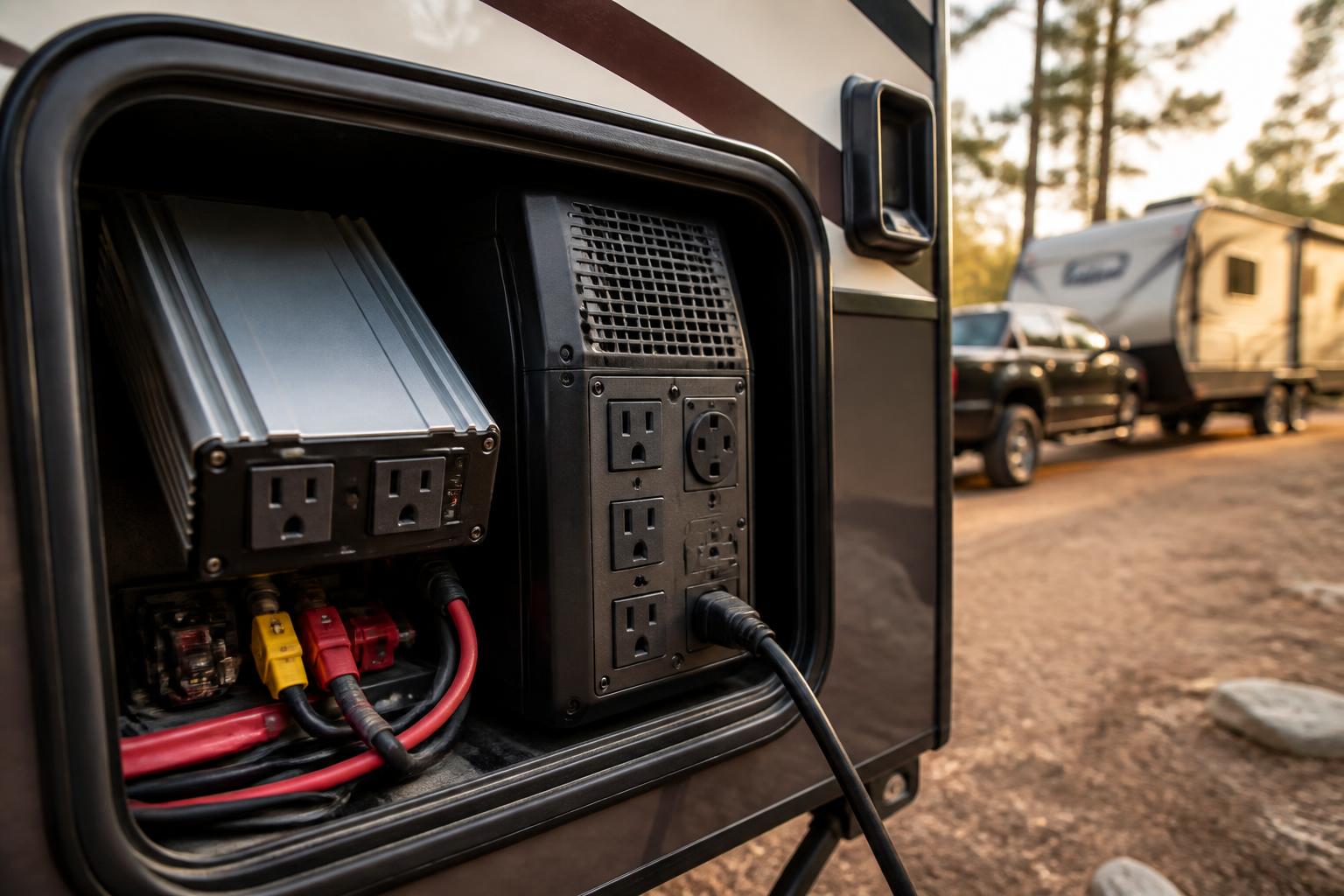
**Verification step:** Before buying, use a kill-a-watt meter or your RV’s built-in power management display to measure the actual starting surge of your rooftop AC. Plug the meter into a shore-power outlet, turn on the AC, and note the peak wattage. Compare that number against the generator’s rated surge – if the surge is within 10% of the AC’s startup draw, you’re too close; step up to a model with at least 1,000W more surge capacity.
**Realistic mismatch/trade-off:** Many buyers look only at running watts but ignore that classic open-frame generators (like the old 3,500W Home Depot special) deliver their surge only for a few seconds. If your AC’s startup surge draws 2,500W for 3–5 seconds and the generator’s surge rating is exactly 2,500W, it may still stall because the surge duration exceeds the brief peak. Inverter generators handle sustained surge better because their electronics can maintain higher output for longer periods. So a 3,200W surge inverter generator often starts an AC that a 3,500W conventional unit struggles with.

—
## Inverter vs Conventional – Which Makes Sense for an RV
**Inverter generators** are the default for most RV buyers. They produce clean AC power (low total harmonic distortion, or THD), which is safe for sensitive electronics like CPAP machines, refrigerator control boards, and smartphone chargers. They also idle down when the load is light, saving fuel and keeping noise under 60 dB.
**Conventional (open-frame) generators** cost 30–40% less than an equivalent inverter model, but they’re louder, heavier, and produce “dirty” power with higher THD. Older RV converters and appliance boards can tolerate it, but modern inverter-based refrigerators and battery chargers may throw error codes or run inefficiently.
**The bottom line:** Unless you’re on a tight budget and only power basic lights and a standard rooftop AC, go with an inverter generator. The noise savings alone make it worth the extra $300–$500. However, one overlooked downside of inverter generators is that many have smaller fuel tanks than conventional models, so you may need to refill more often during long boondocking sessions.
**Concrete verification:** Check the THD rating of any generator you’re considering. Inverter units typically state THD <3% in the specs. Conventional units either don't list it or show >10%. If the spec sheet is silent, assume it’s dirty.
—
## Fuel Options – Gasoline, Propane, or Dual Fuel
**Gasoline** packs the most energy per gallon, but it degrades after 30 days unless treated. Storing gas cans in an RV creates spill and smell risks.
**Propane** burns cleaner and lasts indefinitely in storage. The trade-off: propane produces about 20% fewer BTUs per gallon than gasoline. A 20-lb propane tank (~4.6 gallons) on a dual-fuel generator running at half load lasts 6–8 hours vs 8–10 on gasoline.
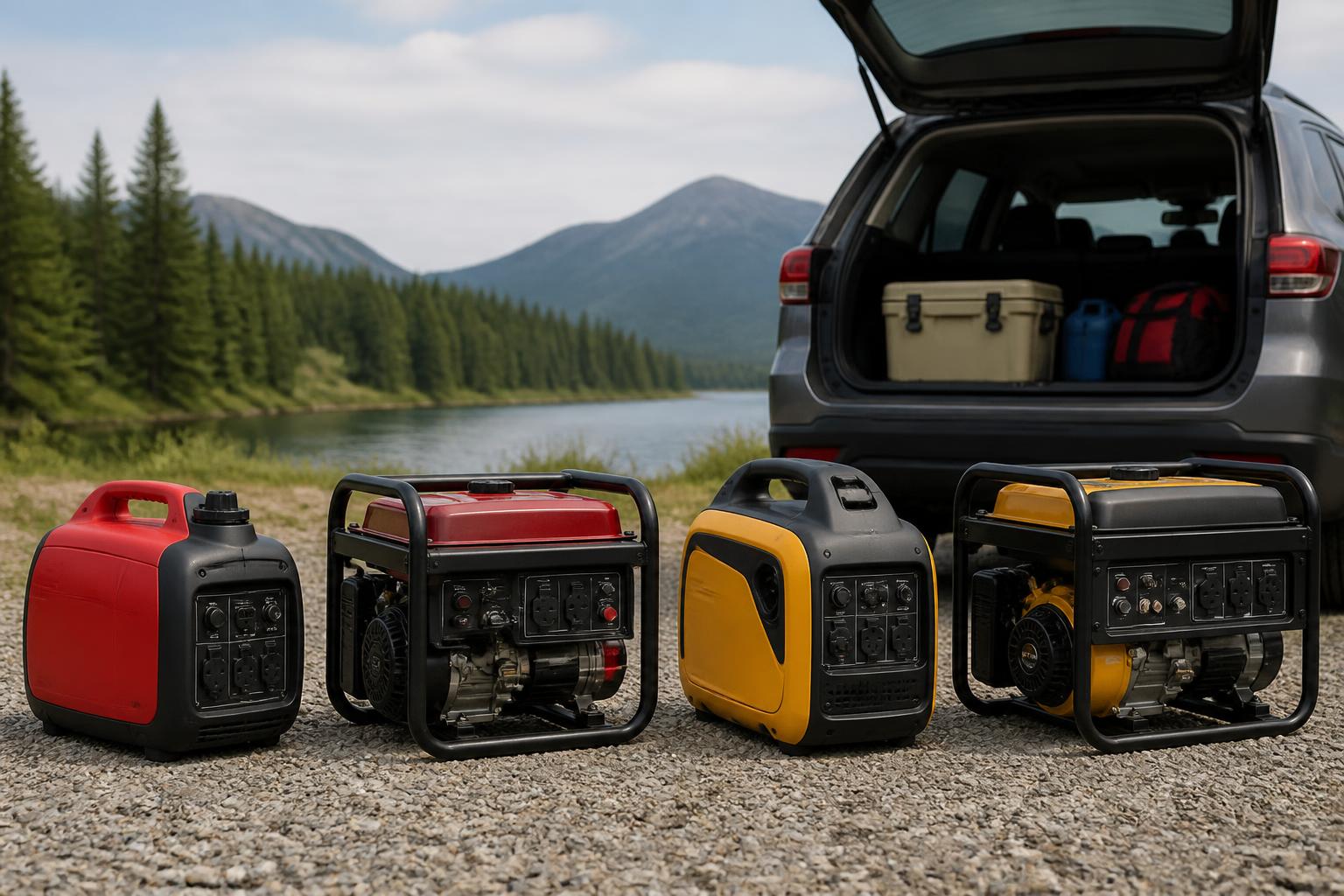
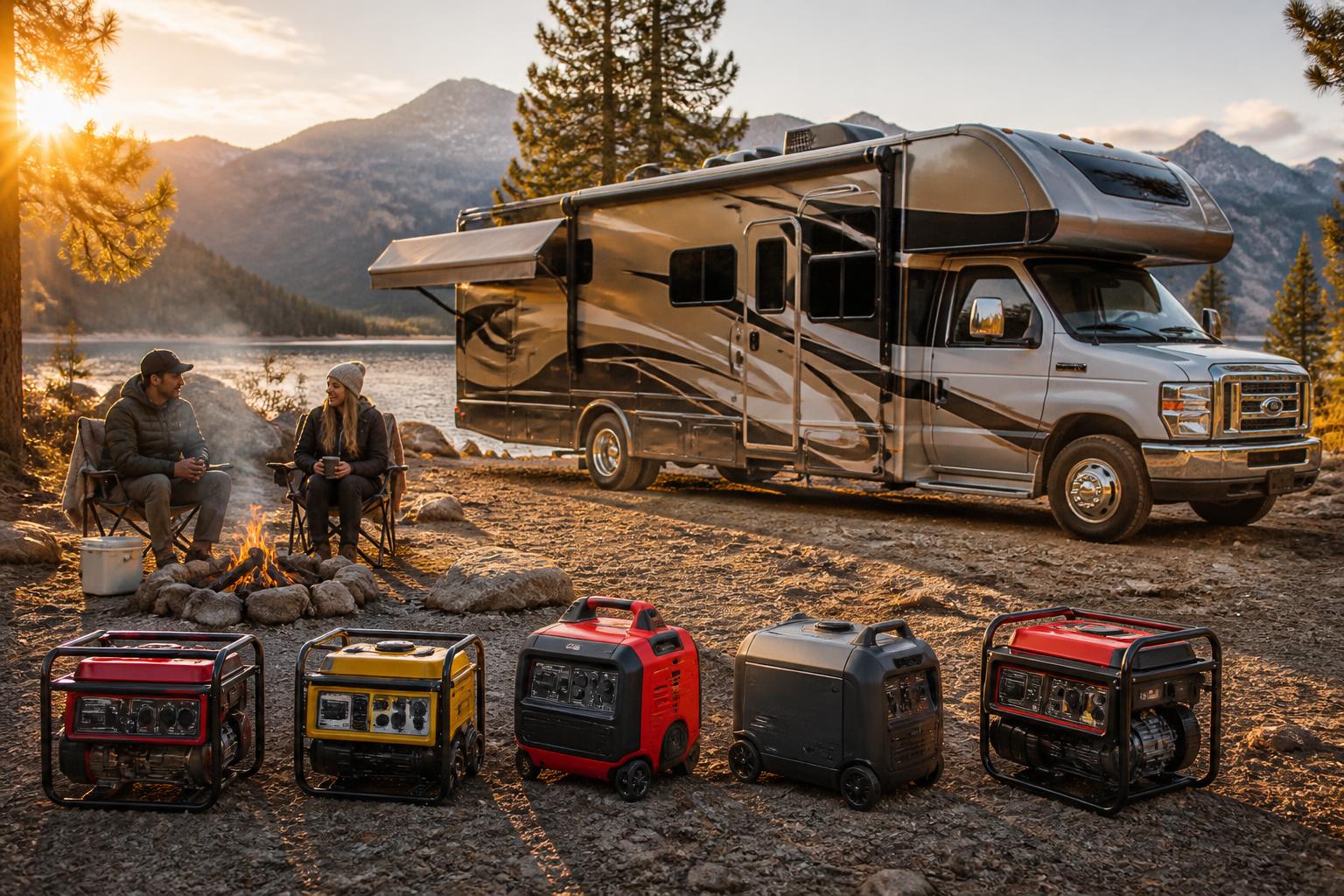
**Dual fuel** offers the most flexibility for RV use. Run on gasoline when you need maximum runtime, then switch to propane for long-term storage or campgrounds that ban gas tanks during fire season. Nearly all inverter generators in the 3,000–4,000W range now come dual-fuel standard.

**Expert tip:** If you already have onboard propane tanks, a dual-fuel generator lets you tap those without carrying extra gas cans. **Actionable step:** Verify your RV’s propane regulator can supply enough volume for the generator’s BTU demand – most can, but some older regulators may starve a large generator. **Common mistake:** Assuming any 20-lb tank works. If you connect to your RV’s main propane system, you may need a high-flow regulator rated for 200,000+ BTU; a standard RV regulator is often only 100,000 BTU, which can cause flame flickering and reduced power output.
—
## Top Portable Generators Compared
| Product | Price | Brand | Rating | Feature 1 | Feature 2 | Feature 3 | Best For | Score |
|———|——-|——-|——–|———–|———–|———–|———-|——-|
| [Champion Power Equipment 4000-Watt Dual Fuel RV Ready Portable Inverter Generator with Quiet Technology and Free 3-Year Warranty](https://www.amazon.com/dp/B0D6SQR1L1?tag=rvownerhelp-20&linkCode=ogi&th=1&psc=1) | — | Champion Power Equipment | — | — | — | — | — | — |
| [PowerSmart 3600-Watt Portable Inverter Generator, Quiet Technology, RV Ready 30A Outlet, Camping, Home use](https://www.amazon.com/dp/B0CRDPSK1G?tag=rvownerhelp-20&linkCode=ogi&th=1&psc=1) | — | PowerSmart | — | — | — | — | — | — |
| [WEN 6800-Watt Dual Fuel RV-Ready Electric Start Portable Inverter Generator with Fuel Shut Off and CO Watchdog for Electric Vehicle Backup (DF680iX)](https://www.amazon.com/dp/B0DVF1RPCJ?tag=rvownerhelp-20&linkCode=ogi&th=1&psc=1) | — | WEN | — | — | — | — | — | — |
*Note: Price, rating, and detailed feature data were not available at the time of writing. Always verify current pricing and specs on Amazon.*
**Top Pick:** For most RV owners with a 30-amp system, the [Champion Power Equipment 4000-Watt Dual Fuel RV Ready Portable Inverter Generator with Quiet Technology and Free 3-Year Warranty](https://www.amazon.com/dp/B0D6SQR1L1?tag=rvownerhelp-20&linkCode=ogi&th=1&psc=1) strikes the best balance of power, noise, and warranty length. The dual-fuel capability and included 3-year coverage (industry standard is 1–2 years) reduce long-term risk. If you need less weight, the [PowerSmart 3600-Watt Portable Inverter Generator](https://www.amazon.com/dp/B0CRDPSK1G?tag=rvownerhelp-20&linkCode=ogi&th=1&psc=1) is a solid lighter alternative at roughly 80 lb vs 95 lb.
For 50-amp RVs running two ACs, the [WEN 6800-Watt Dual Fuel RV-Ready Electric Start Portable Inverter Generator](https://www.amazon.com/dp/B0DVF1RPCJ?tag=rvownerhelp-20&linkCode=ogi&th=1&psc=1) provides the headroom you need.
—
## A Quick Fit / No-Fit Check – 5 Questions to Run Before You Buy
Run through these five checks before adding any generator to your cart. A “no” on any question means that model doesn’t fit your setup.
**1. Does the generator’s surge wattage cover your highest-draw appliance?**
Check your AC startup surge plus the next largest load (microwave or electric water heater). If the surge number doesn’t cover both, move up to a bigger unit.
**2. Is the generator quiet enough for your typical campground?**
Most state parks cap noise at 60 dB at 50 ft. Inverter models under 60 dB pass; open-frame units at 65–70 dB will draw complaints. If you’re borderline, pick an inverter model.
**3. Does the generator have a 30A RV outlet (TT-30R)?**
Many units have only household 5-20R outlets. An adapter works but adds a failure point. If the unit lacks a TT-30R, you’ll need an adapter rated for 30A.
**4. Can your tow vehicle or RV compartment safely hold the weight?**
Generator weight plus fuel plus accessories must stay within your vehicle’s cargo capacity or the RV’s generator compartment rating. If the listed weight plus 10 lb of fuel exceeds the limit, find a lighter model.
**5. Is the fuel type compatible with your on-board storage and campground rules?**
Some public lands ban gasoline generators during fire season. If you can’t run propane, confirm the unit has a propane conversion kit or is dual-fuel.
—
## Three Expert Tips for Buying an RV Generator
### Tip 1: Add 20% headroom for startup surge
**Actionable step:** Calculate your running load, multiply by 1.2, and buy a generator with surge wattage at least that high.
**Common mistake:** Only looking at running watts. A 2,500W running generator might start a 13,500 BTU AC on paper, but the startup surge of 2,200W plus battery charger draw can trip the generator’s overload breaker. You need a surge rating of 3,500W or higher.
### Tip 2: Verify your RV’s existing power system
**Actionable step:** Check if your RV has an automatic transfer switch (ATS). If it does, your generator must be wired through it to safely connect to the RV’s shore power inlet. Many portable generators can’t be permanently wired to an ATS without an external interlock kit.
**Common mistake:** Buying a generator with a 30A outlet and assuming you can just plug into the shore power inlet. That backfeeds power and bypasses the ATS, creating a safety hazard. If you plan to plug directly, use a dedicated external inlet and transfer switch (or connect via a generator cord to a 30A inlet pre-wired for portable use).
### Tip 3: Don’t ignore noise – campground gossip spreads fast
**Actionable step:** Look up the maximum noise limit for your preferred campgrounds (most KOA, state parks, and national forest campgrounds publish decibel limits, often 60–65 dB at 50 ft). Buy a generator rated at least 5 dB below that limit.
**Common mistake:** Assuming “quiet technology” on the box means you’ll be the quietest one in the loop. Many inverter generators labeled “quiet” still hit 62–64 dB at 25 ft. At 50 ft that drops to ~58 dB, but if your neighbor is 20 ft away, it’s still annoying. If you camp in tight-spot campgrounds, consider a unit under 58 dB at 25 ft.
—
## New or Used? The Generator Market Reality
New generators depreciate slower than RVs themselves—a 3-year-old inverter unit in good condition typically holds 60–70% of its original price. But used generators come with hidden risks: carburetor gumming, worn brushes, hours that don’t match the odometer. If you buy used, run through this pre-delivery inspection.
**PDI checklist for a used generator:**
– Check oil color (clean amber is good, milky means moisture)
– Run it under load for 10 minutes (plug in a space heater or RV AC if possible)
– Listen for irregular knocking or surging
– Confirm the hour meter works and matches the seller’s story
– Verify all outlets produce proper voltage (120V ±5)
**Extended warranty:** On new generators under $600, skip the extended warranty—the cost is usually 20–25% of the unit price, and most failures happen in the first year (covered by the manufacturer). On premium units ($1,000+), a 2-year warranty add-on can be worth it if you camp full-time and rely on the generator daily.
## Explore This Topic
– Back to [RV Electrical & Solar](/rv-electrical-solar-hub/)
Related guides in this cluster:
– [The Ultimate Guide to Coleman Camper](/coleman-camper/)
– [RV Inverter: Everything You Need to Know](/rv-inverter/)
– [Camping Trailer: Everything to Know Before Buying](/camping-trailer/)
– [RV Trailer: Everything to Know Before Buying](/rv-trailer/)

Practical RV guides from an experienced owner. Motorhomes, travel trailers, truck campers — we have owned them, maintained them, and written the guides we wish we had found when we started.