Understanding Happier Camper: A Practical Guide
If your tow vehicle handles 3,500 lbs and you value a flexible, modular interior over a permanent bathroom, the Happier Camper is a strong candidate. If you own a half-ton truck or need a dedicated queen bed and full shower, skip it — more traditional trailers deliver more features per dollar. This guide cuts through the marketing to show where this lightweight trailer makes sense, where it doesn’t, and why your payload margin is the real gatekeeper decision.
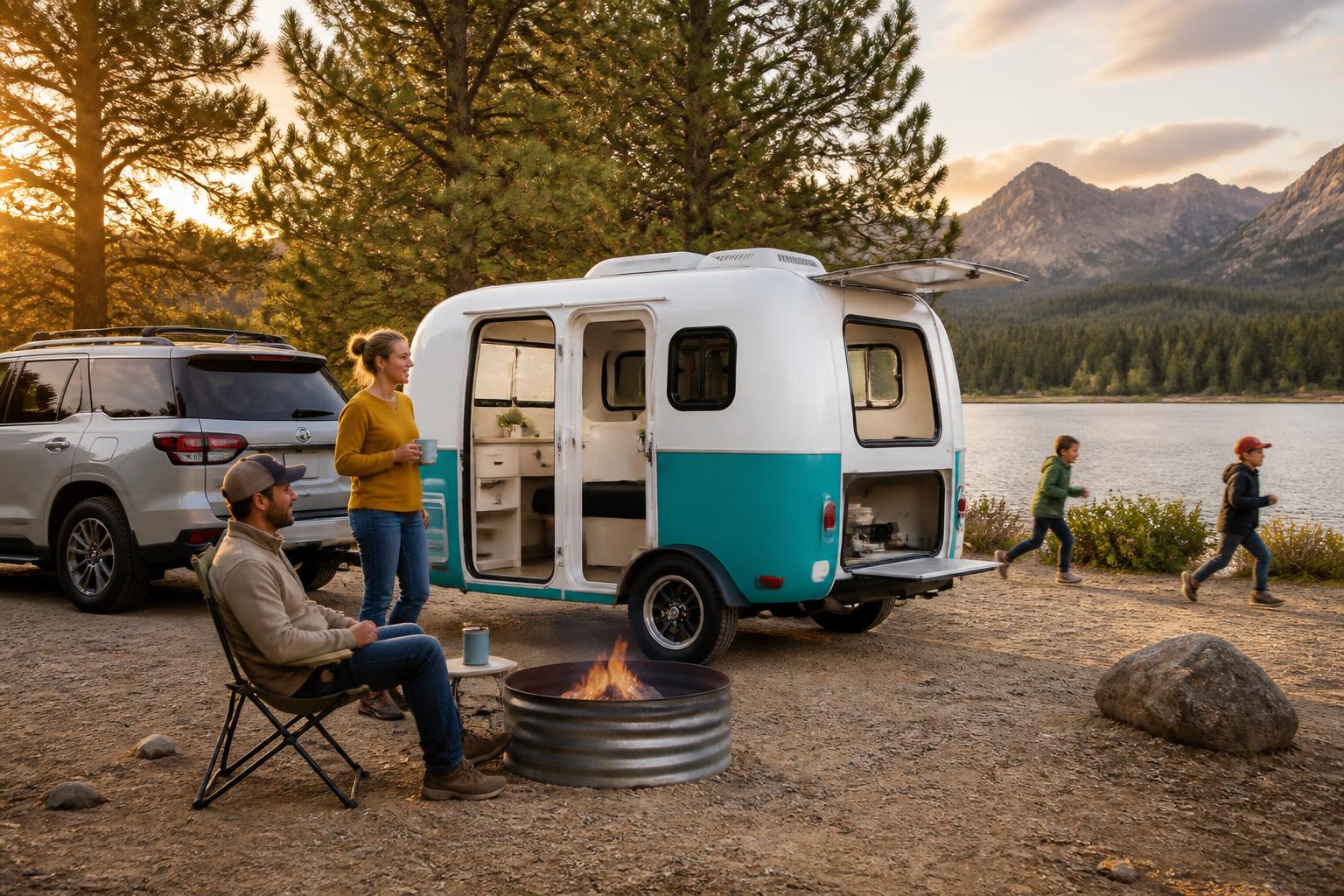

Who Should Buy a Happier Camper and Who Shouldn’t
The ideal owner drives a compact SUV, midsize crossover, or minivan with a towing capacity between 3,500 and 5,000 pounds. Happier Campers have a dry weight of 1,200–1,800 lbs and a GVWR around 3,500 lbs, so nearly any vehicle rated for 3,500 lbs can handle one. That opens up camping to households that don’t own a half-ton truck.
The decision pivot: your payload margin. If your tow vehicle has a payload capacity under 800 lbs — common in smaller crossovers like the Honda CR-V or Mazda CX-5 — you need to account for the trailer’s tongue weight (typically 200–300 lbs) plus passengers and cargo. In that case, a Happier Camper is a strong fit because its tongue weight stays manageable. But if you already own a heavier truck with ample payload, like a Ford F-150 or Ram 1500, you could tow a larger, more feature-packed trailer for the same or less money, especially on the used market. For truck owners, a Happier Camper isn’t the best value unless you specifically want the modular interior.
Payload verification flow:
1. Find the Tire and Loading Information sticker on your vehicle’s driver door jamb.
2. Read “Occupant and Cargo Weight Limit.” Write that number down.
3. Subtract the total weight of all passengers, gear, and a full tank of gas.
4. The remainder must exceed the trailer’s tongue weight. Check the Happier Camper’s sticker — tongue weight usually runs 250–350 lbs.
5. If the remainder is less than 350 lbs after loading, you need a different trailer or a weight-distribution hitch. Note that weight-distribution hitches are not always recommended for lightweight fiberglass trailers.
Stop here and don’t proceed unless that check passes.

Who should look elsewhere: You need a full bathroom with a wet bath, a dedicated queen bed that stays set up, or a slide-out for extra floor space. Happier Campers offer an optional portable cassette toilet and outdoor shower, but no permanent bathroom or black tank. The typical sleeping arrangement involves converting the dinette or using the modular blocks to make beds — fine for weekend trips but not ideal for full-time living or families with young children. If you camp more than 30 days per year, the ongoing reconfiguration becomes a chore.
New vs Used Happier Camper: Real-World Differences
Happier Campers hold their value better than many mainstream RVs, but they still depreciate roughly 15–20% in the first two years. A two- or three-year-old used model can save you several thousand dollars, and the fiberglass shell is highly durable, so cosmetic wear is often light.
| What you lose buying used | What you gain buying used |
|---|---|
| Manufacturer’s 2-year structural warranty. This warranty is transferable if the original owner registered it — verify directly with Happier Camper customer service using the VIN. | Lower purchase price, typically 20–30% off MSRP. |

| The 1-year limited warranty covering appliance and electrical shakedown issues. | Known quirks: used units often have aftermarket modifications such as solar panels, upgraded batteries, or lithium conversion included at no extra cost. |
| Ability to customize interior colors and fabric choices at order time. | Faster availability. New orders can take 3–6 months, while used units are ready to go. |
PDI tip for used buyers: Hire a certified NRVIA RV inspector before finalizing. Focus on the torsion axle condition — check the date code stamped on the axle tube. Torsion axles typically last 10–12 years before needing replacement, costing $500–$800 installed. Also check for any delamination on the fiberglass, which is rare but possible, and test the operation of the modular bed supports. Test every electrical outlet and the water system if it has one. Bring a portable power station to test the 12V system independently without shore power.
What to Check Before Buying a Happier Camper
Towing Compatibility – A Five-Point Fitness Test
Use this checklist before contacting a seller or signing any papers. Each item is a pass/fail requirement:
1. Tow rating: Your vehicle’s maximum towing capacity must be at least 3,500 lbs, and preferably 4,000 lbs for a loaded HC1 with gear. Check the owner’s manual, not the sales brochure.
2. Payload capacity: Subtract the weight of all passengers, cargo, and a full tank of gas from your vehicle’s GVWR. The remainder must exceed the trailer’s tongue weight, usually 250–350 lbs. A common failure: the vehicle can tow 5,000 lbs but only has 600 lbs of payload, leaving no room for people and gear.
3. Hitch class: You need at least a Class III hitch with a 2-inch receiver. Many compact crossovers come with Class II (1.25-inch), which limits to 3,500 lbs and 350 lbs tongue weight — still within range, but with less margin. If your vehicle has a Class II, verify the receiver’s true rating; some aftermarket Class II hitches are only rated for 2,000 lbs.
4. Brake controller: All Happier Campers require an electric brake controller. If your vehicle isn’t pre-wired, factor in installation cost, typically $150–$300. Some dealers include this, many do not.
5. Tire rating: Verify your tow vehicle’s tires are rated for the added load. Aftermarket LT tires are safer for highway towing than stock passenger tires. Look for the load index on the tire sidewall — passenger tires (P-metric) often overload under sustained highway travel with a trailer.
Interior Layout – Is the Modular System Right for You?
The “Modivan” interior uses interlocking foam blocks that can be arranged as beds, seating, or cargo storage. It’s a brilliant space-saver, but it also means spending 5–10 minutes each trip reconfiguring the setup. Families with small children often find this tedious; solo or couple travelers appreciate the versatility.
Real-world example: The HC1 Studio layout comes with a fixed counter, sink, and cooktop plus a small wardrobe. That reduces daily reconfiguration but limits flexible cargo area. The base HC1 has a modular galley that you can pull out — great if you want to haul bikes during the day, but plan on reinstalling the galley each evening. If you camp for weeks at a time, the constant setup and teardown can become a chore. A common mismatch: Buyers who expect to leave the bed set up are disappointed — the sleeping arrangement is always a conversion unless you buy the optional bed lift system for the HC1, which runs around $800.
Construction and Quality – What to Look For
Happier Campers use a one-piece fiberglass shell over a laminated floor. Build quality is generally good, but you need to inspect these specifics:
- Seal integrity: Check the seam where the upper and lower shell halves meet. Gaps or uneven caulking can lead to leaks. On pre-2020 models, this seam was a known problem area — water intrusion behind the fiberglass can cause rot that’s hard to repair. Run a garden hose over the shell for 5 minutes while someone watches the interior for drips.
- Window and door seals: Open and close all windows. The sliding plastic windows on older models sometimes warp due to heat exposure. Replacements cost around $100 per window. Also check the door latch alignment — misalignment causes the door to pop open during travel.
- Modular block durability: Foam blocks are covered in automotive-grade carpet. After a few years, the carpet can show wear. This is easily replaced, but factor that into your offer — replacement block sets run $200–$400 from Happier Camper or third-party sellers.
- Torsion axle: Ask for the axle date code, which is stamped on the axle tube near the hub. Torsion axles typically last 10–12 years before needing replacement. A worn axle causes uneven tire wear and can affect towing stability — look for cupping or feathering on the tire tread as a red flag. If the axle is near the end of its life, negotiate the price down.
Dealer vs Private Sale Trade-Offs
Buying from a dealer: You get a pre-delivery inspection (PDI) and full warranty. Many dealers include a walkthrough demonstration of the modular system. Negotiate on dealer fees, which often run $500–$1,500 in documentation and prep charges. Extended warranties offered at the dealer markup are typically overpriced — negotiate them separately or skip them entirely. Ask the dealer to provide a signed PDI checklist showing which items were tested and corrected.
Buying from a private seller: Lower price, but you assume the risk. Insist on a test tow with your own vehicle — drive at least 15 miles on highway and local roads to check sway and brake response. Check the title for any liens using a service like vehiclehistory.gov or your state’s DMV. Bring a portable power station to test the 12V system independently. Private sales often happen in the off-season, from October through February, when demand drops, so you can negotiate harder. Always verify the warranty transfer status with Happier Camper directly by calling customer service with the VIN before handing over money.
Extended Warranty: When It’s Worth It and When It’s Not
The factory 2-year structural warranty covers the shell, frame, and axle. The 1-year limited warranty covers appliances, plumbing, and electrical components. Most Happier Camper owners report few major issues beyond the shakedown period, so an extended warranty often doesn’t pay off.
Consider an extended warranty only if:
- You plan to full-time or live in the trailer for more than 30 days per year.
- You buy a used unit that is out of factory warranty.
- The policy is from a reputable RV warranty provider — not a third-party marketer — and specifically covers fiberglass delamination and torsion axles. Get the policy in writing and read the exclusions carefully. Many exclude water damage from seal failures, which is one of the most common issues on older units.
Skip it if:
- You’re handy enough to fix minor electrical or plumbing issues yourself, such as replacing a water pump or a 12V outlet.
- You keep the trailer less than three years.
- You buy new and plan to sell before the factory warranty expires.
FAQ
Does a Happier Camper have a bathroom? No permanent toilet or shower is included. Only a portable cassette toilet option and an outdoor shower hookup are available. There is no black tank.
Can I tow a Happier Camper with a Subaru Outback? Yes, if the Outback is rated for 3,500 lbs, though some model years are lower. Check the payload sticker first — the tongue weight plus passengers often max out the payload on smaller SUVs.
How long does a Happier Camper last? The fiberglass shell can last 20+ years if maintained. The torsion axle typically needs replacement after 10–12 years. Modular foam blocks may need re-covering after 5–7 years of regular use.

Practical RV guides from an experienced owner. Motorhomes, travel trailers, truck campers — we have owned them, maintained them, and written the guides we wish we had found when we started.