The Complete Guide to Airstream Airstream trailer
# The Complete Guide to Airstream Airstream trailer
There is no single “best” RV trailer—the right one depends on what you plan to tow it with, how often you’ll use it, and whether you’re buying new or used. The single most important decision criterion is your tow vehicle’s **payload capacity**, not just its towing rating. Many first-time buyers focus on max tow pounds and ignore the tongue weight and cargo limits, which can render a perfectly rated truck unsafe before you load a single cooler. Below we walk through the key trade-offs, common pitfalls, and a practical checklist to help you avoid a costly mismatch.
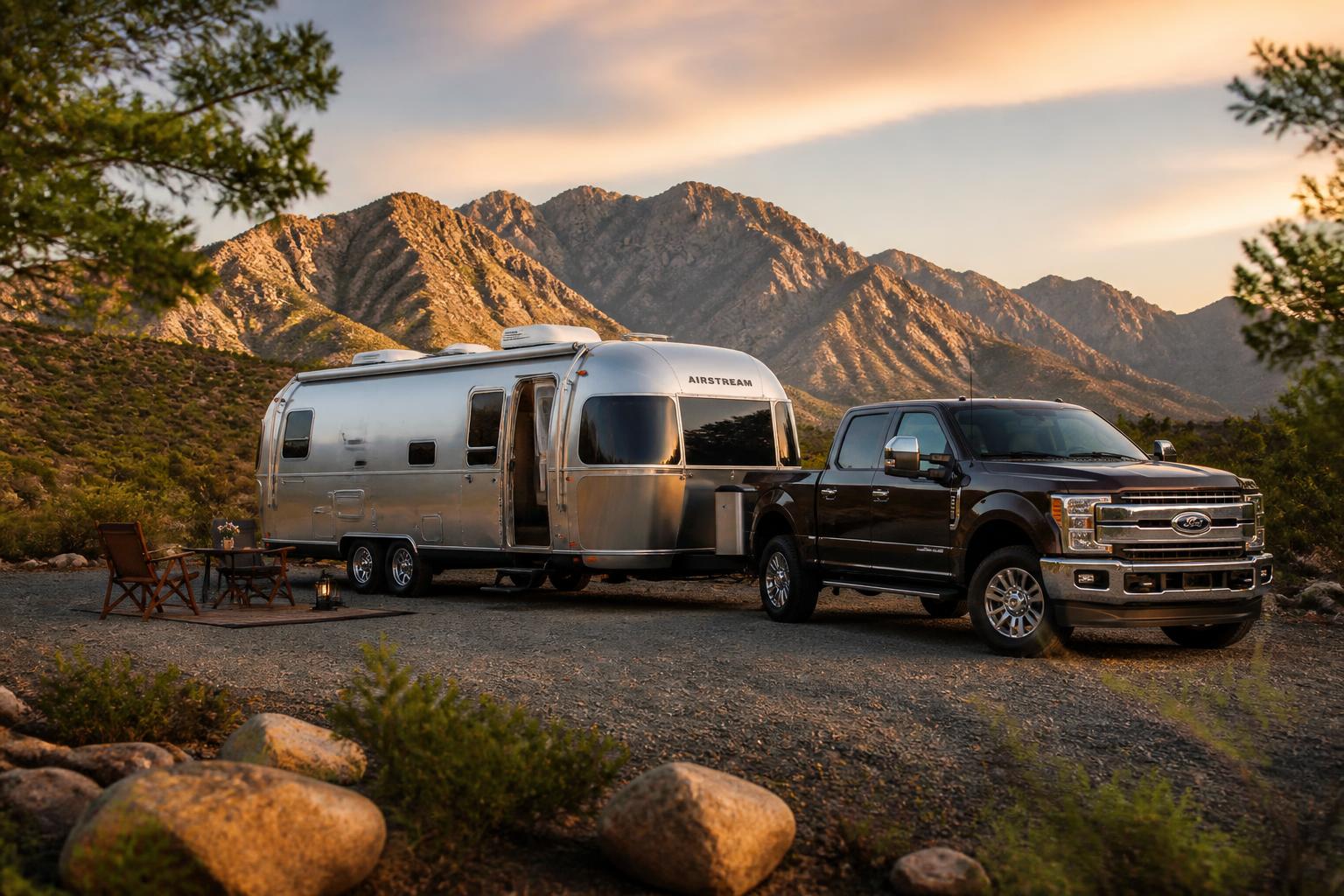
## Match Your Trailer to Your Tow Vehicle
Your tow vehicle’s published towing capacity is only half the story. The other half is payload—the weight your truck can carry including passengers, gear, and the trailer’s tongue weight. A typical travel trailer’s tongue weight is 10–15% of its gross vehicle weight rating (GVWR). For a 7,000-pound trailer, that’s 700–1,050 pounds of tongue weight alone.
Most half-ton pickups have a payload capacity between 1,200 and 2,000 pounds. After adding two adults, a dog, and a full tank of gas, you may have only 600–900 pounds left for tongue weight. That means a trailer with a GVWR over 6,000 pounds can push you over your payload limit even if your truck is rated to tow 9,000 pounds. Always check the driver’s door sticker for payload, not the marketing brochure.
**The decision criterion that changes recommendations:** If your tow vehicle is a midsize SUV or a half-ton truck, limit your search to trailers with a GVWR no more than 60% of your truck’s max towing capacity. For a 3/4-ton or 1-ton truck, you can generally go up to 80% without issue. This rule alone will save you from buying a trailer you can’t legally haul.
**Practical implication for your next choice:** Once you know your available payload, multiply it by 0.12 to estimate the maximum tongue weight that keeps you under 15% of the trailer’s GVWR. Then divide that number by 0.15 to get the maximum trailer GVWR you can safely pull. If that number is below 5,000 pounds, you are limited to lightweight trailers under 22 feet—meaning you should skip fifth wheels and stick to small bumper-pulls or teardrops.
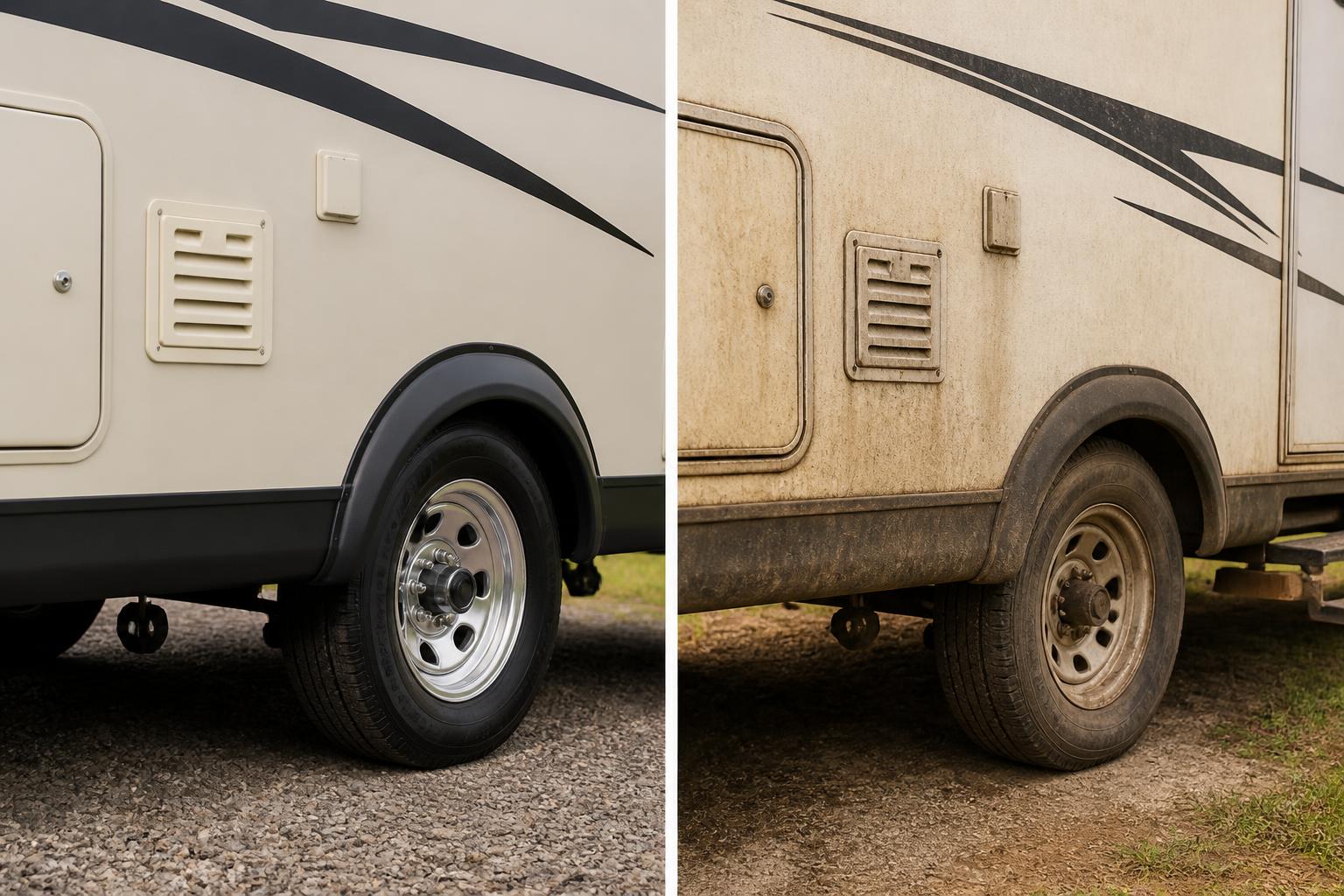
**Verification step:** Weigh your truck at a public scale (often $10–$15) with a full tank, all passengers, and gear you always carry. Subtract that from the truck’s GVWR on the door sticker. The result is your true available payload. Compare that to the trailer’s loaded tongue weight (12–15% of its GVWR). If the tongue weight exceeds your available payload, you need a lighter trailer or a heavier truck.
## New vs. Used: The Depreciation Reality
New RVs lose value faster than almost any other vehicle segment. A $40,000 travel trailer will often be worth $28,000–$32,000 after just two years—a 20–30% drop. The upside of buying new is the manufacturer’s warranty (usually 1–2 years) and the ability to address defects during the “shakedown” phase. The downside is you absorb the steepest depreciation.
Used trailers, especially those 2–4 years old, offer better value per dollar but often come with no warranty. The first year of ownership of any new RV is the shakedown period—expect a handful of small repairs (plumbing leaks, loose trim, faulty appliances) that the warranty covers. If you buy used, you need to budget $500–$1,000 for immediate fixes or negotiate a price that reflects that risk.
 Process](https://rvownerhelp.com/wp-content/uploads/2026/05/rv-trailer-step-3.jpg)
The worst depreciation hit happens in the first 2–3 years, but after year 4 the curve flattens. A 2019 model bought in 2024 at 50–60% of its original MSRP is often the sweet spot: most major bugs have been worked out, and you avoid the heaviest drop.
**Realistic mismatch to watch for:** A “used like new” trailer from a private seller that is only one year old may still have hidden shakedown issues the original owner didn’t fix. Many sellers offload a trailer after one frustrating season of appliance failures. Always run the PDI before committing, and ask the seller for repair records. If they hesitate, assume the worst.
## How to Navigate the RV Trailer Buying Process
Use this step-by-step flow to move from research to a confident purchase. Each step includes a checkpoint to confirm you’re on track.
### Step 1: Set your tow-vehicle limits
Weigh your truck with a full tank of gas, all passengers, and any gear you always carry. Subtract that from the GVWR of your truck to find your available payload. Then calculate the maximum trailer GVWR that keeps tongue weight (12–15% of GVWR) under that payload.
*Checkpoint:* If available payload is less than 800 pounds, you cannot safely pull most travel trailers over 20 feet. Consider a lightweight pop-up or teardrop.
### Step 2: Decide new vs. used based on your risk tolerance
If you want a warranty and can absorb the first-2-year depreciation, buy new. If you’re willing to handle minor repairs and want the best value for your money, target a 3-to-5-year-old unit.
*Checkpoint:* Set aside at least $1,000 for immediate repairs if buying used; if buying new, plan to use the warranty heavily during year one.
### Step 3: Research floor plans and features
Walk through as many models as possible (at shows or dealerships) to gauge ceiling height, kitchen counter space, bathroom size, and storage. Bring a tape measure.
*Friction point:* Many buyers fall in love with a floor plan online, only to find the dinette slides are too tight or the bed is too short. Visit in person before committing.
### Step 4: Perform a Pre-Delivery Inspection (PDI)
Use the checklist below on any trailer you’re serious about. If you’re buying from a private seller, hire a certified RV inspector ($300–$600) to do this.
*Checkpoint:* If more than two items on the PDI checklist fail, walk away or demand repairs in writing before paying.
### Step 5: Negotiate and close
Private sellers often price 10–20% below dealer, but you have no warranty leverage. For dealer purchases, ask for a 30-day warranty in writing or a discount that equals the cost of a third-party warranty.
*Success signal:* You leave with a signed purchase agreement that includes the PDI findings corrected, or a clear “as-is” acknowledgment you’ve factored into the price.
## Pre-Purchase Inspection (PDI) Checklist
Use this checklist before signing any contract. Mark each item as pass or fail. If more than two items fail, walk away or demand repairs before purchase.
– **Check the roof and seals.** Look for cracks, bubbles, or swelling around vents, skylights, and the roof seam. A soft spot when pressed indicates water damage.
– **Inspect the tires.** Confirm the date code is less than 5 years old. Even with tread, RV tires older than 5 years are a blowout risk. Check spare tire condition too.
– **Test every system.** Run the A/C, heater, water pump, refrigerator (on both electric and propane), and all faucets. Look for leaks under sinks and at the water heater.
– **Verify the electrical system.** Plug into shore power (30-amp or 50-amp) and verify all outlets work. Test the converter by checking battery voltage when plugged in—it should read 13.2–13.8V.
– **Operate the slide-out completely.** Extend and retract the slide-out(s) fully. Listen for grinding or jerky movements. Inspect seals and wipe away any debris that could tear the rubber.
## What Type of RV Trailer Fits Your Trip Style?
Not all trailers are created equal for every use case.
**Travel Trailer (bumper-pull).** Best for weekenders and first-time buyers. Easier to hitch and unhitch, lighter overall, but limited interior space per foot of length compared to fifth wheels.
**Fifth Wheel.** Tows more stable, allows a raised bedroom over the truck bed, and typically offers more living space. Requires a bed-mounted hitch and a truck with higher payload—a 3/4-ton or 1-ton for most models.
**Toy Hauler.** Rear garage for motorcycles, ATVs, or extra gear. Heavier and usually less living space for the same length. Great for adventure seekers but overkill for a family that only brings bicycles.
Many first-time buyers overlook the turning radius difference. A 30-foot travel trailer can be maneuvered in a tight campsite more easily than a 30-foot fifth wheel because the fifth wheel’s pivot point is over the truck’s rear axle, requiring more swing space. If you plan to stay at older campgrounds with narrow roads, a bumper-pull is often easier.
**Trade-off to consider:** If your trips are mostly long-distance highway travel, a fifth wheel’s stability is a real safety advantage. But if you frequently camp in state parks with tight sites, the extra maneuvering space required by a fifth wheel can turn a 10-minute setup into a frustrating half-hour. Test your planned campsite dimensions before committing to a fifth wheel.
## Essential Accessories to Budget For
Even a well-bought trailer needs a few accessories to be usable. Below are three highly-rated options that solve common first-season frustrations.
| Product | Brand | Key Feature | Best For |
|———|——-|————-|———-|
| [RVMATE 12 Pack RV Leveling Blocks](https://www.amazon.com/dp/B0DNTGWG7T?tag=rvownerhelp-20&linkCode=ogi&th=1&psc=1) | RVMATE | Heavy-duty, works with single and dual wheels | Quick campsite leveling without concrete blocks |
| [Free Country Grand Ride Set 4 Trailer Tires ST225/75R15 10 Ply Load Range E](https://www.amazon.com/dp/B01MD2C4QI?tag=rvownerhelp-20&linkCode=ogi&th=1&psc=1) | Free Country | Steel belted radial with scuff guard | Reliable replacement tires for tandem-axle trailers |
| [Set of 4 All Steel ST235/80R16 RV Radial Trailer Tire 16-Ply Load Range H](https://www.amazon.com/dp/B07KWBVW2G?tag=rvownerhelp-20&linkCode=ogi&th=1&psc=1) | Libra Trailer Parts | 16-ply, load range H (3,640 lbs per tire) | Heavy-duty or fifth wheel trailers with high GVWR |
**Top Pick: RVMATE 12 Pack RV Leveling Blocks** – Leveling blocks are an inexpensive item (around $30) that every new owner needs immediately. This set stacks easily and stays put better than wooden planks. You’ll use it on nearly every trip, and it eliminates the need to find rocks or boards at the campsite.
## Dealer vs. Private Sale Trade-Offs
– **Price.** Dealer prices are typically 5–15% higher. Private sellers offer lower, negotiable pricing.
– **Warranty.** Dealers often include a 30–90 day warranty and may sell extended coverage. Private sales are as-is with no warranty.
– **Inspection.** You can request a
## Explore This Topic
– Back to [RV Buying & Reviews](/rv-buying-reviews-hub/)
Related guides in this cluster:
– [Camping Trailer: Everything to Know Before Buying](/camping-trailer/)
– [Class B RV: Everything to Know Before Buying](/class-b-rv/)
– [A Frame Camper: Everything to Know Before Buying](/a-frame-camper/)
– [Happier Camper Buying Guide: Features to Consider](/happier-camper/)

Practical RV guides from an experienced owner. Motorhomes, travel trailers, truck campers — we have owned them, maintained them, and written the guides we wish we had found when we started.