A Frame Camper: Everything to Know Before Buying
# A Frame Camper: Everything to Know Before Buying
If you want the quickest setup of any towable camper and can live with compact interior space, an A‑frame camper is a strong candidate. But it’s not the “best of both worlds” some marketing makes it sound like. The real trade‑off is between ultra‑fast setup and the kind of livability most first‑time buyers assume they’ll get. Here’s how to decide if it fits your actual camping style.

## What Makes an A‑Frame Camper Different?
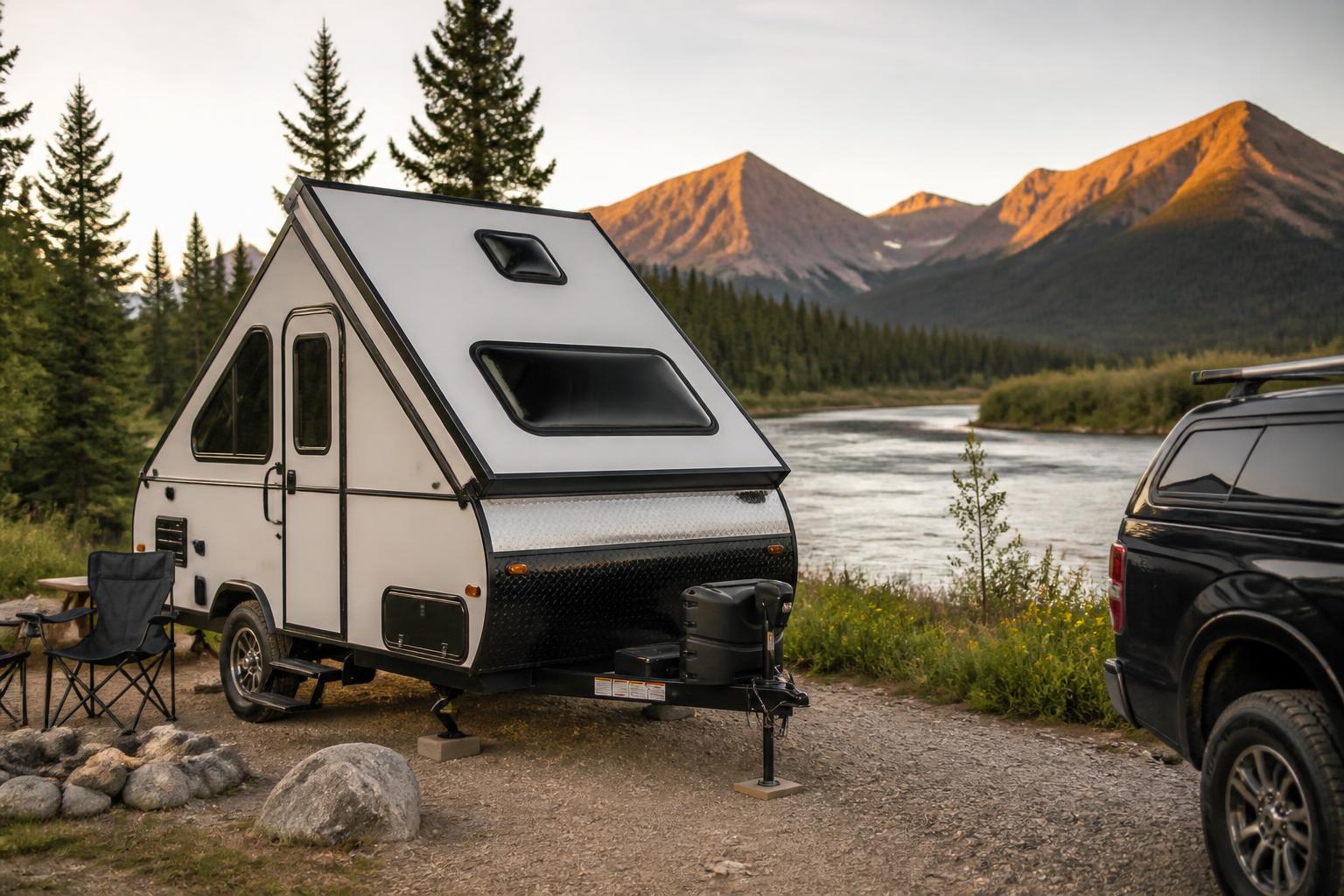
An A‑frame is a folding hard‑sided trailer. The roof and side walls are rigid panels that hinge upward into a tall, tent‑like shape with a steep A‑profile. Most models have a queen bed on each end and a small dinette in the middle that converts to a third bed. Setup takes about 60–90 seconds: pop the latches, push the roof up, lock the struts, and you’re done. No canvas to snap, no poles to thread, no bungee cords.
The key advantage compared to a traditional pop‑up camper is that the walls are solid when deployed, giving better insulation and weather resistance. Compared to a hard‑sided travel trailer, the A‑frame is lighter, cheaper, and far easier to store in a standard garage.
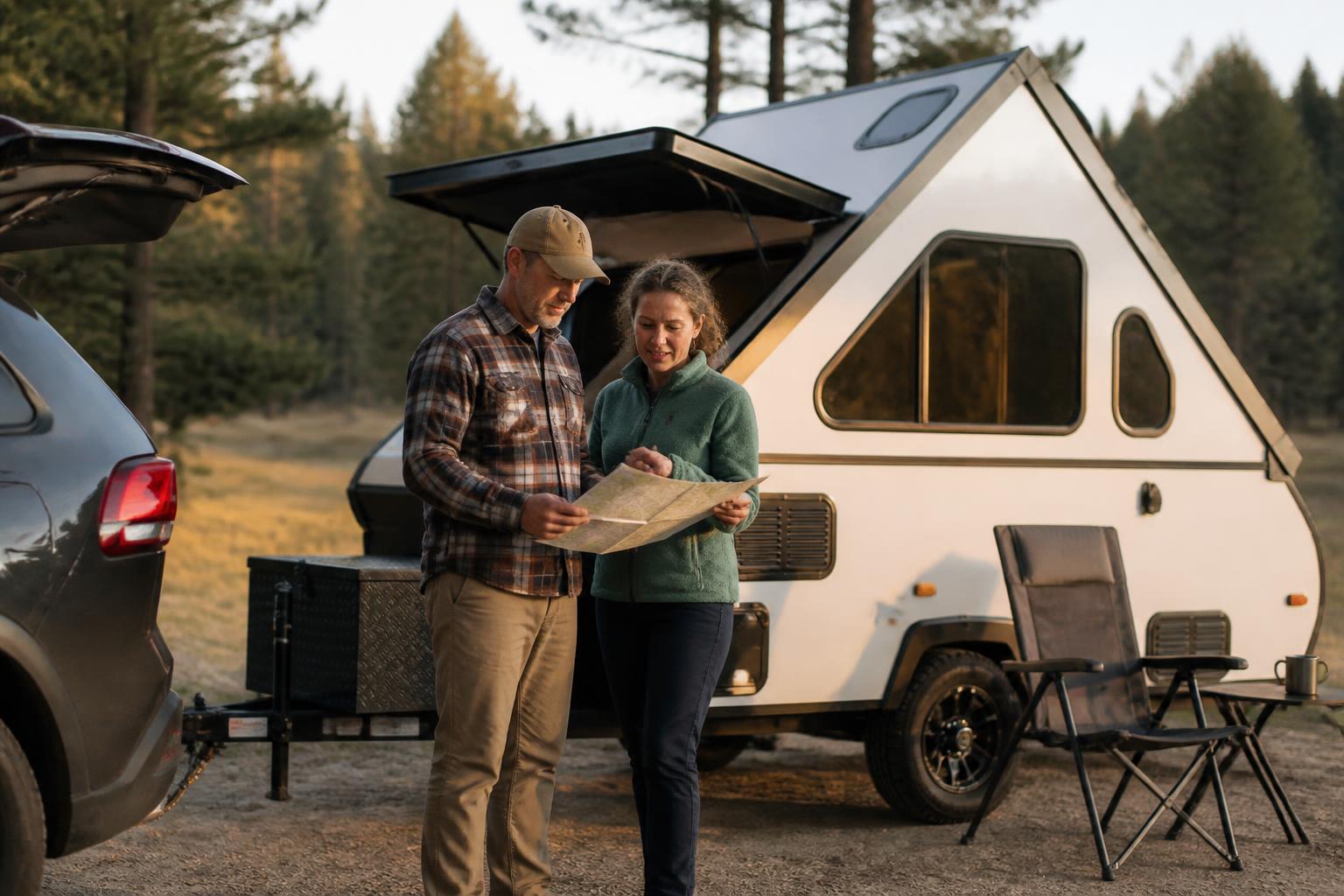

But that speed comes with compromises. The interior headroom is often only 6’2” to 6’6”, and the roof slope means you can’t stand upright near the edges. The dinette is small, the counter space is minimal, and there is no dedicated bathroom in most models (a few have a wet bath, but they add significant weight and price). You are essentially getting a double‑bed tent with hard walls and a basic kitchen.
## Who Should Buy an A‑Frame Camper — and Who Shouldn’t
### The best match
This camper works well for:
– Couples or small families with young children who don’t need separate rooms.
– Owners with a tow vehicle limited to 2,500–3,500 lbs (minivans, small SUVs, or some sedans).
– Campers who move site every day or two and value a 90‑second setup.
– Anyone who wants to store the camper in a residential garage (most fold to under 5’ tall).
– Budget‑conscious buyers looking for a new camper under $15,000–$18,000.
### When it’s a bad fit
– You regularly camp in strong winds (the large fabric gable ends can flap violently, and the panels can strain in sustained 30+ mph gusts).
– You need a private bathroom or a real shower (add‑on portable toilets work, but they complicate daily life).
– You plan to camp in below‑freezing temperatures regularly (the furnace works but the lack of enclosed underbelly means tanks freeze faster than in a hard‑sided trailer).
– You are tall (over 6’2”) and want to stand upright across the full interior.
### 5 Quick Fit Questions
Before you shop, run through these pass/fail checks. Any “no” means you should reconsider the A‑frame category.
1. **Tow vehicle payload** – Does your vehicle’s payload sticker (on the driver’s door jamb) show at least 400 lbs more than the dry tongue weight of the camper you’re looking at? (Dry tongue weight is often 200–250 lbs; add battery, propane, and gear.)
2. **Garage height** – When folded, will the camper’s closed height (typically 48–60 inches) clear your garage door opening? Measure actual clearance, not just door height.
3. **Rain setup** – If it’s pouring, can you get the roof up and the camper dry in under three minutes? (Practice at the dealer lot [before buying](/rv-trailer/).)
4. **Sleeping capacity** – Do you truly need more than two separate sleeping areas? The dinette bed is small and requires clearing the table every night.
5. **Wind tolerance** – Have you camped in a tent in 20+ mph winds and been comfortable? If not, the A‑frame’s fabric panels will feel similar.
## New vs. Used: The Depreciation Reality
A‑frames depreciate steeply in the first two to three years, just like most RVs. A new $16,000 Forest River Rockwood A122 will typically sell used after three years for $10,000–$12,000 in good condition. That’s roughly a 30% drop in value over three years, similar to a comparably priced travel trailer.
**If you buy new**, you get the manufacturer’s one‑year warranty. That matters because A‑frames have a known shakedown list: roof panel alignment, latch adjustment, and furnace vent seal failures are common in the first few trips. The warranty is worth having, but you’ll pay the premium.
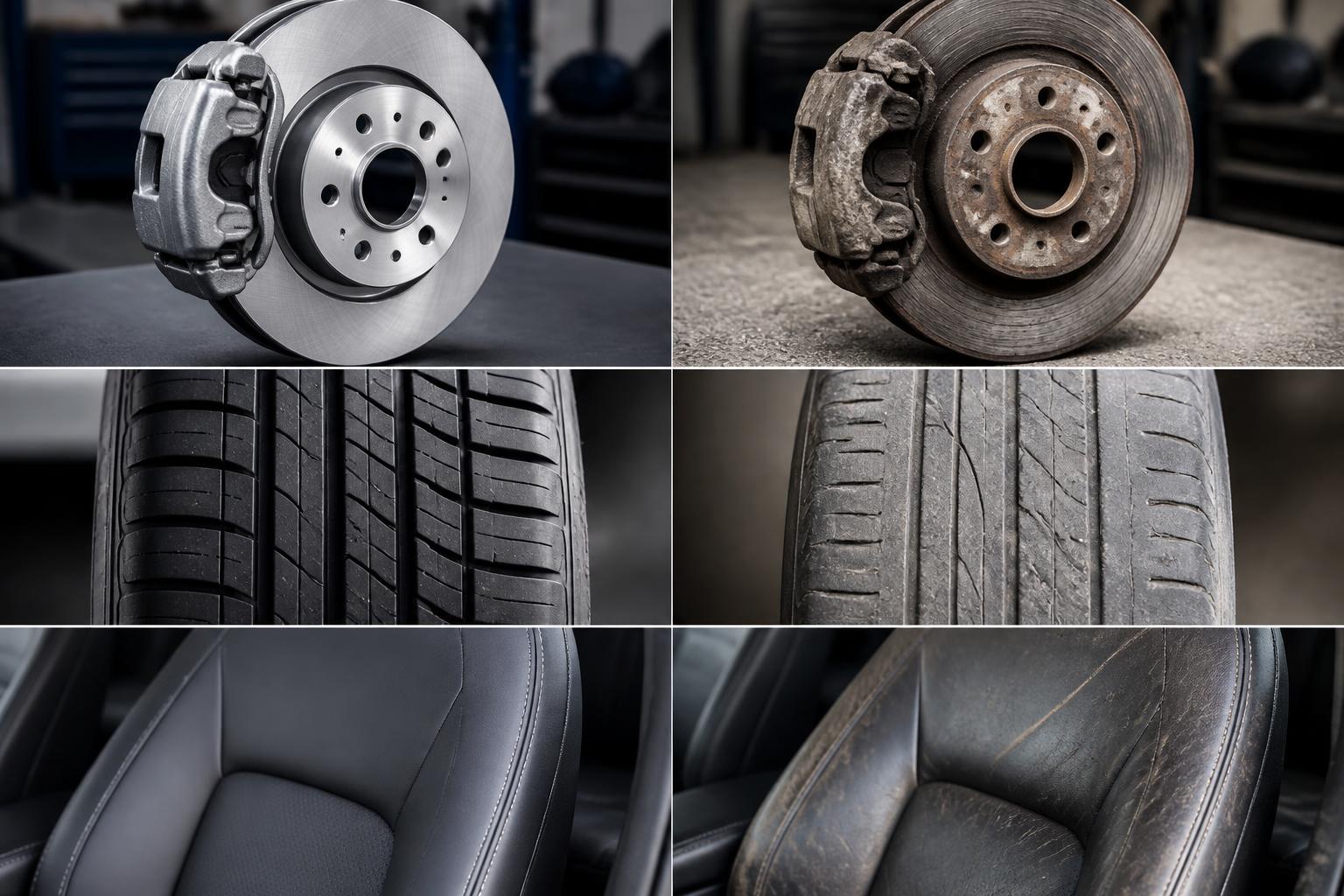
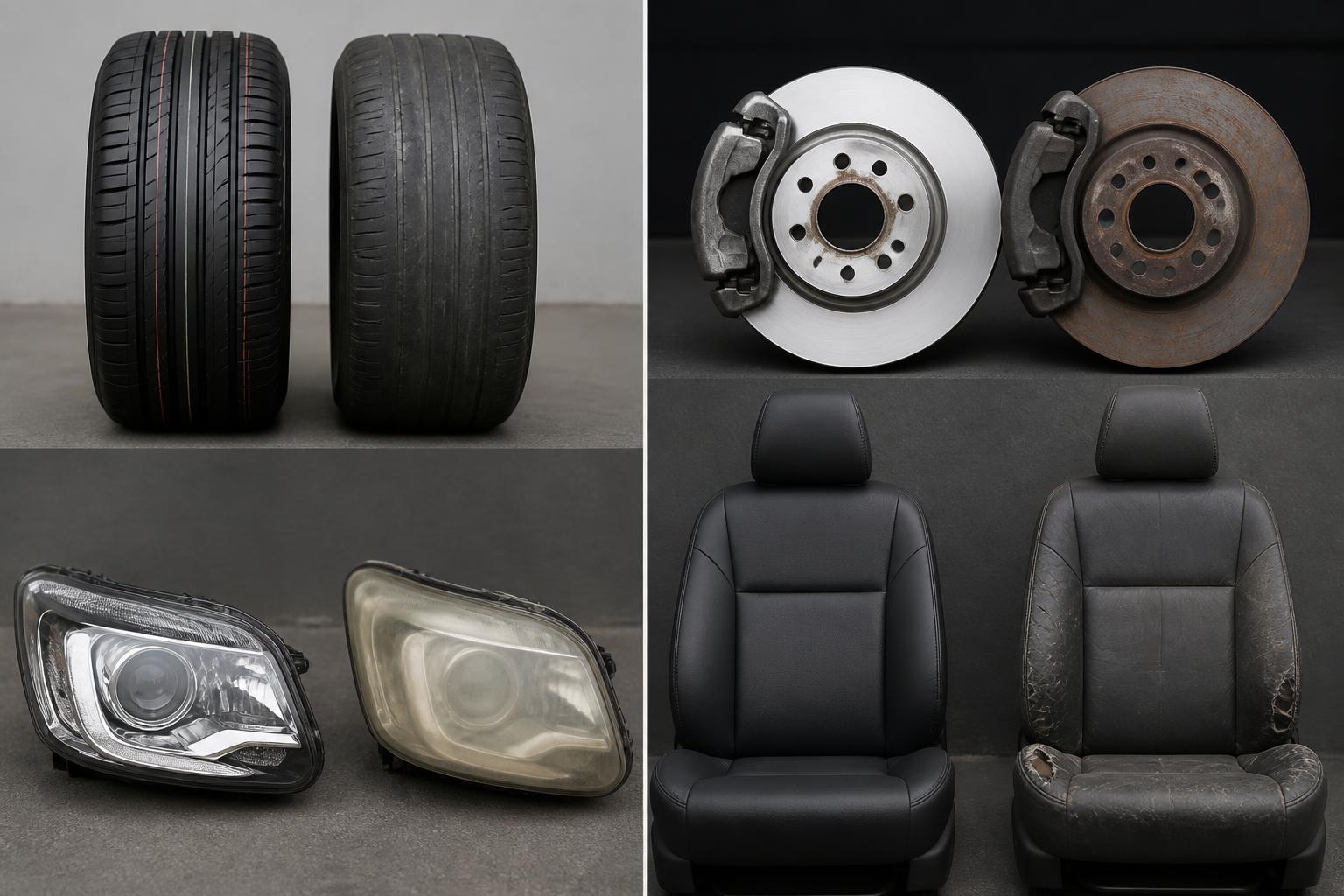
**If you buy used**, you skip the biggest depreciation hit, but you lose warranty coverage unless you buy an extended plan. The biggest risk with a used A‑frame is water damage at the roof‑to‑wall hinge seals. Look for stains, soft spots, or musty odor along the fold lines. A used camper three to five years old that has been stored indoors and shows no water intrusion can be a strong value.
**One concrete example:** A 2019 Aliner Classic (retail new ~$18,000) often lists used around $13,000–$14,000 in the Midwest. That’s a $4,000–$5,000 savings, but you’re taking on the risk of aging seals and appliances with no warranty.
## The Tow Vehicle Truth: Don’t Assume You’re Fine
Because A‑frames are light, many buyers think any SUV or minivan can tow one. That’s true only if you check three numbers:
– **Towing capacity** – The manufacturer’s maximum tow rating. Most A‑frames weigh 1,800–3,000 lbs loaded. A minivan like a Honda Odyssey is rated at 3,500 lbs, so it’s fine for most models.
– **Payload** – The real limiter. A family of four with a full tank of gas, gear, and the camper’s tongue weight can easily exceed the payload of a small SUV (often 900–1,200 lbs). Add 600 lbs of people, 100 lbs of cargo, 250 lbs of tongue weight, and you’re at 950 lbs—right at the limit. Exceed payload and handling becomes dangerous.
– **Gross Combined Weight Rating (GCWR)** – This is the total weight of vehicle, passengers, cargo, and loaded trailer. It’s rarely an issue with A‑frames, but check it.
**Common mistake:** Relying on the dealer’s claim that “any midsize SUV can pull this.” Always verify your specific vehicle’s payload sticker.
## Dealer vs. Private Sale: What Changes With an A‑Frame
**Dealer advantages:**
– You see the camper set up and can test the latch mechanism, the roof lift, and the furnace before buying.
– You can negotiate a pre‑delivery inspection (PDI) that includes cranking the roof up and down three times in front of you. Expect some dealers to resist—insist.
– Financing is easier to arrange through the dealer’s lender, though the rate will be higher than a credit union’s.
**Private seller advantages:**
– Lower price by 15–20% compared to dealer used‑lot prices.
– You can talk to the previous owner about actual usage, storage, and common issues with that model year.
– No dealer fees or documentation charges.
### Pre‑Delivery Inspection Walkthrough (Use This as a Step‑by‑Step Guide)
Treat the PDI as the single most important buying checkpoint. Do not skip any of these steps, regardless of whether you’re buying from a dealer or private party.
**1. Preparation.** Bring a hose with a nozzle, a flashlight, a flathead screwdriver (to check latch alignment), and a phone to record video of the roof operation. If the seller resists a hose test, walk away.
**2. Early checkpoints.** Before raising the roof, inspect the exterior hinge seals (the rubber or vinyl strip where the roof meets the side walls). Look for cracks, gaps, or any evidence of previous sealant. Press on the seal with your thumb – if it feels hard or brittle, it needs replacement within a year.
**3. Ordered actions.**
– Raise the roof fully, noting any binding or uneven lift. Lower it, then raise it two more times. On the third raise, stop halfway and check that the lift cables (or struts) are equally tensioned on both sides. – Open and close the entry door with the roof up. Many A‑frames have doors that stick after the frame settles; if the door drags, it may need hinge adjustment or the roof panels could be out of alignment. – Spray the roof hinge seals, all window gaskets, and the door seal with the hose for a full minute per section.
Go inside and check every corner for drips – pay special attention to the upper corners where the roof panels meet. – Turn on the propane system: light each burner on the stove and let it run for 30 seconds. Then turn the furnace to its highest setting and listen for even ignition. A yellow, flickering flame indicates a dirty burner or incorrect air mixture.
**4. Likely causes of failure.** Binding during roof lift often means the cable guide pulleys are misaligned or the roof panel hinges have shifted. If the roof is difficult to lift, budget for a cable system replacement ($300–$500). Water intrusion at the hinge seals is the most common cause of delamination and mold – if you see any staining inside, reject the unit unless the seller provides a professional repair receipt.
**5. Escalation signal.** If you find water stains, a sticking door that cannot be adjusted with simple latch shimming, or a propane system that won’t hold pressure (you hear gas hissing after the stove is off), stop the inspection. Do not buy the camper until those issues are fixed or you have a written repair estimate from an RV technician.
**6. Success check.** After the hose test, you have zero interior moisture. The roof raises and lowers smoothly three times without binding. The door closes with normal force. All propane appliances burn cleanly. You now have reasonable confidence the camper is solid.
## Extended Warranty and Financing: When It Makes Sense
**Extended warranty** – For a used A‑frame (3+ years old), a third‑party warranty from a reputable provider (e.g., Good Sam, Wholesale Warranties) can cover major mechanical failures like the refrigerator, furnace, or roof lift system. A typical plan costs $1,200–$2,000 for three years. If you plan to keep the camper five years, the peace of mind can be worthwhile. For a new A‑frame, skip the extended warranty; the one‑year manufacturer warranty covers the shakedown period, and by year two you’ll know if you have a reliable unit.
**Financing terms** – RV loans run longer than auto loans—often 10–20 years. For an A‑frame under $20,000, a 10‑year term at 7–9% interest means a monthly payment of $230–$280. But the longer the term, the more interest you pay on a depreciating asset. If you can pay cash or get a 5‑year personal loan at a lower rate, do that instead. Never finance an A‑frame for more than 10 years; you’ll be underwater on the loan before the camper is half paid off.
## A Practical Decision Criterion That Changes the Recommendation
The single question that shifts the recommendation is: **How often do you break camp?** If you move every night or every other night, the A‑frame’s 90‑second setup is a genuine advantage. If you stay at one site for a week at a time, the lack of interior space, small fridge, and no bathroom will wear on you fast. That one factor—camping mobility vs. base‑camp comfort—should drive whether you seriously consider an A‑frame or look at a small travel trailer instead.
**What this means for your next step:** If you answered “I usually camp for 3+ nights at a single spot,” then a trailer with a dedicated bathroom and full kitchen (even a 16-foot travel trailer) will give you more usable comfort for roughly the same tow weight. If you answered “I move every day or two,” the A‑frame is the better choice – but only if you can verify the roof seals and tow vehicle payload as outlined above. Many buyers who try an A‑frame for week-long stays end up selling within two years; those who use it for weekend road trips keep it for a decade.
## When the Answer Changes by Model or Setup
Not all A‑frames are created equal. The two dominant brands are Aliner and Forest River (Rockwood and Flagstaff lines). Aliner uses a manual gas‑spring lift system; Rockwood/Flagstaff use a manual crank or optional power lift. The key difference is roof weight – Aliners tend to be slightly lighter (1,800–2,200 lbs dry) while Rockwoods can exceed 2,500 lbs dry, which matters if your tow vehicle is a small sedan.
Some A‑frame models include a wet bath (toilet and shower combo) – for example, the Aliner Classic with the “LG” package or the Rockwood A122 with the “Sport” option. These add about 200–300 lbs and $2,000–$3,000 to the price. A wet bath makes the camper usable for a family of four on a longer trip, but the shower is tight (28×32 inches) and the plumbing introduces a new failure point (frozen pipes, pump issues). If you plan to camp in sub‑freezing temperatures, avoid any model with a wet bath unless you are prepared to winterize before every cold night.
**How to verify which options are on a specific unit:** Locate the manufacturer’s sticker (usually on the driver-side front of the frame near the coupler). It will list the model number and a “C” code for standard or “S” for special options. Cross‑reference with the brand’s online build sheet. Do not rely on the seller’s verbal description alone.
## The One Trade‑Off Most Buyers Underestimate
The biggest mismatch between expectation and reality is interior moisture in cold weather. A‑frames have no enclosed underbelly, and the single 20‑lb propane tank runs the furnace through uninsulated ducts under the floor. In 40°F weather, the furnace will cycle frequently, consuming propane faster than a travel trailer of similar size. At 30°F, the tanks can freeze if you don’t use an insulated cover – and if you do, the propane draw may not produce enough heat to keep the tanks above gelling temperature.
The practical consequence: if you plan to camp in weather below 40°F more than a few nights a year, choose a model with an aluminum (rather than steel) propane tank mount and carry a spare 5‑lb tank as backup. Better yet, consider a small hard‑sided trailer with an enclosed underbelly and heated holding tanks.
**What to do after reading this:** If the three‑minute hose test, the payload check, and the cold‑weather limit don’t scare you off, an A‑frame can be a rewarding camper. If any of those warning lights went off, shift your search to a 16–18 foot travel trailer – you’ll lose the 90‑second setup but gain year‑round usability and far more livable space.
## Explore This Topic
– Back to [RV Buying & Reviews](/rv-buying-reviews-hub/)
Related guides in this cluster:
– [RV Trailer: Everything to Know Before Buying](/rv-trailer/)
– [Camping Trailer: Everything to Know Before Buying](/camping-trailer/)
– [Happier Camper Buying Guide: Features to Consider](/happier-camper/)
– [Slide in Camper: Complete Buyer’s Guide](/slide-in-camper/)

Practical RV guides from an experienced owner. Motorhomes, travel trailers, truck campers — we have owned them, maintained them, and written the guides we wish we had found when we started.