Scamp Camper: A Complete Overview
The Scamp is a lightweight, towable fiberglass travel trailer built in Backus, Minnesota since 1972. Its molded one-piece fiberglass shell, aerodynamic shape, and low curb weight let many midsize cars, SUVs, and minivans tow it without a heavy-duty truck. Scamps come in three floorplan sizes—13, 16, and 19 feet—and are one of the most available used fiberglass trailers on the market.

Scamp Camper Models and Layouts
Scamp offers three body lengths, each with multiple interior layouts. All use the same basic construction: a gel-coated fiberglass shell bonded to a plywood subfloor over a steel frame.
| Model | Length (ft) | Dry Weight (lb) | GVWR (lb) | Hitch Weight (lb) | Typical Sleeping Capacity |
|---|---|---|---|---|---|
| 13 ft | 13’ | 845 – 1,200 | 1,500 – 2,200 | 80 – 135 | 2 – 3 |
| 16 ft | 16’ | 1,200 – 1,600 | 2,400 – 3,500 | 120 – 175 | 3 – 4 |
| 19 ft | 19’ | 1,800 – 2,200 | 3,500 – 4,500 | 175 – 220 | 4 – 5 |
Weights vary by build year, options, and installed equipment. Always read the manufacturer’s VIN sticker on the trailer frame—never rely on online specs alone.
13 ft
The original size. Usually a front dinette that converts to a bed and a rear gaucho or a side dinette. No bathroom; a cassette toilet can be added in some layouts. Best for solo travelers or couples who don’t need a toilet.
16 ft
The most popular size. Floorplans include a front dinette with a rear bathroom (shower, toilet, sink) or a rear dinette with a front bathroom. Some have a permanent queen bed. This is the sweet spot for a couple or small family wanting a private bath.
19 ft
The largest Scamp. Two axle options (single or tandem). Usually has a front queen bed, mid-dinette, and a rear bath with separate shower. Sleeps four to five, but the extra length reduces off-road maneuverability.
Model-Year Changes
Before 2000, Scamp used a separate roof cap seam instead of the full-clamshell design—that seam is a known failure point for leaks. Also, early 13 ft models used a 1-7/8” ball coupler; all later models use the 2” coupler. If you are inspecting a pre-2000 trailer, pay close attention to the roof seam. Post-2000 trailers have smoother construction but still need regular window seal maintenance.
Construction and Durability
Scamp uses a two-piece fiberglass clamshell construction: an upper half and a lower half bonded at the beltline with a mechanical flange and sealant. The floor is ¾-inch plywood sandwiched between the shell and a steel frame. No wood roof or walls—only fiberglass, which eliminates the risk of roof rot found in stick-built campers.
Pros: No roof seams to leak, no paint to peel, and the gel coat can be polished back to original luster. The rounded shape sheds wind well, improving fuel economy while towing.
Cons: Fiberglass does not insulate as well as foam-filled aluminum walls. Scamps are “cold-weather” trailers only down to about 25°F unless you add insulation or a furnace. The original single-pane windows are weak points for both heat loss and condensation.
Common Failure: Water Intrusion at Window Seals
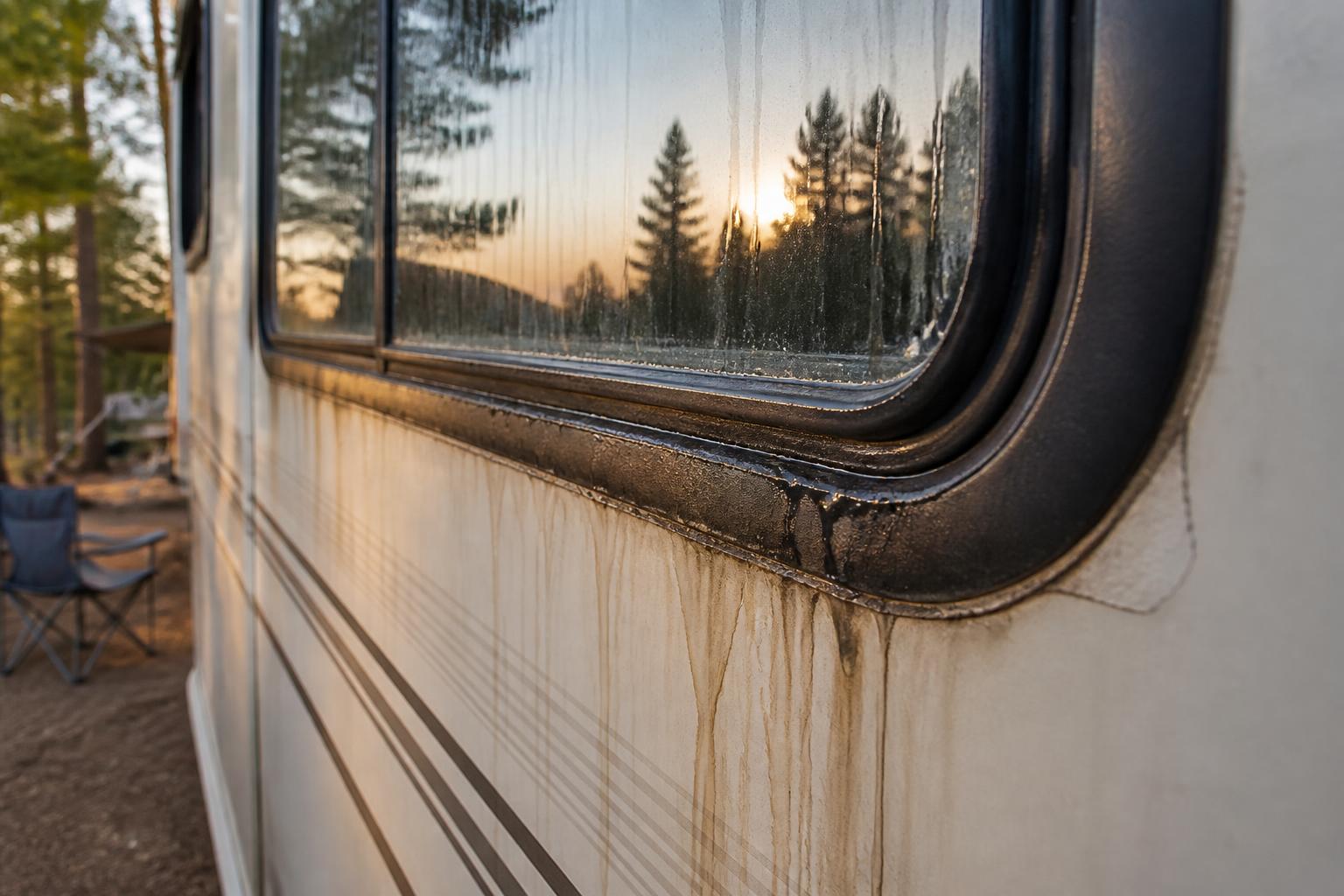
The most common failure mode in older Scamps is water entering around the window frames. The factory seals are butyl tape and a plastic trim ring, which dry out and crack after 5–10 years. Water then runs behind the fiberglass and soaks the plywood subfloor, causing soft spots and eventual floor rot.
How to Detect It Early
- Push on the floor around every window. Use your hand or a screwdriver handle. A soft or spongy feeling means the plywood has already started to delaminate.
- Look for dark stains on the interior walls below the windows. This indicates water is running down behind the skin.
- Check the exterior trim ring. If it is brittle or missing pieces, the butyl tape is likely compromised.
- Smell for musty odors after the trailer has been closed for a few days.
The fix requires removing the window, scraping old butyl, reinstalling with new butyl tape and a fresh trim ring, then replacing any rotted subfloor. Early detection keeps repairs to a few hours and under $100 in materials.
Practical Implication for Buyers
If you find even one soft spot near a window, factor floor repair into your purchase price. A single window reseal costs about $50 and an hour of work, but replacing a rotted subfloor section can run $500–$1,200 at a shop. If the soft area is larger than a dinner plate, walk away unless the price is deep enough to cover repair and you’re comfortable doing the work yourself.
Inspecting a Used Scamp: Step-by-Step
If you are buying a used Scamp, run through this process in a dry, level lot. Allow at least 45 minutes.
Before you start, bring a flashlight, a step stool, a flathead screwdriver, and a moisture meter if you have one. Ask the seller to have the trailer disconnected from shore power and fresh water drained.
| Step | Action | What to look for |
|---|---|---|
| 1 | Exterior shell check | Cracks, deep scratches, or delamination bubbles in the gel coat. Pay attention to corners and the roof crown. |
| 2 | Window seals | Butyl tape oozing out or missing, trim ring cracked, sealant gaps wider than 1/8″. |
| 3 | Floor perimeter | Push on every edge of the floor inside and outside. Also check under the cushions and around the wheel wells. |
| 4 | Roof seam (if present on pre-2000 models) | Scamps before ~2000 had a separate roof cap seam. |
Look for caulking gaps or water stains inside. |
| 5 | Axle and suspension | Torsion axle should have no more than 1” of sag from the center bolt. Tire sidewalls should not show dry rot (cracks). |
| 6 | Plumbing systems | Turn on the water pump. Check for leaks at all pex connections and under the sink. Run the water heater briefly. |
| 7 | Electrical | Test all lights (12V and 120V), the converter, and the fridge (on propane and electric). Check battery condition. |
Likely causes for soft floors: Water intrusion from windows (most common), cracked gray tank fittings that let water spill under the floor, or a leaking water heater.
Escalation signals: Any soft floor larger than a dinner plate or frame rust that flakes when poked. These usually require professional repair.
Success check: After the inspection, you should have a clear list of up to three minor repairs (reseal two windows, replace a battery) and no major structural issues.
Concrete Verification: Window Seal Condition
To confirm whether a window needs resealing, run a fingernail along the exterior edge of the trim ring. If the butyl tape is dry and crumbly, you will feel a gritty residue. Then press the window from inside—if it moves more than 1/8” at the edge, the seal has failed. This test takes 30 seconds per window and removes guesswork.
Towing and Weight Considerations
The 13 ft Scamp can be towed by many cars with a 2,000-lb tow rating—think a Honda CR-V, Subaru Outback, or Toyota RAV4. The 16 ft model pushes around 1,500 lb dry, but loaded with gear, water, and propane you can hit 2,500 lb. That bumps you into 3,000-lb tow-rated vehicles (Ford Explorer, Toyota Highlander).
Real-world numbers: A 16 ft Standard Deluxe model with full fresh water (12 gal ≈ 100 lb), propane (two 20-lb tanks ≈ 70 lb), and camping gear (200 lb) will weigh about 1,600 + 100 + 70 + 200 = 1,970 lb. Stay below 80% of your vehicle’s tow rating.
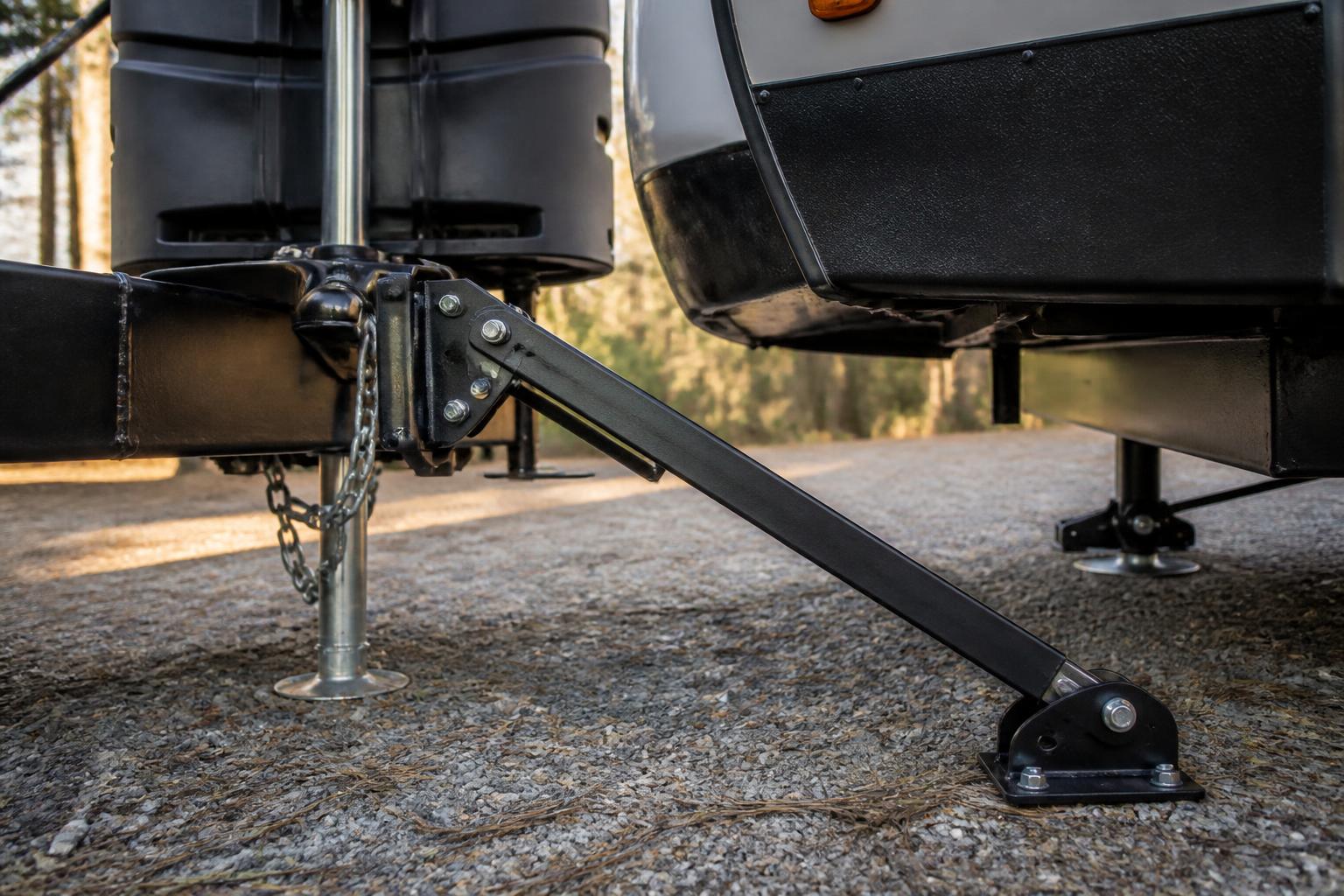
Hitch type: All Scamps use a 2” ball with a 2-inch coupler (except some very early 13 ft models that used a 1-7/8” ball). A weight-distributing hitch is not required for the 13 and 16 ft trailers, but using a sway control bar is recommended for the 19 ft or any Scamp when towing above 55 mph.
Towing Mismatch: Under-Rated Tow Vehicle
A common mistake is buying a 16 ft Scamp and towing it with a vehicle rated for only 2,000 lb. Even though the trailer’s dry weight is under 2,000 lb, a full load of gear, propane, and water often exceeds the vehicle’s capacity, leaving no margin for hills or emergency braking. Always weigh the loaded trailer at a public scale (about $12) before relying on online dry weights.
Expert Tips for Scamp Ownership
1. Seal windows proactively every 3 years. Scamp recommends re-butyl-taping windows on a schedule, not after you see a leak. Remove the trim ring, clean old butyl with mineral spirits, lay new ¾” wide butyl tape (available at any RV supply), and press the window back. Common mistake: using silicone caulk instead—it makes future removal extremely difficult and can trap moisture against the fiberglass.
2. Upgrade to a portable power station for boondocking. The stock converter/charger is fine on shore power, but off-grid you will want a quiet, fuel-free option. The Anker SOLIX C2000 Gen 2 Portable Power Station provides 2,048 Wh of battery capacity—enough to run a 12V fridge, lights, and charge phones for two days. Common mistake: buying a cheap inverter generator that does not have clean (THD < 3%) output, which can damage the converter’s electronics.
**3. Replace the original single-pane windows with dual-pane acrylic.** Aftermarket dual-pane windows from companies like Agile RV or Clear2Go reduce condensation and improve insulation by about 50%. They also weigh half as much as original glass. Common mistake: assuming RV window film will solve condensation—it only delays it and can trap moisture against the seal.
Is a Scamp Right for You?
Scamp campers appeal to owners who want a durable, repairable, lightweight trailer that holds its value. The lack of wood framing and the simple electrical and plumbing systems mean you can maintain them with basic tools. The trade-offs are limited headroom (6’3” in the 16 ft), no slide-outs, and a spartan feel that some find too basic.
If you need a trailer you can tow with a commuter car, camp in year-round (with insulation upgrades), and keep for decades, a Scamp is a solid choice. If you want a large bathroom, a dedicated queen bed with walk-around space, or modern amenities like a TV niche, look at the larger fiberglass competitors (Casita, Escape, Bigfoot) instead.
Does a Scamp hold its value?
Scamps typically retain 70–80% of their original purchase price after 10 years, assuming no major rot or structural damage. A 2005 13 ft model in good condition often sells for $8,000–$12,000, while the same trailer cost roughly $10,000 new. The fiberglass shell is the main value driver—stick-built trailers of the same age usually depreciate harder because of wood rot and delamination.
Can you use a Scamp in freezing weather?
The stock insulation is marginal below 25°F. Plumbing lines run under the floor without heat tape, and the single-pane windows lose heat fast. To camp below freezing, add foam board insulation under the floor, install dual-pane windows, and use a furnace with a thermostat rather than the standard catalytic heater. Many owners also wrap the exposed water lines with heat tape and add a skirting panel around the bottom. These upgrades add 200–400 lb of weight and cost $800–$2,000, which may cancel the lightweight advantage that made you choose a Scamp in the first place.

Practical RV guides from an experienced owner. Motorhomes, travel trailers, truck campers — we have owned them, maintained them, and written the guides we wish we had found when we started.