Rockwood RV Explained: What You Need to Know
# Rockwood RV Explained: What You Need to Know
If you’re considering a Rockwood RV, the key thing to know is that they are lightweight, aluminum-framed travel trailers and fifth wheels that offer a lot of features for the weight—most can be towed by a half-ton truck or even a mid-size SUV. But the real selling point is also their biggest vulnerability: water damage from roof and slide-out seal failure. This failure mode goes unnoticed until the structure is compromised, and it’s the single most expensive repair you’ll face if you skip annual seal maintenance.
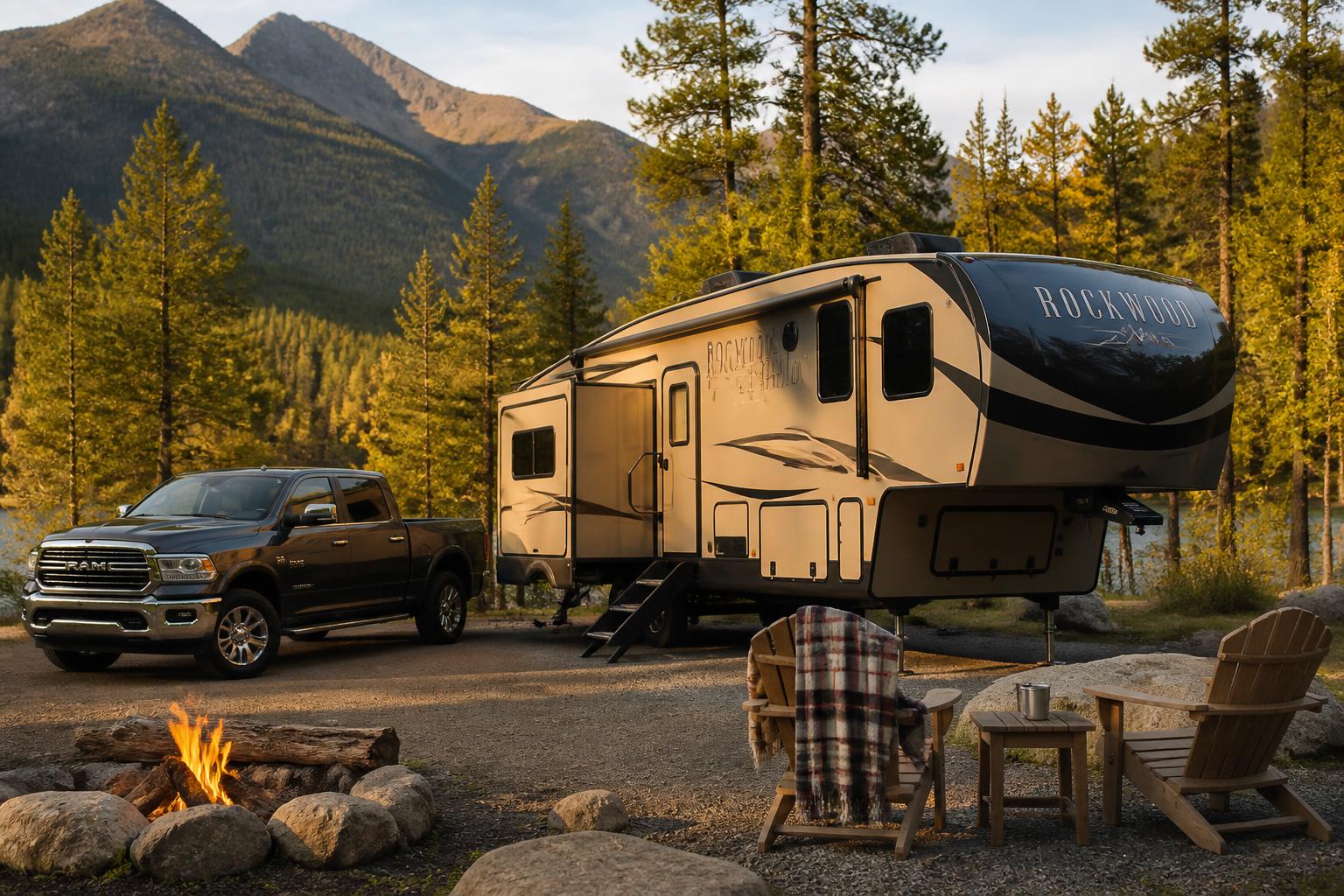
## What “Rockwood” Actually Means
Rockwood is a Forest River brand (Forest River is owned by Berkshire Hathaway). The lineup covers:
– **Rockwood Mini Lite** – under 3,000 lbs dry, single-axle
– **Rockwood Ultra Lite** – 3,000–5,500 lbs, tandem-axle
– **Rockwood Signature** – mid-sized fifth wheels with more residential features
– **Rockwood Flagstaff** – technically sister brand, same chassis and build, different trim/dealer line

Rockwood’s primary selling point is laminated aluminum-framed walls (not wood) on most models, which resists rot better than wood-framed competitors. They also use a one-piece TPO or EPDM rubber roof membrane. That sounds good on paper, but the weakest points aren’t the panels—they’re the edges and penetrations.
## The One Failure Mode You Need to Catch Early
Water intrusion through slide-out gaskets, roof seams, and window seals is the biggest long-term risk on any Rockwood. Delamination (the outer fiberglass skin separating from the lamination board) is the visible symptom. The root cause is almost always caulk and sealant failure at the roof edge, the slide-out topper gap, or the clearance lights and antenna mounts.
**What this means for your next move:** If you own a Rockwood, plan to reseal all roof penetrations and slide-out gaskets every 12 months—not every two years. If you’re buying used, a unit that shows any soft ceiling or stained slide-out floor should be avoided unless you’re prepared to do structural repairs. The cost to fix delamination often exceeds the purchase price of the trailer.
### How to Detect It Early
You don’t need tools. Do this on any used Rockwood before you buy:
1. **Push on interior ceiling panels**, especially near vents and the TV mount. If the panel depresses or feels soft, water has already soaked the luan underlayment.
2. **Check the slide-out floor corners** where the slide meets the main floor. Peel back the carpet or linoleum edge. Dark staining or white powder (dry rot) is a hard stop.
3. **Look for wavy exterior walls**, especially below windows and at the back wall. Delamination creates a visible bubble or sag.
4. **Inspect all roof caulk** at the front and rear caps, vents, AC unit base, and rain gutters. Cracks, chunks missing, or yellowed silicone means it’s due for reseal. Silicone that no longer sticks to the membrane is a failure.
**Quick verification:** Press your thumbnail into the sealant at the roof-to-wall J-rail. If it leaves a permanent dent or flakes off, the sealant has degraded and needs replacement before the next rain.
5. **Run a hose over the roof and slide-out tops** for five minutes while you watch inside for drips at seams, outlets, and light fixtures. Any moisture means either failed gaskets or a pinched slide-out seal.
**Expert tip:** Most Rockwood RVs come with a walkable rubber roof, but owners often skip annual sealant inspection. The single highest-value maintenance you can do is replace caulk at roof penetrations every 12 months, not every 24. Common mistake: using standard silicone instead of self-leveling lap sealant (Dicor or similar) on the rubber membrane. Silicone won’t bond properly and peels within one season.
**Expert tip:** Slide-out topper fabric on Rockwoods is often a thinner grade than aftermarket replacements. If the topper sags enough to pool water, the hydraulic force during rain will pull the gasket channel loose from the RV wall. On a used unit, check that the topper ends are still screwed into the sidewall. Re-drill and seal with butyl tape immediately if they aren’t.
**Expert tip:** Rockwood uses bonded-frame windows on some models. The window frame is glued to the fiberglass wall with no mechanical fasteners. If the bond fails (cold weather, age), the window shifts outward and water enters behind the frame. You can spot this by looking at the gap between the window frame and the wall at the corners—any unevenness means the adhesive has let go.
## How Rockwood Builds (and Where Corners Get Cut)
Rockwood uses a laminated sidewall construction: aluminum studs with luan plywood interior, foam insulation block, and fiberglass or aluminum exterior skin. The roof is a one-piece membrane over a truss system. Frame material is steel, typically with a “C” channel or I-beam design depending on model year.
The lightweight construction that makes these trailers towable with a half-ton also comes with real trade-offs:
– **Subfloor:** Many Rockwoods use 5/8” OSB floor decking rather than plywood. OSB is more susceptible to water damage and swells when wet. If a leak reaches the subfloor, the entire floor deck may need replacement, which means removing cabinets and the slide-out mechanism.
– **Insulation:** Wall R-value is typically R-7; roof is R-14. That’s fine for three-season camping, but below 20°F the furnace will run constantly and the water lines can freeze in unheated bays.
– **Fresh tank size:** Standard on Mini Lite and Ultra Lite is 30 gallons. For boondocking, that’s barely a weekend. Owners who dry camp regularly often need to carry extra water jugs or upgrade to a larger tank.
– **Tongue weight vs. dry weight:** The advertised dry weight doesn’t include the battery (60–80 lbs), propane tanks (40–50 lbs), or any gear. If you load heavy in the front storage compartment, tongue weight can easily exceed your receiver’s rating. Always weigh the tongue on a scale before hitting the road.
The corners that matter most for long-term durability:
– **Slide-out room seals** – Rockwood uses a wiper seal at the bottom and a bulb seal at the top and sides. The wiper seal is exposed to debris and UV. On units over 3 years old, it’s common for the bottom seal to gap by 1/8” or more, letting water wick into the slide-out floor.

– **Roof-to-wall joint** – This is a caulked seam covered by a plastic drip rail (called a “J-rail”). The J-rail itself can crack or separate from the sidewall on units exposed to extreme sun. If the caulk behind it fails, water runs down inside the wall cavity.
– **Water heater and furnace exterior panels** – These are screwed into the sidewall through a foam gasket. If the gasket compresses or shifts, water enters the cabinet and rots the floor from below. On many 2020–2021 units, these gaskets were undersized.
**Key fact:** Most Rockwood models come with a 1-year structural warranty. The manufacturer considers sealant maintenance the owner’s responsibility. If you buy new, sealing the roof and slide-out flanges yourself during the first season is cheap insurance.
## Key Specs and Decision Points
| Series | Typical GVWR | Hitch Weight | Sleeps | Slide-outs |
|—|—|—|—|—|
| Mini Lite | 3,500–4,500 lbs | 350–450 lbs | 4–6 | 0–1 |
| Ultra Lite | 5,000–7,000 lbs | 500–650 lbs | 4–8 | 1–2 |
| Signature (5th wheel) | 7,500–10,000 lbs | 1,200–1,600 lbs | 4–6 | 2–3 |
*GVWR and hitch weight vary by floorplan. Always verify on the manufacturer sticker.*
## 5-Minute Pre-Purchase Checklist
Before signing on any used Rockwood, run these pass/fail checks:
– [ ] Ceiling and interior walls feel solid (no soft spots or water rings)
– [ ] All slide-out seals press tightly against the wall with no daylight visible
– [ ] Roof caulking is flexible, not cracked or peeling (especially at front cap seam)
– [ ] Floor in the slide-out corners is dry and free of staining
– [ ] Window frames are flush to the fiberglass wall with no gap at corners
– [ ] Cargo doors pass a hose test (low-pressure water directed at the frame seam for 2 minutes, no interior drips)
Fail any one, and the repair cost likely exceeds the value of the RV unless you’re prepared to reseal and replace trim yourself.
## Related Questions
**Is Rockwood better than Jayco or Forest River’s other brands?**
Rockwood and Jayco serve the same price point. Jayco uses wood-framed walls on many models, while Rockwood uses aluminum framing. Jayco’s warranty package is longer (2-year structural vs. 1-year). Rockwood is lighter on average, which matters if you’re towing with a half-ton. Neither brand is inherently more reliable; individual unit quality depends on the dealer prep and how the first owner maintained seals.
**Can a Rockwood be used for full-time living?**
The Mini Lite and Ultra Lite lines are designed for seasonal/weekend use, not full-time occupancy. The cushions use residential foam that degrades with daily use, and the insulation R-values (typically R-7 in walls, R-14 in roof) are marginal for winter camping below 20°F. The Signature fifth wheel series is closer to a part-time rig but still lacks the insulation and heavier gauge frame of purpose-built full-time models.
**What years of Rockwood should I avoid?**
Pre-2015 units may have wood-framed walls in some floorplans (Rockwood switched to aluminum framing gradually). Check the sidewall construction by peeking inside a cargo hatch or accessing the interior of a cabinet near the wall—if you see plywood edge grain, it’s a wood-framed unit. Wood-framed Rockwoods are more prone to rot if water intrusion occurs. 2020–2021 units from the peak production period often have QC issues such as misaligned slide-out tracks and loose cabinet fasteners. Inspect those model years especially closely for fasteners that have pulled through, and check the furnace gasket for signs of water entry.
## Explore This Topic
– Back to [General RV](/general-rv-hub/)
Related guides in this cluster:
– [Grand Design RV Explained: What You Need to Know](/grand-design-rv/)
– [RV Trailer: Everything to Know Before Buying](/rv-trailer/)
– [A Frame Camper: Everything to Know Before Buying](/a-frame-camper/)
– [Choosing the Right Pop Up Trailer: A Buyer’s Guide](/pop-up-trailer/)

Practical RV guides from an experienced owner. Motorhomes, travel trailers, truck campers — we have owned them, maintained them, and written the guides we wish we had found when we started.