Grand Design Explained: What You Need to Know
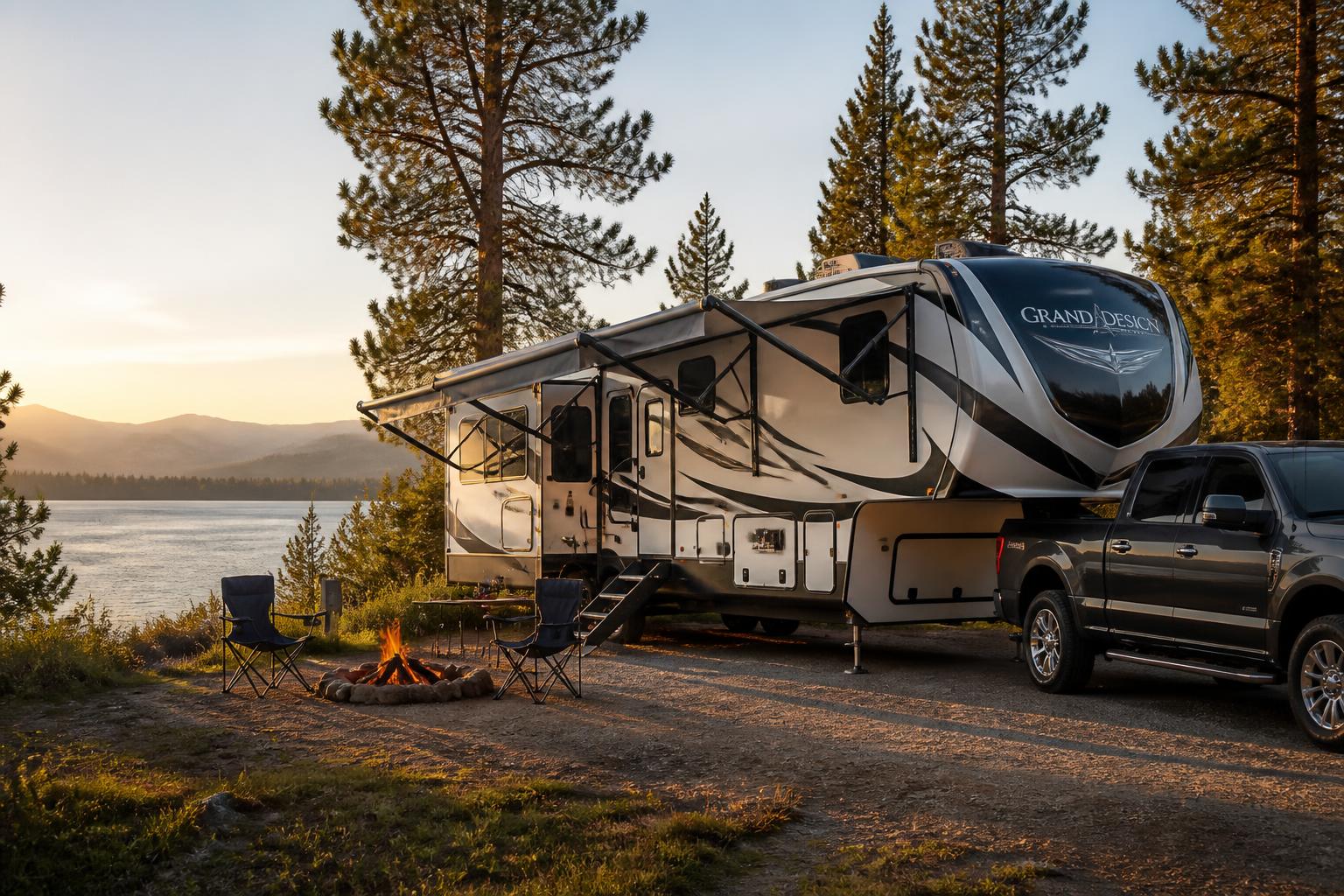

The Brand and Its Reputation
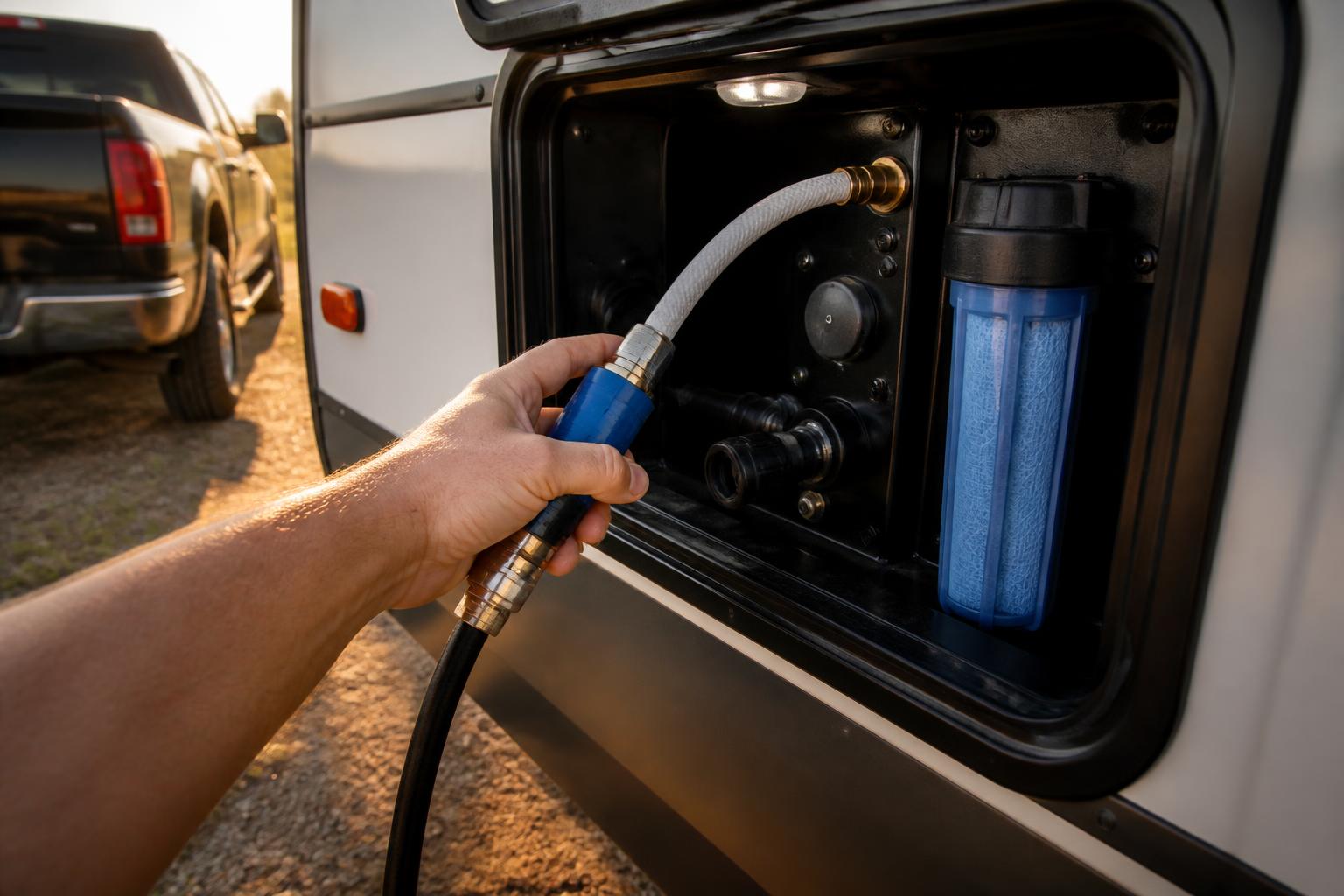

Founded in 2012, Grand Design quickly earned a loyal following by focusing on build quality, customer service, and owner-focused features. Their lineup includes the Reflection (fifth wheels and travel trailers), Solitude (luxury fifth wheels), Imagine (mid-range travel trailers), Transcend (lightweight), and Momentum (toy haulers). Many owners cite the brand’s heated and enclosed underbelly, Azdel composite wall panels, and laminated fiberglass construction as reasons they chose Grand Design over competitors like Forest River or Keystone.
Build Quality and Construction – What Sets Them Apart
Grand Design uses a few key construction methods that reduce common RV problems:
- Azdel composite panels instead of Luan plywood in walls and ceilings. Azdel won’t rot, delaminate, or absorb moisture like wood-based substrates.
- Laminated fiberglass sidewalls with block-foam insulation (R-10 in most models). This gives better thermal performance and a smoother exterior than filon or aluminum siding.
- Heated and enclosed underbelly – ducts run warm air under the RV to keep tanks and plumbing from freezing. The underbelly cover is a rigid material, not the cheap corrugated plastic you often see.
- One-piece TPO roof membrane (most models) with a 12-year warranty. Seams are fewer than on older rubber roofs, reducing leak points.
Real-world example: An Imagine 2670MK owner reported interior temps stayed 20°F higher than outside during a 15°F night with the furnace set at 50°F, thanks to the block foam and underbelly heating. That’s not common with many comparably priced travel trailers.

Verification Step: Confirm Your Underbelly is Actually Heated
Some early models or special-order units may have the enclosed underbelly but not the ducted heat. To verify: after the furnace has been running for at least 10 minutes, place your hand on the underbelly cover during cold weather. You should feel warmth coming through the material. If the underbelly feels cold to the touch, the duct may be blocked or the RV may have only the unheated version. Check your build sheet or contact Grand Design with your VIN to confirm.
One Common Failure Mode – Water Intrusion at Slide-Out Seals
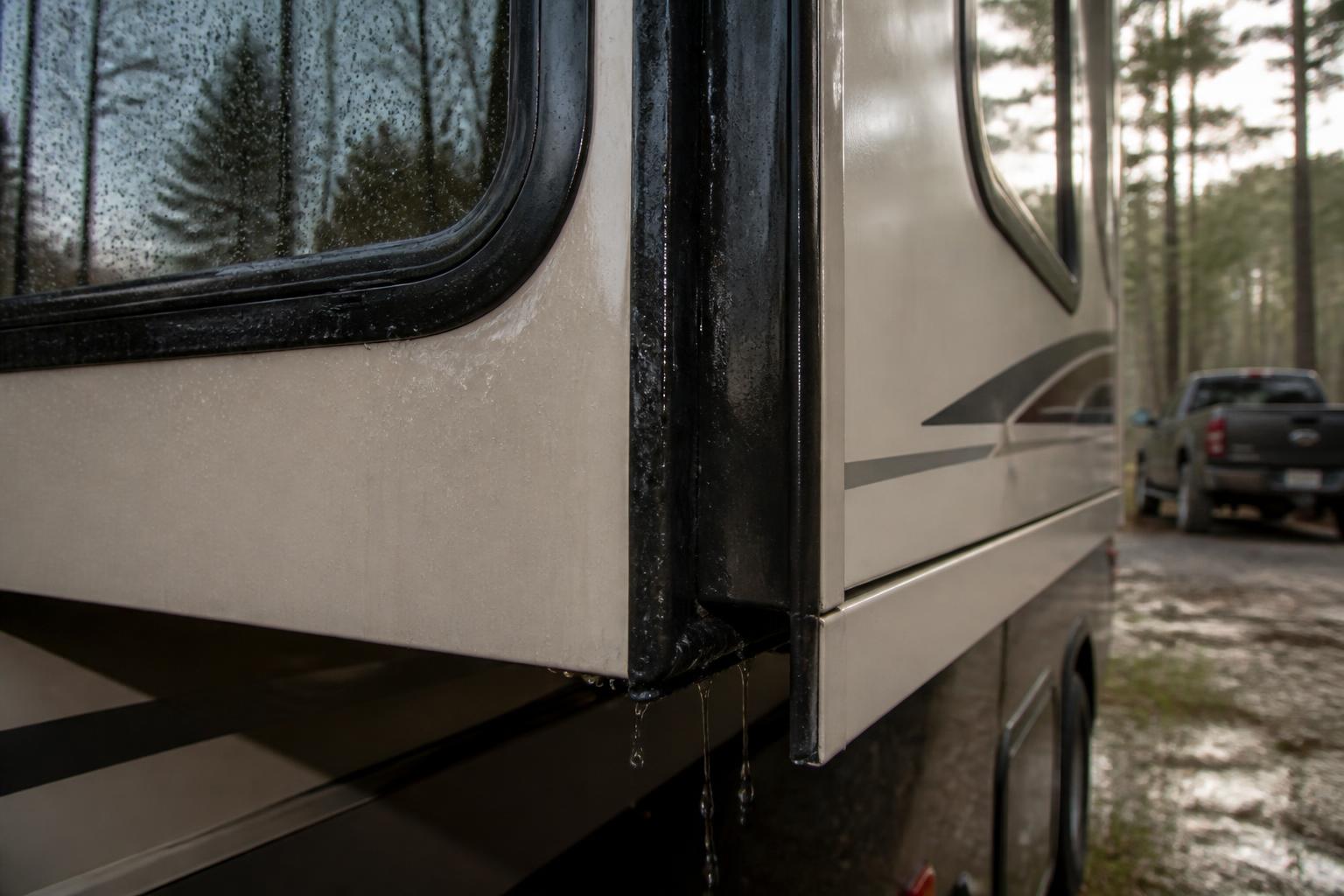
The most frequent issue owners run into is water entry around the slide-out seals, leading to floor rot, delamination, or mold. It’s not unique to Grand Design, but the design of the wiper seals and the gap between the slide-out and the RV body make the brand especially vulnerable if the seals aren’t maintained.
How to Detect It Early
- Check the wiper seals (the outer rubber that presses against the slide-out sidewall). Look for cracks, gaps, or hardening. A wiper seal that’s pulling away from the frame is a leak waiting to happen.
- Inspect the interior corners of the slide-out room. Use a flashlight to look for staining, soft caulk, or discoloration on the wall, floor, or carpet edge.
- Run a garden hose test – at least once a season, hose down the slide-out seals from all angles while someone inside watches for drips. Do this before you store the RV for winter.
- Use a moisture meter on the floor near the slide-out opening. Readings above 20% are a red flag.
Operator Flow: Slide-Out Seal Inspection
| Step | Action | Checkpoint |
|---|---|---|
| 1 | Visually scan the top, bottom, and sides of each slide-out seal. Look for cracks, missing chunks, or loose ends. | If you see damage, order replacement seals immediately. |
| 2 | Run a water hose at low pressure across the top seal for 2 minutes while someone checks inside. | Any water inside the coach means the seal is compromised. |
| 3 | Check interior corners for soft spots or discoloration. Press firmly on the floor near the slide-out edge. | If the floor feels spongy, you already have water damage. Stop the leak first, then dry and repair. |
| 4 | Apply a thin layer of Dicor or similar slide-out seal conditioner to rubber seals once a year. | Avoid using silicone-based products; they can dry out the rubber faster. |
Likely Causes of Failure
- UV damage – seals left exposed for years without conditioning become brittle.
- Road debris – tiny stones or dirt trapped between the seal and the slide-out can abrade the rubber over time.
- Improper retraction – if you store the slide-out without cleaning the outer gasket, debris can cut into the seal.
Escalation Signal
If you find water stains, soft wood, or musty odor near a slide-out, seal replacement alone won’t fix the damage behind the wall. You need to pull the interior trim, dry the cavity, and replace any rotted sheathing. This is a dealer-level fix for most owners.
Warranty Coverage and Customer Service – What’s Actually Covered
Grand Design offers a 2-year structural warranty on most models and a 1-year component warranty on appliances, A/C, and electronics. The structural warranty covers defects in frame, walls, roof, and floor. The roof membrane itself carries a separate 12-year warranty (often prorated after year 2 – so year five you only get a 7/12 discount on replacement). Transfer to a second owner is possible with a fee and inspection – contact Grand Design or your dealer for the current transfer policy.
Trade-off to know: The prorated roof warranty is weaker than a fully transferable, non-prorated plan from some competitors (like DRV’s 10-year non-prorated). Also, component warranties are handled by the manufacturers (Dometic, Suburban, etc.), not Grand Design, so claim times depend on their service networks. Customer service at Grand Design itself is widely regarded as above average, but regional dealer availability varies – if you’re in the Southeast, you’ll find faster service than in the Mountain West.
Which Grand Design Model Fits Your RV Style?
Reflection
– Flagship line for fifth wheels and travel trailers. Best for full-timers or those wanting higher-end finishes. Typical length: 27–40+ feet. GVWR starts around 10,000 lb and goes past 16,000 lb for fifth wheels.
Trade-off: The heavier Reflections require a 3/4-ton or 1-ton truck. A 2024 Reflection 337RLS has a hitch weight around 2,200 lb – that leaves only about 800 lb for people, cargo, and fuel on a typical 1-ton (3,000 lb payload), which is tight.
Solitude
– Luxury fifth wheels with residential features (king beds, island kitchens, fireplace, optional washer/dryer). Heavier – dry weight often 11,000–14,000 lb. Requires a 1-ton truck with at least 3,500 lb payload.
Trade-off: The Solitude 310GK’s hitch weight of 2,800 lb eats up most 1-ton payloads. If you carry a generator or full water tanks, you’ll exceed the TV’s GVWR quickly. Consider a 3500 dually if you plan to boondock with full tanks.
Imagine
– Mid-range travel trailers and fifth wheels aimed at families and weekenders. Lighter than Reflection (GVWR 6,000–9,000 lb for travel trailers). Good entry point for first-time owners.
Trade-off: Heated underbelly is standard, but the Imagine’s tank heaters are often optional. If you camp in freezing weather, verify you have the tank heater package – otherwise, the enclosed underbelly alone may not prevent black tank freezing.
Transcend
– Lightweight travel trailers with aluminum framing and Azdel. Dry weights as low as 3,500 lb. Tows with a half-ton SUV or pickup. Budget-friendly but still includes heated underbelly.
Trade-off: The lighter frame means less payload capacity (often under 2,000 lb cargo carrying capacity). Carrying full water, gear, and propane can push you over GVWR easily.
Momentum
– Toy haulers with a garage for motorcycles, ATVs, or cargo. Features heavy-duty suspension and large holding tanks for boondocking. Models range from 26 to 44 feet.
Trade-off: The garage floor is not always fully insulated even though the underbelly is enclosed. In cold weather, the garage area can get cold, and water lines running through it may freeze if not winterized.
How to decide: Match the model’s hitch weight and GVWR to your tow vehicle’s payload and towing capacity. For example, a Solitude 310GK has a hitch weight around 2,800 lb – that eats up most 1-ton truck payloads. An Imagine 2400BH with a hitch weight of 550 lb is fine for a half-ton with proper weight distribution.
Expert Tips for Grand Design Owners
Tip 1: Lubricate slide-out seals regularly. Apply a foam seal conditioner (like Thetford Slide-Out Rubber Seal Conditioner) every 90 days. Common mistake: Using WD-40 or silicone spray – these cause rubber to dry and crack faster.
Tip 2: Check axle alignment after the first 1,000 miles. New RVs often have slightly misaligned axles from the factory or from transport. Uneven tire wear is the first symptom. Verification: Measure tire tread depth across the inner and outer edges. If the difference exceeds 2/32 of an inch, alignment is off. Have a qualified shop check and adjust the camber/toe. Common mistake: Rotating tires without fixing the alignment – that just spreads wear more evenly while hiding the root cause.
Tip 3: Use a surge protector instead of a power management system. A hardwired EMS (like Progressive Industries) protects your RV from undervoltage, reverse polarity, and high voltage. Common mistake: Relying on the pedestal’s breaker – that won’t stop a loose neutral from frying your converter.
Tip 4: Winterize the freshwater line by blowing it out, not just adding antifreeze. Running pink antifreeze through the system doesn’t fully purge water from the water heater bypass or the low-point drains unless you open them. Common mistake: Forgetting to bypass the water heater before adding antifreeze – you’ll dump up to 6 gallons of antifreeze for nothing and risk damaging the heating element.
Final Considerations
Grand Design RVs generally hold their value better than many competing brands because of the construction quality and warranty support. However, no RV is perfect – the slide-out seal issue and the prorated roof warranty are the most common real-world limitations. Budget for an annual seal inspection and a roof inspection (or do it yourself) to keep your Grand Design trouble-free for years. If you’re shopping used, pay extra attention to the interior ceiling corners and the edges of the slide-out floors – those are the first places water damage shows. And always verify your actual GVWR and payload with the factory label on the left front side of the RV – don’t rely solely on the brochure numbers.

Practical RV guides from an experienced owner. Motorhomes, travel trailers, truck campers — we have owned them, maintained them, and written the guides we wish we had found when we started.