The Complete Guide to Scamp Trailer
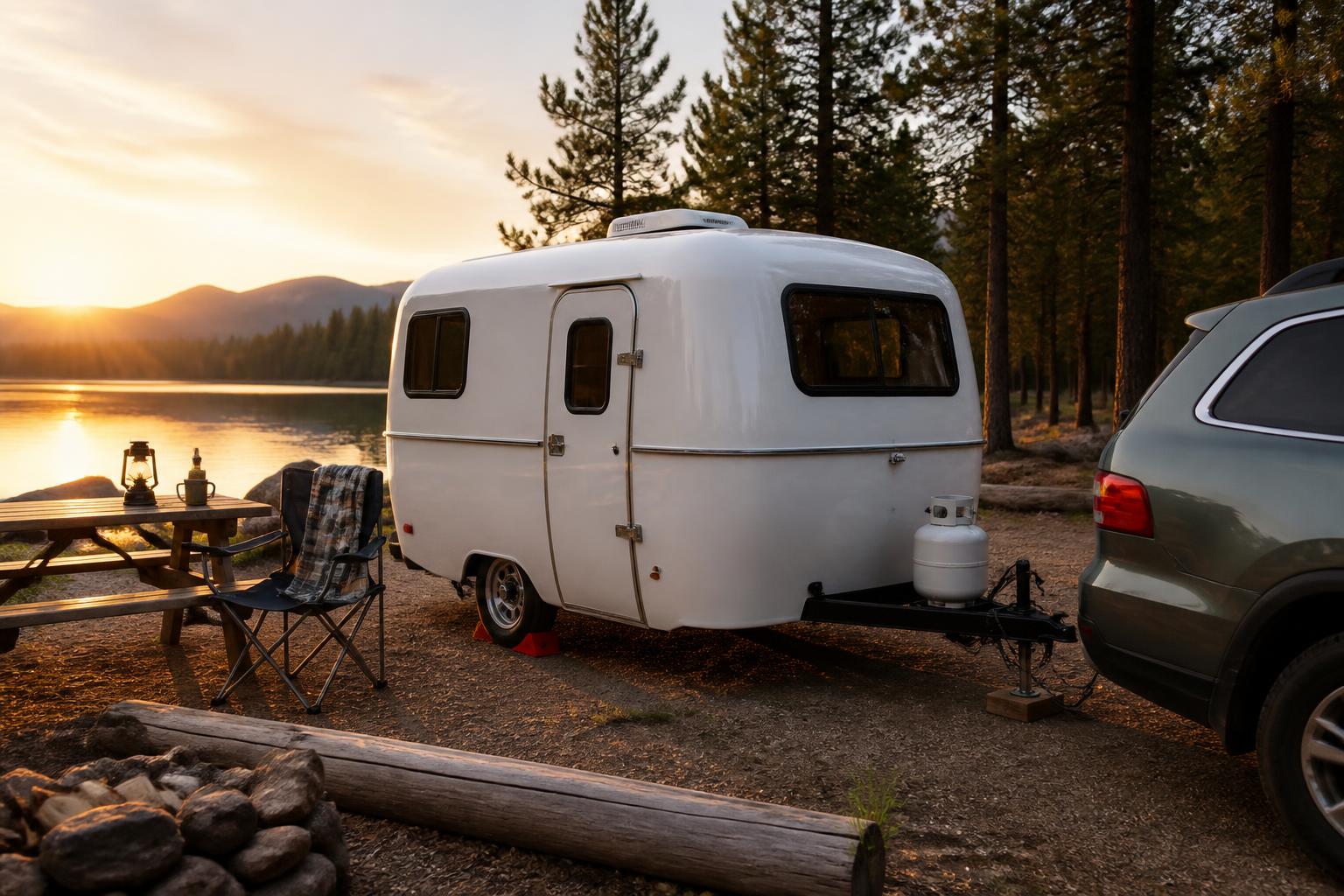
Scamp trailers are lightweight, molded fiberglass travel trailers built in Minnesota since the early 1970s. Their one-piece fiberglass shell and low curb weight make them easy to tow with a mid-size SUV or even a compact car. But the biggest hidden risk is frame rust—here’s what to look for before you buy or hit the road.
The One Failure Mode Most Scamp Owners Miss
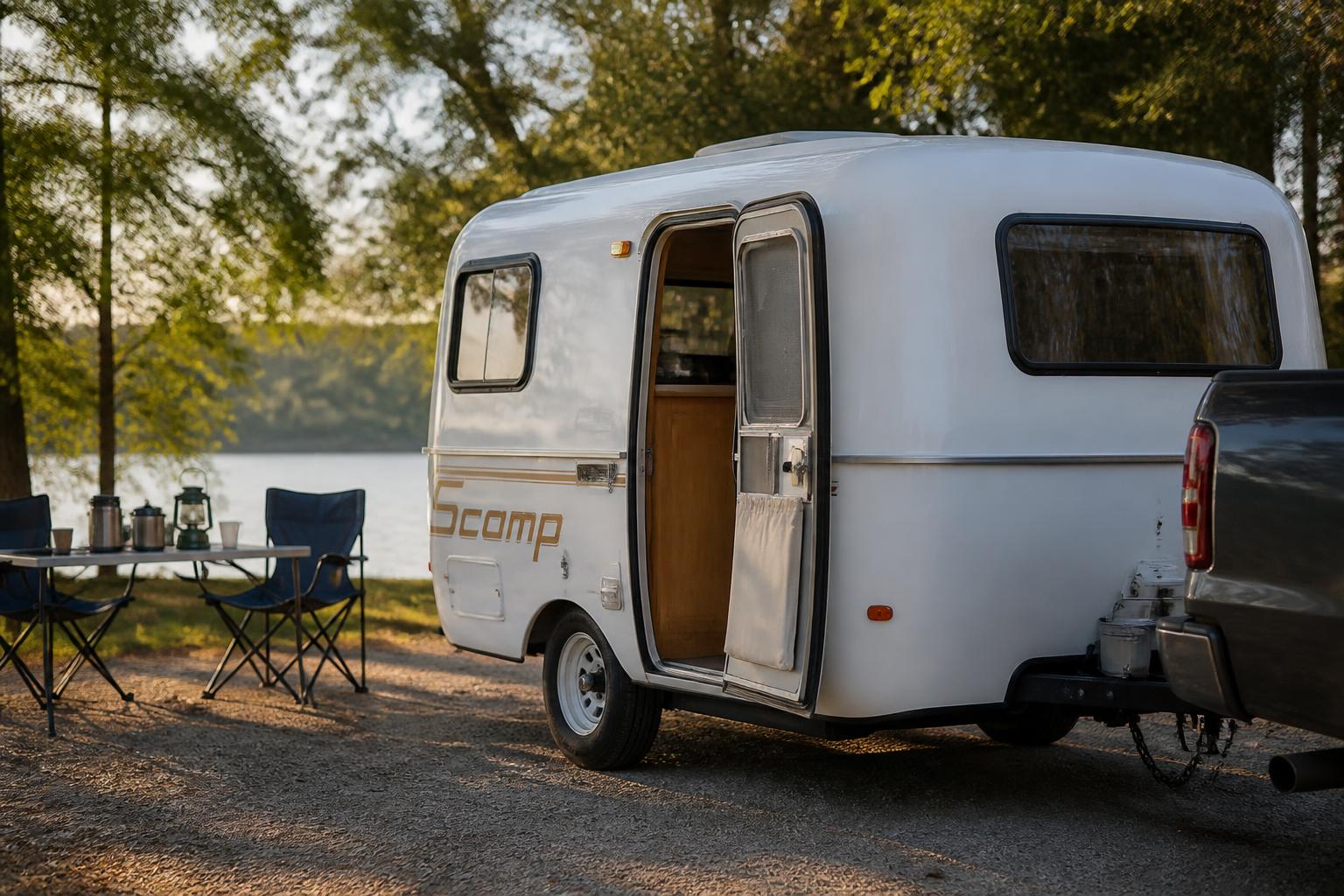
The steel frame under a Scamp’s fiberglass body is the trailer’s biggest weak point. On pre‑2000 models, the frame is often C-channel steel that wasn’t galvanized or powder‑coated. Water sneaks in through imperfect sealant around the belly band, wheel wells, and floor penetrations, then pools against the frame rails. Over time this causes frame rust and, in severe cases, full frame failure—especially on the rear crossmember and the tongue extension.
This failure mode is common on Scamps stored outside without a cover in humid climates, especially 1980s models. For a buyer, a clean frame check is worth more than cosmetic condition. If you see any frame rust, either negotiate the price down by the cost of a professional inspection and possible repair (typically $500–$2,000) or walk away.
How to Detect It Early
- Visual check from underneath: With the trailer level, crawl under and look for flaking rust, deep pitting, or a reddish‑brown dust trail. Pay special attention to the area behind the axle and where the tongue meets the main frame.
- Floor‑flex test: Stand inside on the floor near the wheel wells. If you feel any bounce or sponginess, the crossmembers that support the subfloor may already be compromised.
- Jack‑point test: Place a jack under the frame rail near the corner of the trailer. Lift just until you see the frame take weight. If the frame twists or creaks audibly, corrosion has weakened it.
Even a small amount of frame rot can make the trailer unsafe to tow. If you catch it early, a local welding shop can reinforce or replace the affected section. If you let it go, you’ll likely need a complete frame swap—a multi‑thousand‑dollar job that often totals the trailer.
Scamp Models: Length, Weight, and Towability
Understanding the specific model numbers and weight limits is essential when matching a Scamp to your tow vehicle.
| Model | Length (tip to tail) | Dry Weight (approx) | GVWR | Hitch Weight (approx) | Typical Sleep Capacity |
|---|---|---|---|---|---|
| 13 ft | 13′ 2″ | 1,200–1,350 lb | 1,800 lb | 100–150 lb | 2–3 |
| 16 ft | 16′ 4″ | 1,600–1,850 lb | 2,400 lb | 150–200 lb | 3–4 |
| 19 ft | 19′ 6″ | 2,100–2,400 lb | 3,200 lb | 200–280 lb | 4–5 |
Key note: GVWR includes all cargo, water, propane, and batteries. A fully loaded 19-ft Scamp can easily exceed 2,800 lb, so your tow vehicle must have a class III or higher hitch and a tow rating of at least 3,500 lb.
A Common Mismatch: Overloading Beyond GVWR
Many owners assume the low dry weight means they can load the trailer to the brim. But payload capacity is limited. A 19-ft Scamp with a full 32‑gallon fresh water tank (267 lb), two propane tanks (60 lb), a battery (50 lb), and camping gear (200+ lb) will likely push past the 3,200 lb GVWR. That overloads the tires and axle, causing sway and premature wear. Always weigh the loaded trailer on a truck‑stop scale before your first trip—this is the only way to confirm you’re within legal and safe limits.
How to Inspect a Used Scamp Trailer
If you’re shopping used, the frame rust check above is step one. Here’s a complete operator flow that covers the rest of the common failure points.
Preparation and Gear
- Flat, level parking lot (you’ll need to walk around the whole trailer)
- Flashlight, small pry bar (for checking floor edges), and a tire tread depth gauge
- VOM multimeter if you plan to check the electrical system
Early Checkpoints
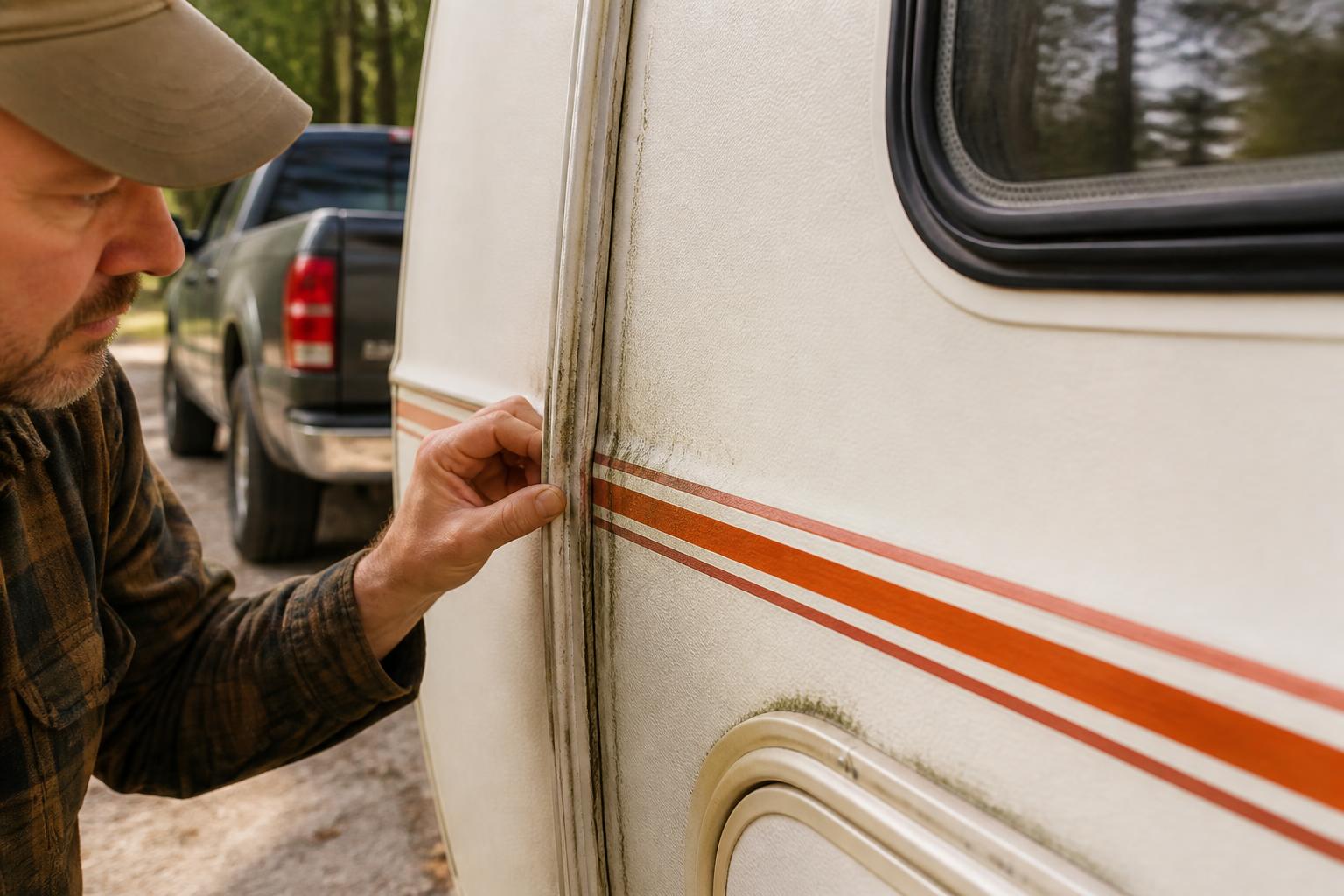
1. Belly band sealant: The horizontal seam between the top and bottom halves of the fiberglass shell is notorious for wicking water. Any cracks, gaps, or yellowed silicone mean the band needs to be resealed.
2. Windows and vents: Press on the outer flange of each window. If the fiberglass is soft or flexes, the lamination has failed and the window frame is leaking.
3. Axle condition: Scamp uses torsion axles (Dexter or Al‑Ko). To verify condition precisely, lift the trailer by the frame, then lower it. If the wheel droops more than 2″ below the spindle center, the rubber torsion bond has sagged. A bad axle can cause uneven tire wear and dangerous sway.
Ordered Action Steps
1. Pull the interior floor mat or carpet near the entry door and the bathroom edge. Insert the pry bar between the subfloor and the fiberglass wall. If the wood is soft or shows black water stains, the floor has delaminated.
2. Check the propane line connections at the stove, furnace, and water heater. Scamp uses flare‑fittings; loosen and retighten the nuts every season. On a used unit, if the copper lines have green corrosion, the system likely had a slow leak.
3. Test the 12‑volt system. Connect a known‑good battery (or a 12V power supply) and turn on the interior lights. Dim lights suggest corroded wiring in the tongue harness.
Likely Causes of Common Problems
| Symptom | Likely Cause | Fix |
|---|---|---|
| Water inside front storage locker | Missing or cracked lower front belly‑band seal | Re‑caulk with Dicor self‑leveling lap sealant |
| Musty smell in cabin | Window‑corner leak from failed butyl tape | Remove window, clean, re‑tape with butyl sealant |
| One brake not engaging | Rusted magnet on the brake assembly | Replace brake assembly (Dexter recommends 2–3 years of service) |
Friction Points and Escalation Signals
- If you find any soft floor spot larger than a dinner plate, get a professional estimate before buying. Replacing the subfloor in a fiberglass trailer involves cutting a section of the shell.
- A firm frame rust area longer than 6″ on a pre‑1990 Scamp likely means the entire frame needs reinforcement. Walk away unless the price reflects a $2,000 repair.
- If the tires are more than 5 years old (check date code on sidewall), budget $300–$500 for a new set. Scamp uses ST175/80R13 or ST205/75R14 depending on model.
Success Check
After your inspection, the trailer should show no water staining in the cabinets, no soft floor, no cracked frame rails, and all lights and brakes operational. A passing Scamp will need only routine maintenance—fresh sealant, a new battery, and a good cleaning. Anything else is a negotiation point.
Practical implication: If your inspection reveals only minor sealant gaps and no frame rust, the trailer is a safe buy. If you find any frame rust, budget for a professional assessment and do not assume sealant alone will stop it—rust spreads from the inside out.
Expert Tips for Scamp Ownership
Tip 1: Protect the Frame from Day One
Action: Apply a rust‑converter product (like POR‑15) to the underside frame rails and tongue after cleaning off any loose rust. Then spray an oil‑based undercoating into the box‑frame openings to coat the inside cavities.
Common mistake: Using rubberized undercoating on a rusty frame. It traps moisture against the metal and accelerates rot. Stick to a penetrating oil coating.
Tip 2: Reseal the Belly Band Every 2 Years
Action: Remove the old sealant with a plastic scraper, clean the area with denatured alcohol, and apply a bead of Dicor 501LSW‑1 self‑leveling lap sealant. Smooth it with a wet finger so it bonds to both shell halves.
Common mistake: Leaving old sealant in place and just adding more on top. Two layers of mismatched sealant often create a gap at the seam where water wicks in.
Tip 3: Weigh the Trailer Fully Loaded at a Truck Scale
Action: Before your first long trip, fill the fresh water tank, load your gear, and drive to a public scale (many truck stops have them). Weigh the rig with the wheels on the platform and again with only the hitch on the scale. Compare to GVWR and hitch‑weight limits.
Common mistake: Assuming the dry weight from the brochure is your actual weight. A 19‑ft Scamp with full water (32 gallons = 267 lb) and gear can easily exceed the 3,200 lb GVWR, which puts your tires and axle overloaded.
Scamp Trailer Warranty and Parts Coverage
New Scamps come with a 5‑year structural warranty on the fiberglass shell and a 1‑year warranty on appliances. Transferring the warranty to a second owner costs a $75 fee and requires a signed inspection form from an authorized dealer. If you’re buying used, ask the seller for the original warranty card and proof of any claims.
Scamp still manufactures replacement parts for every model going back to 1972—windows, doors, awnings, and even complete shell halves. That’s a huge advantage over many vintage fiberglass trailers. However, lead times for body panels can be 8–12 weeks, so plan ahead if you need a repair.
FAQ
Are Scamp trailers worth the high used prices?
Yes, if the frame is sound. Their fiberglass shell won’t rot or dent like aluminum, and their resale value stays strong for decades. A well‑maintained 1990s Scamp often sells for $8,000–$12,000 today.
Can I tow a Scamp with a Subaru Outback?
The 13‑ft and 16‑ft models (under 2,000 lb loaded) are within the Outback’s 2,700 lb tow rating, but check your specific year’s payload capacity. The 19‑ft model requires a full‑size SUV or a light truck.
How often should I replace the torsion axle?
Dexter axles typically last 10–15 years. Signs of sagging include a gap larger than 2″ between the wheel and the fender on level ground, or tires rubbing during turns.
What is the best way to store a Scamp trailer?
Indoor storage is ideal. If outdoor, cover it with a breathable fabric cover (not a tarp) that fits the full body length—for example, an Umbrauto Travel Trailer RV Cover sized 20′–22′ works well for a 19‑ft Scamp (measure your model first). Support the frame on jack stands to relieve weight from the tires and axle, and ensure the cover reaches past the belly band to keep water out of the frame area.

Practical RV guides from an experienced owner. Motorhomes, travel trailers, truck campers — we have owned them, maintained them, and written the guides we wish we had found when we started.