The Ultimate Guide to Coleman Camper
# The Ultimate Guide to Coleman Camper
You’re likely here because you own or are shopping for a Coleman camper—probably one of the iconic pop-up tent trailers like the Fleetwood/Coleman summer series. These lightweight, fold-out campers are a great way to get into camping without a massive tow vehicle, but they have a few well-known weak spots that can ruin a trip if you don’t catch them early. This guide pinpoints the most common hidden failure, gives you a no-nonsense checklist for inspecting a used unit, and compares the power options that actually make sense for boondocking or backup.
](https://rvownerhelp.com/wp-content/uploads/2026/05/coleman-camper-hero-1.jpg)

## The #1 Hidden Problem in Older Coleman Campers (and How to Spot It)
The biggest failure mode on vintage Coleman pop-ups (especially models from the 1990s and early 2000s) is **roof delamination at the rafter seams** caused by trapped moisture. The ABS plastic roof panels are glued to a foam core, and once the factory sealant around the roof edge or the zippered tenting seam breaks down, water wicks into the foam. Over several seasons the foam rots, the panel buckles, and you end up with a sagging roof that can collapse under snow load or even catch wind during a highway tow.
**How to detect it early:**
– Look for **soft spots** on the roof surface when pressing with a hand—any give means the foam has turned to mush.
– Check the **interior ceiling fabric** for brown water stains, especially where the roof panels meet the side walls.
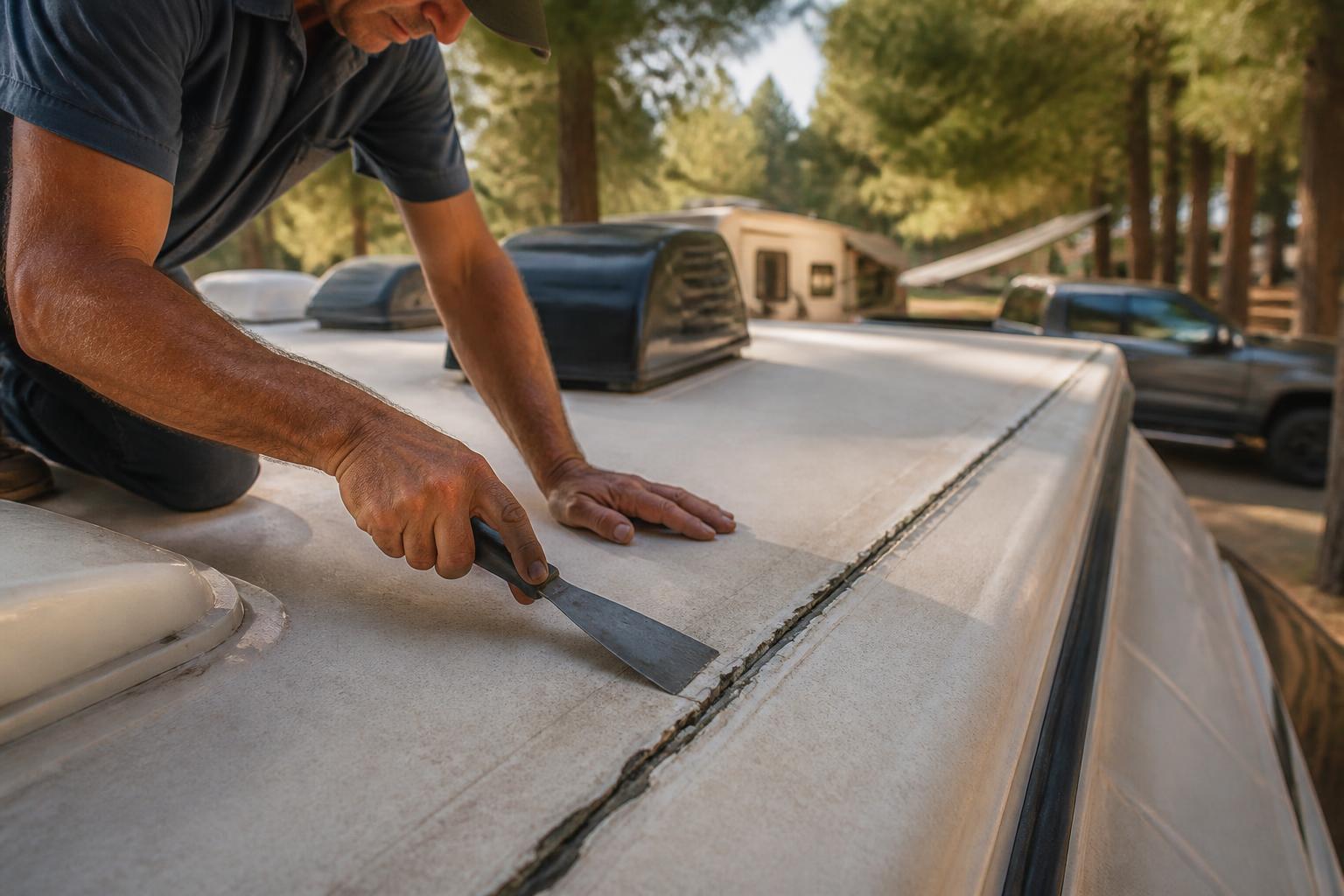
– Test the **roof sealant** along the front and rear seams: if it’s cracked, peeling, or missing, water intrusion has likely started.
– On a rainy day, go inside and run your hand along the roof-to-wall joints while a helper sprays the roof with a hose. Any wetness means the seal is compromised.
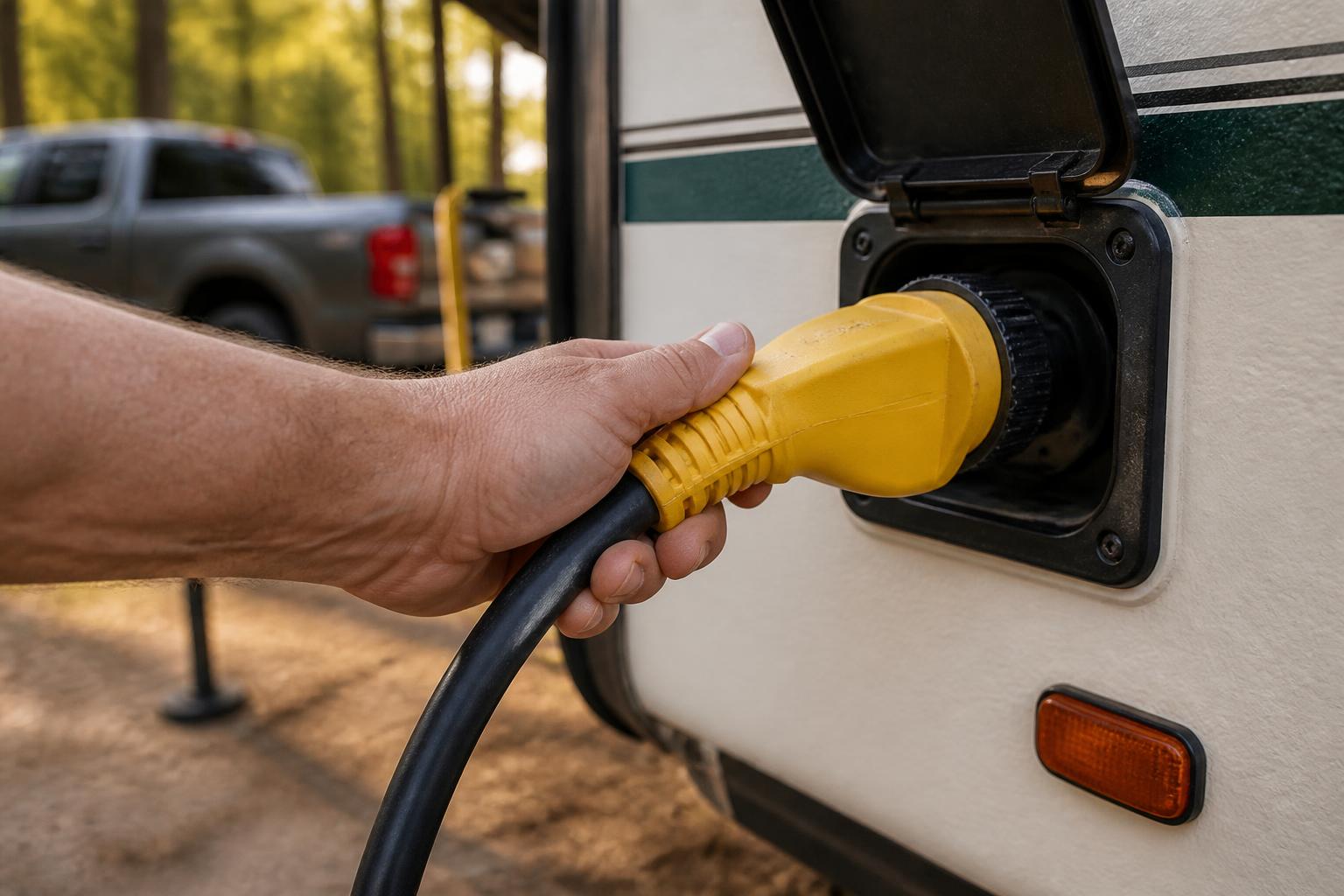

If you catch it before the foam disintegrates, you can reseal the roof with a high-quality RV lap sealant (Dicor) and apply Eternabond tape over the seams. Once the foam is gone, the only fix is a full roof replacement—often not worth the cost on a camper that’s only worth a few thousand dollars.
## Power Solutions That Make Sense for a Coleman Camper
Most Coleman pop-ups come with a basic 15-amp electrical system (a few later models have 30-amp). That’s fine for powering the fridge, lights, and a small converter, but if you want to run a microwave, air conditioner, or charge your devices during dry camping, you’ll need an external power source. Below are three solid options. Prices and ratings are approximate at time of writing—check current listings.
| Product | Price | Brand | Rating | Feature 1 | Feature 2 | Feature 3 | Best For | Score |
|—|—|—|—|—|—|—|—|—|
| [Generac 2,500-Watt Gas Powered Portable Inverter Generator – Lightweight and Compact Design – Produces Clean, Stable Power – Quiet Operation – Great for Home Backup, Camping, and RV Use](https://www.amazon.com/dp/B0DD28FF4R?tag=rvownerhelp-20&linkCode=ogi&th=1&psc=1) | | Generac | | | | | | |
| [briidea Home Integration Generator Transfer Switch Kit, 15 Amp 120V 4-Circuit Indoor/Outdoor Generator Transfer Switches with IP 67 Waterproof, Prewired, All Ready for a Next Power Outage](https://www.amazon.com/dp/B0BYZDMHSF?tag=rvownerhelp-20&linkCode=ogi&th=1&psc=1) | | briidea | | | | | | |
| [Anker SOLIX C2000 Gen 2 Portable Power Station, 2,400W (Peak 4,000W) Solar Generator, Full Charge in 58 Min, 2048Wh LiFePO4 Battery for Home Backup, Power Outages, and Camping (Optional Solar Panel)](https://www.amazon.com/dp/B0FVFGL38H?tag=rvownerhelp-20&linkCode=ogi&th=1&psc=1) | | Anker | | | | | | |
**Top Pick:** [Generac 2,500-Watt Gas Powered Portable Inverter Generator](https://www.amazon.com/dp/B0DD28FF4R?tag=rvownerhelp-20&linkCode=ogi&th=1&psc=1) – Lightweight and Compact Design – Produces Clean, Stable Power – Quiet Operation – Great for Home Backup, Camping, and RV Use. It’s quiet enough for campgrounds, produces inverter-clean power safe for your converter and electronics, and at 2,500 watts it can handle a small AC or microwave without bogging down. For a Coleman camper that typically has a 15-amp electrical system, this is the easiest drop-in solution.
If you want to stay silent and avoid gas, the [Anker SOLIX C2000](https://www.amazon.com/dp/B0FVFGL38H?tag=rvownerhelp-20&linkCode=ogi&th=1&psc=1) is a strong battery alternative, but you’ll pay more upfront and need to plan for recharging. The [briidea transfer switch](https://www.amazon.com/dp/B0BYZDMHSF?tag=rvownerhelp-20&linkCode=ogi&th=1&psc=1) is useful only if you plan to hardwire a generator into your camper’s shore power system—skip it for simple portable use.
## Quick Inspection Checklist for a Used Coleman Camper
Before you hand over cash for a used Coleman pop-up, run through these six checks. Each one is a pass/fail test that can save you from a money pit.
1. **Roof fabric and seam sealant** – Lift the roof and inspect the canvas where it attaches to the roof edge. Look for cracks in the factory sealant, separated seams, or old globs of silicone (a sign of previous patching). Pass = sealant is flexible and intact, no water stains.
2. **Crank mechanism** – Open and close the roof fully. The crank should turn smoothly with even resistance. Listen for grinding or skipping – that signals broken gears or a slipping gearbox. Pass = no noise, roof lifts and lowers without binding.
3. **Lifting cables** – With the roof half up, examine the cables on both sides for frayed strands, rust, or kinks. Pass = cables are clean, free of corrosion, and show no fraying.
4. **Floor integrity** – Walk every inch of the floor, especially near the walls and under the dinette. Any soft spot means water damage to the plywood subfloor. Pass = no give, no discolored wood.

5. **Water system test** – Fill the fresh tank, turn on the pump, and run each faucet (kitchen, outdoor shower if equipped). Check under the sink for drips at the connections. Pass = steady flow, no leaks, pump cycles off when faucets close.
6. **Appliances** – Turn on the furnace, fridge (on electric and propane), and stove burners. The furnace should light immediately and produce steady heat. Pass = every appliance operates with no odd smells or hesitation.
Fail any one of these, and you should either negotiate a significant discount or walk away. A roof or floor repair alone can cost more than the camper is worth.
## Troubleshooting a Cracked Roof Seam: Operator Flow
If you own a Coleman camper and notice a small crack in the roof sealant, act now before water gets into the foam. Here’s the process:
**Preparation**
– Park the camper on level ground. Lower the roof partway if sealed roof sections block access. Work on a dry, warm day (above 60°F) so the sealant cures properly.
– Gather materials: RV roof lap sealant (Dicor self-leveling), Eternabond tape, a putty knife, isopropyl alcohol, rags, and gloves.
**Early Checkpoints**
– After a rain, go inside and feel the ceiling near the cracked area. If the inner foam is wet you’ll feel a damp cold spot. If it’s already soft, skip the patch and call a shop.
– Check the area under the camper for any water dripping from the roof seam onto the floor.
**Ordered Steps**
1. Clean the area around the crack with isopropyl alcohol and a rag. Remove any old loose sealant using a putty knife.
2. Apply a generous bead of Dicor self-leveling lap sealant over the crack, spreading it about 1 inch beyond the damaged area. Let it cure per the label (typically 24 hours).
3. For extra protection, apply a strip of Eternabond tape over the cured sealant. Press firmly to bond.
4. After 24 hours, simulate rain by spraying the patched area with a hose from above. Have someone inside watch for drips.
**Likely Causes**
– UV degradation: Sun exposure breaks down the sealant after 3–5 years.
– Improper storage: Leaving the camper set up for months under direct sun accelerates cracking.
**Friction Points**
– If the crack is on a curved rafter area, the tape may not adhere perfectly—use multiple overlapping strips.
– Working on a hot roof during midday sun can make sealant runny; work in the morning or shade.
**Escalation Signals – When to Stop DIY and Call a Pro**
– If after patching you still see water inside, or the roof panel has visible sagging, the foam core is likely compromised. The permanent fix is a roof replacement by an RV dealer.
– If you smell mold inside the camper, open the ceiling fabric and assess the damage. Mold remediation and panel replacement can easily exceed $2,000.
– **Concrete stop threshold:** If the roof surface has any soft spot larger than a quarter (about 1 inch diameter) when pressed with your thumb, the foam beneath is already rotted. Do not attempt to patch—the repair will fail within weeks. Take the camper to a qualified RV service center.
## Which Coleman Camper Fits Your Camping Style?
Coleman pop-ups come in several series, and the right one depends on how you camp.
– **Coleman Redwood / Westlake** – Larger, slide-out models with a separate dinette and king bed. They weigh 2,500–3,200 lbs and require a mid-size SUV or minivan with a tow package. Best for families who want indoor space and a dedicated bathroom (if equipped).
– **Coleman Evolve / Santee** – Mid-size with a slide-out sofa, often under 2,000 lbs. Good for couples or small families who want a convertible seating area.
– **Coleman Bayside / Oak Creek** – Classic pop-ups around 1,400–1,800 lbs, simple boxy layouts, no slide-out. Easiest to tow and maintain. Best for weekenders who value affordability and simplicity.
If you plan to boondock off-grid, look for models with **solar prep** (a pre-wired roof port for solar panels) and a **12V fridge** instead of a three-way absorption fridge. Avoid models with a factory air conditioner if you live in a cool climate—the AC adds 80–100 lbs and takes up storage space.
**Final checks before buying any Coleman camper:** Verify the manufacturer year (the decal on the tongue near the propane regulator usually shows the date code) and check the GVWR against your tow vehicle’s rated capacity. Most older Colemans have GVWRs between 2,000 and 3,500 lbs, but never guess—weigh the camper at a scale or confirm from the manual.
## Explore This Topic
– Back to [General RV](/general-rv-hub/)
Related guides in this cluster:
– [Slide in Camper: Complete Buyer’s Guide](/slide-in-camper/)
– [The Complete Guide to Scamp Trailer](/scamp-trailer/)
– [Lightweight Campers: Complete Buyer’s Guide](/lightweight-campers/)
– [A Frame Camper: Everything to Know Before Buying](/a-frame-camper/)

Practical RV guides from an experienced owner. Motorhomes, travel trailers, truck campers — we have owned them, maintained them, and written the guides we wish we had found when we started.